

Decoding America's biblical messaging amid rising tensions


 Messenger
 Whatsapp
 Threads
 Email
Email
 Print
Print
 X
X
 Facebook


The Middle East faces a highly sensitive political test in decoding American messaging, where the true direction Washington's interests is opaque and convoluted. The statements of U.S. Ambassador to Israel, Mike Huckabee, regarding what he described as "biblical rights" for Israel to control the Middle East, have opened a wide door of controversy and concern—not only in Arab capitals but also within international monitoring circles, which saw in their content and timing a need for an interpretation that goes well beyond the statement itself. The words, relying on religious references to justify political realities, cannot be separated from the general context of the region, where the expansion of settlements in the West Bank intersects with increasing uncertainty in Gaza and political deadlock.
The broad Arab condemnation of these statements was not an emotional reaction but a deep awareness of the dangers of shifting the conflict from the political realm to a sphere of ideology. When the dispute is given a religious dimension, traditional diplomatic tools lose their utility, leaving middle-ground solutions as highly improbable.
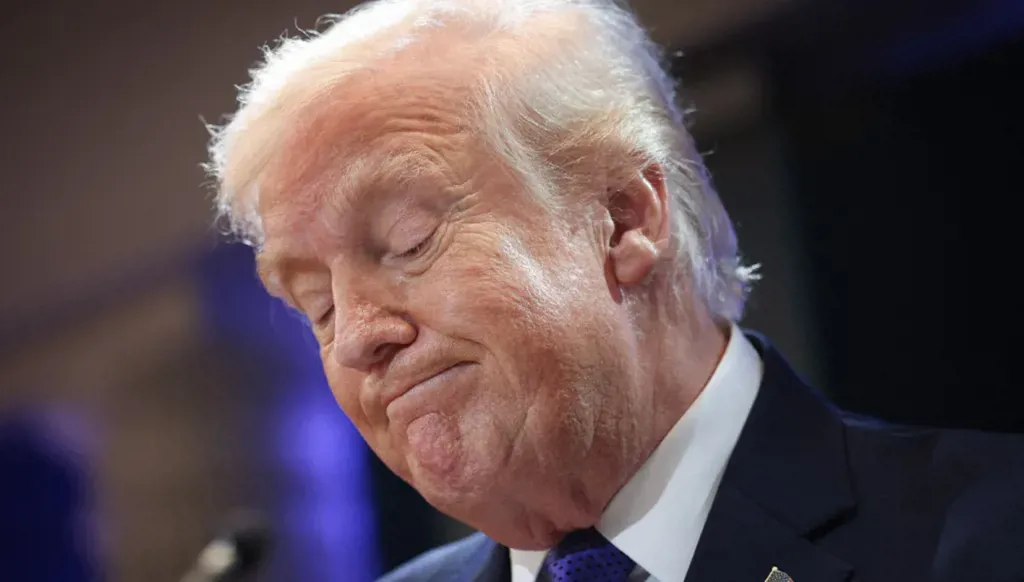
Notably, this rhetoric appeared in stark contrast to "Trump's Peace Plan," which was presented as a political framework to regulate security, borders, and the economy, and was not formulated with religious language or sweeping rhetoric. Here emerges the contradiction in American messages. The contradiction weakens strategic coherence and fuels doubts about the true path being pursued.
On the ground, this controversy coincides with a reality characterized by accelerated settlement construction in the West Bank, escalating clashes, and persistent stubbornness at certain stages of implementing Gaza understandings, making any hardline rhetoric appear part of a broader climate leaning toward imposing realities rather than supporting a settlement. If this trend continues, the political horizon will shrink in favor of a fait accompli, and the conflict will decide itself, sliding slowing into open conflict fueled by opposing religious narratives.
The dilemma is that ideologically religious conflicts are inherently long-term because they treat texts as final references not subject to compromise, whereas politics is the art of the possible and the management of interests. If the contradiction in messages from Washington is not resolved, and if the relationship between diplomatic discourse and declared peace plans is not clarified, ambiguity will remain an additional factor of instability, as each party will interpret these signals according to its preconceived calculations, increasing the likelihood of misunderstanding and misjudgment and shrinking the space for mutual trust.
Therefore, the Arab condemnation was not merely a protest stance but an expression of strategic concern over a perceived slide toward war. The future of the Middle East, in light of these facts, will be determined by the ability of international and regional actors to realign the compass toward a clear and cohesive political pathway. The greatest threat to the peace process is not only the hardening of positions but also their contradictions, which create an interpretative vacuum where doubt expands and opportunities for achieving sustainable peace—based on the principles of international law and mutual recognition of rights—shrink, far from the logic of absolutism that recognizes only itself.
Disclaimer: The opinions expressed by the writers are their own and do not necessarily represent the views of Annahar.