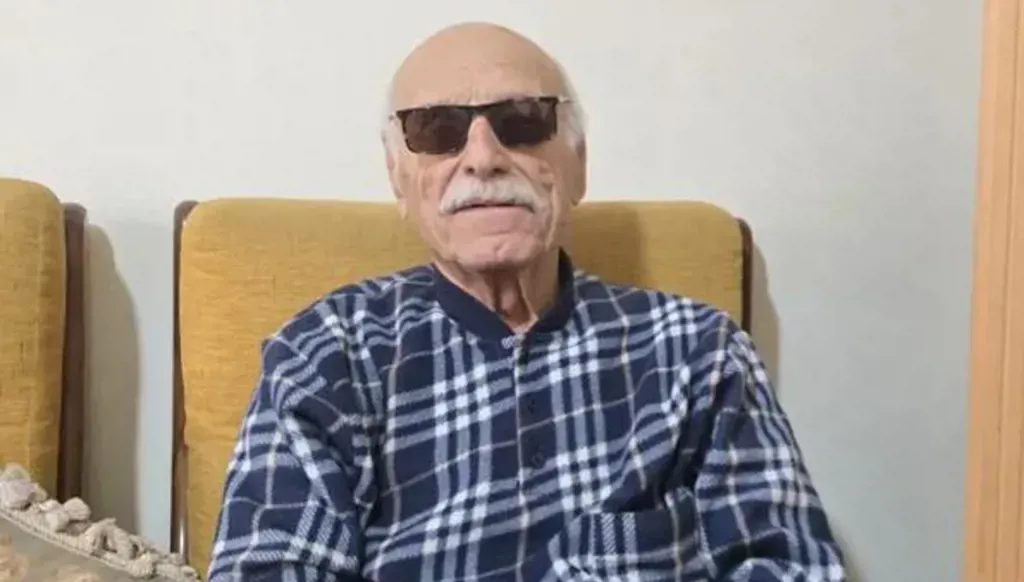
Missiles damaged poet Talal Haidar's home in Bednayel, west of Baalbek. The Israeli military claimed the raids targeted Hezbollah missile unit sites. The poet's words echoed with distinct clarity, shaped by long-standing experience and a deep creative reservoir, conveying what is now whispered within what is known as the party’s "supporting environment."
His words were not the fleeting emotions of a man affected in his home, but a moment of revelation: exposing the gap between a political discourse of mobilization and a daily reality in which civilians bear the cost, without agency or choice.
Only the creatives can tear down the iron curtain. When they speak, they cannot revert to expressions of blind allegiance, even when loyal.
Their relationship with places is not like that of soldiers behind barricades. Places, in the human sense, are filled with memories, layered with emotions, and imbued with dignity. Beyond the barricades, homes remain imprinted in consciousness, even when reduced to ashes.
Therefore, when the creatives’ voices are freed, they can articulate the proper standards, where tremendous sacrifices lead to meaningful outcomes. The human mind rejects the notion of "gratuitousness."
Talal Haidar did not say anything that many before him—who share enmity toward Israel—have not already expressed, but he articulated it with rare clarity. As reported by Annahar, he said:
“If this price restores Palestine, then congratulations. But if it does not, and we are being destroyed, they need to reconsider their approach and recognize that fighting is not only with guns—it is with music, poetry, thought, and politics… The more civilized we are, the more we defeat our enemies, whoever they may be; the more savage we become, the more we resemble them.”
The equation is simple in Talal Haidar’s mind: we sacrifice for guaranteed results. When sacrifice becomes futile, the battle ends. Ineffective means are replaced by productive ones. Confrontation is not limited to weapons, and setting them aside does not end the struggle—it shifts it to another arena, where the fighter yields to the creative.
What does this mean?
It is a rational discourse confronting an irrational state. It is an effort to recalibrate the meaning and methods of enmity and to reexamine the question of effectiveness: do the costs bring us closer to the goal, or push us further away?
Many are like Talal Haidar, yet their voices are stifled for various reasons. Meanwhile, ongoing efforts to replace this rational voice with the amplification of fear persist, granting weapons roles beyond their purpose and creating new arenas and enemies, keeping the logic of mobilization alive.
Here, a collective responsibility emerges—one that cannot be reduced to a single party. The approach should not be limited to external criticism of Hezbollah; it must be accompanied by a genuine engagement with the concerns of the community to which it belongs.
Lebanese Shiites need genuine reassurance for the post-military phase of the party: reassurance tied to their future within the state, the nature of the Lebanese-Syrian relationship, guarantees against being targeted, continuity of their role in the system, and a clear plan for reconstruction.
The issue isn't limited to weapons but extends to the feeling of political and social security.
Therefore, addressing the environment highlighted by Talal Haidar cannot be limited to the slogan of “disarmament”; it must evolve into a comprehensive project with clear guarantees, capable of restoring trust—especially amid the Lebanese state’s declining credibility in public perception, and particularly within the Shiite community.
Disclaimer: The opinions expressed by the writers are their own and do not necessarily represent the views of Annahar.



 Messenger
 Whatsapp
 Threads
 Email
Email
 Print
Print
 X
X
 Facebook