

Third Gulf War on the horizon


 Messenger
 Whatsapp
 Threads
 Email
Email
 Print
Print
 X
X
 Facebook



With the American aircraft carrier Gerald R. Ford entering the Mediterranean on Saturday, President Donald Trump has gained increased military leverage if he chooses to strike Iran.
The past few days have shown many signs that the room for diplomacy is narrowing following the second round of indirect talks in Geneva last week between Iranian Foreign Minister Abbas Araghchi and U.S. envoys Steve Witkoff and Jared Kushner.
Trump has not dismissed the possibility of a "limited strike" to pressure the Iranian regime into making greater concessions in any nuclear deal, setting a 10- to 15-day deadline for Iran. Steve Witkoff confirmed that, following Trump’s instructions, he met with Reza Pahlavi, son of Iran’s former Shah Mohammad Reza Pahlavi, and conveyed Trump’s astonishment that Iran “has not surrendered yet.”
Meanwhile, protests have reemerged at some Iranian universities for the first time since large-scale demonstrations were suppressed last month. War advocates, including U.S. Senator Lindsey Graham, are calling for a rapid decision to go to war.
Amid rising tensions, an Axios report cited a White House official saying that Washington might permit Iran “symbolic and limited” uranium enrichment on its soil, under strict supervision to prevent levels that could enable a nuclear weapon. Araghchi confirmed that American envoys did not request Tehran to give up uranium enrichment during the Geneva talks.
Even if the uranium enrichment issue is resolved, the missile program remains a major concern, with Israel treating it as equally critical to the nuclear question and demanding limits on Iran’s missile capabilities, which it views as an “existential threat.” Also under scrutiny is Tehran’s support for regional allies, including Hamas, Hezbollah, the Houthis, and the Popular Mobilization Forces.
The mounting pressure prompted Araghchi to state that Iran is prepared to respond to American “red lines” within three days, rather than the previously set two-week deadline after the Geneva talks.
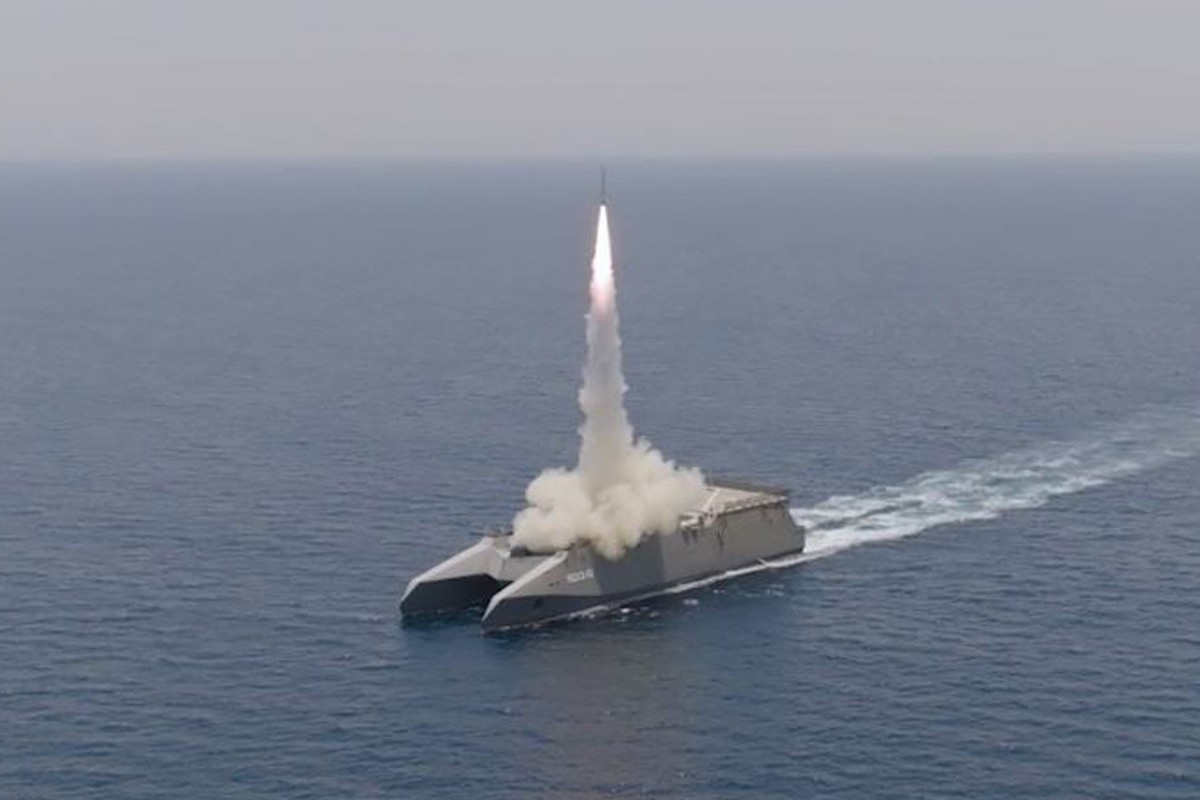
Despite the military buildup, Trump has not made a final decision on whether to go to war, nor clarified its specific objective: to extract major concessions from Iran, or to overthrow the regime. Each scenario carries significant risks of a wider regional conflict, should Iran retaliate against the strikes or succeed in closing the Strait of Hormuz to international shipping.
Perhaps the last thing Trump wants is a repeat of the Iraq scenario, where mission creep forces longterm ground operations in Iran. This explains the emphasis on the air and naval buildup, which has reached its highest level since 2003.
Trump’s preferred option appears to be a swift strike that shocks Iran, sparking renewed street protests or compelling the regime to retreat to a point akin to “surrender” before American red lines.
But can either of these outcomes be achieved without triggering a “Third Gulf War,” as questioned by the U.S. edition of Newsweek magazine?
Disclaimer: The opinions expressed by the writers are their own and do not necessarily represent the views of Annahar.