

War or agreement? Inside the high-stakes U.S.–Iran nuclear standoff


 Messenger
 Whatsapp
 Threads
 Email
Email
 Print
Print
 X
X
 Facebook
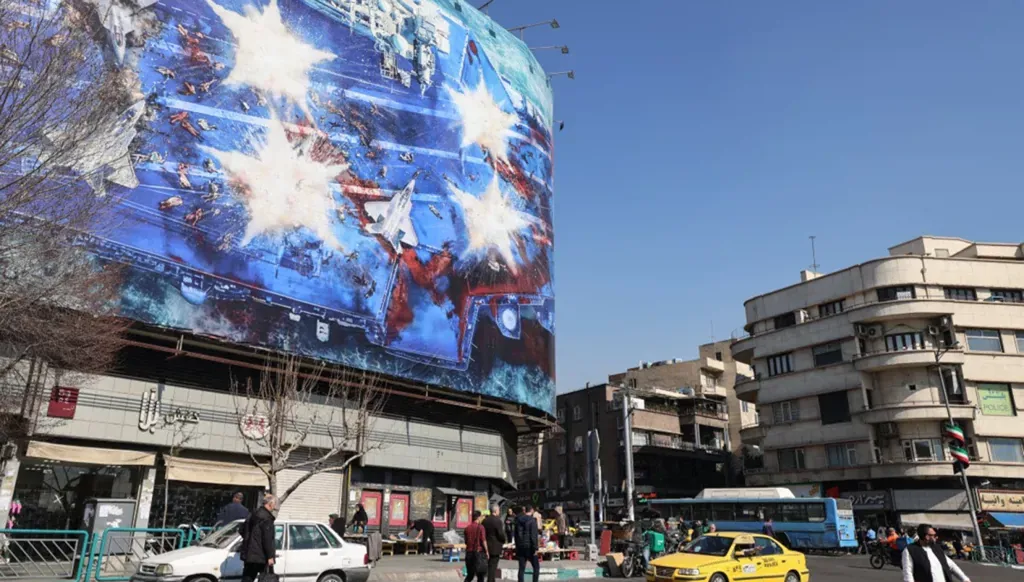


War or agreement? It has become something of a “Ramadan riddle.” The Arabs and the region find themselves caught in the middle of a duel they once longed to see in earlier times, yet when it finally appeared on the horizon, they urged diplomacy at Iran’s request. After Washington agreed to return to the negotiating table in response to Arab and Turkish appeals, Tehran did not say “thank you” to those who mediated. Instead, it continues to cling to conditions that keep its threat to neighboring countries alive—whether through its missiles or its affiliated militias.
It is not wrong to believe that the purpose of any negotiations is to find a way out and avoid war, provided that this objective is shared by both parties. However, the reality after the two rounds in Muscat and Geneva suggests that reaching an agreement is nearly impossible.
Why? First, because Tehran cannot accept the American conditions and continues to behave as if it were engaged in traditional negotiations like those it conducted with two previous U.S. administrations—Barack Obama and Joe Biden—betting on prolonging the process while ignoring the “red lines” set by Donald Trump or attempting to alter them. Second, because the United States and Israel, though differing over details and tactics, agree that any agreement that does not deliver the results they expect—no nuclear program, no long-range missiles, and no proxies capable of causing disruption—would ultimately benefit the Iranian regime.
At this level of impasse, the prospects for negotiations appeared blocked, with assessments fluctuating within hours—from describing the situation as “good” to suggesting that Iran was maneuvering to dismantle Trump’s conditions. This analysis did not stem from discussions during the Geneva round, but was instead put forward before its conclusion, with a two-week deadline given to the Iranians to return with a detailed proposal.While awaiting the draft agreement prepared by Tehran’s team, the U.S. military readied itself for possible action against Iran, and Trump was informed of the matter. He then indicated that the deadline was 10 days, before hinting at keeping it unchanged—namely, 15 days. This was followed by a calculated leak suggesting that Trump is willing to discuss a proposal allowing Iran “token uranium enrichment.”It is clear that, at this stage, the crux of the matter is solely “enrichment,” which Iran considers an “inalienable sovereign right.” However, once a draft agreement is on the table, the core dispute could shift to something else. As for the “token enrichment” proposal, it appears ambiguous: Is it a public U.S. gesture aimed at breaking the deadlock, a trap designed to confuse Iranian experts, or an attempt to humiliate Tehran and provoke it?
Both sides are negotiating with an almost certain conviction that war will eventually break out. If the open secret behind the resumption of talks was to gauge how far Iran is willing to go in making concessions—based on the experience of the 12-day war—then the question arises: why would Tehran reveal its concessions if an agreement might not be reached, and even if it is, may neither ease tensions nor prevent war?Undoubtedly, Iran wants negotiations as a pathway to lifting sanctions and is prepared to offer concessions to ward off the specter of war. Yet each time it signals “flexibility” or “positivity,” the American side reverts to the rhetoric of “regime change.” Tehran needs no further explanation to conclude that accepting the required concessions on the nuclear issue would, in practical terms, amount to the regime’s downfall. And nothing guarantees the removal of threats against it unless it places its missiles and proxy forces on the negotiating table.
Tehran was justified in insisting on limiting negotiations to the nuclear issue, as it lies at the heart of its dispute with the United States and Western countries—largely framed around “Israel’s security.” It believed that, in any case, it could preserve its program as a purely scientific endeavor. However, at no stage was it able to prove that it was genuinely pursuing a “peaceful program”; on the contrary, it appeared to demonstrate the opposite.Likewise, it failed to convince others that its regime’s ideology does not pose a threat to its regional surroundings. Instead, it cultivated that perception through the notion of “exporting its revolution,” using it as an external defensive shield, reinforced by “strategic alliances” with China and Russia.At this moment, as its geopolitical position comes under direct pressure, Tehran should be more aware that no one is likely to come to its aid.
The theory of war was based on the assumption that Iran had been weakened after the defeat of its proxies and the direct war waged against it. Iran, however, built its defensive strategy on several considerations, including the claim that it possesses secret weapons and contingency plans that were not deployed during the war of June 2025.Despite doubts about its ability to remedy the intelligence vulnerabilities exposed during that conflict, it appears to be betting on dramatic scenarios—such as “sinking an aircraft carrier” or striking American bases—as “victorious” images that would counter the narrative of “swift and clean strikes” favored by Trump.
Many, after analyzing the preliminary outcomes of the negotiations, believe that both parties are effectively betting on war. Each side needs an “exit” and a “presentation” that allows it to save face. Yet any middle ground, if one is found, would neither fulfill Trump’s objectives nor justify the massive military display he ordered. At the same time, such a “solution” would not amount to granting the Iranian regime a new lease on life.
Disclaimer: The opinions expressed by the writers are their own and do not necessarily represent the views of Annahar.