

A civilizational alliance: Rubio’s vision for the West and U.S. strategy


 Messenger
 Whatsapp
 Threads
 Email
Email
 Print
Print
 X
X
 Facebook


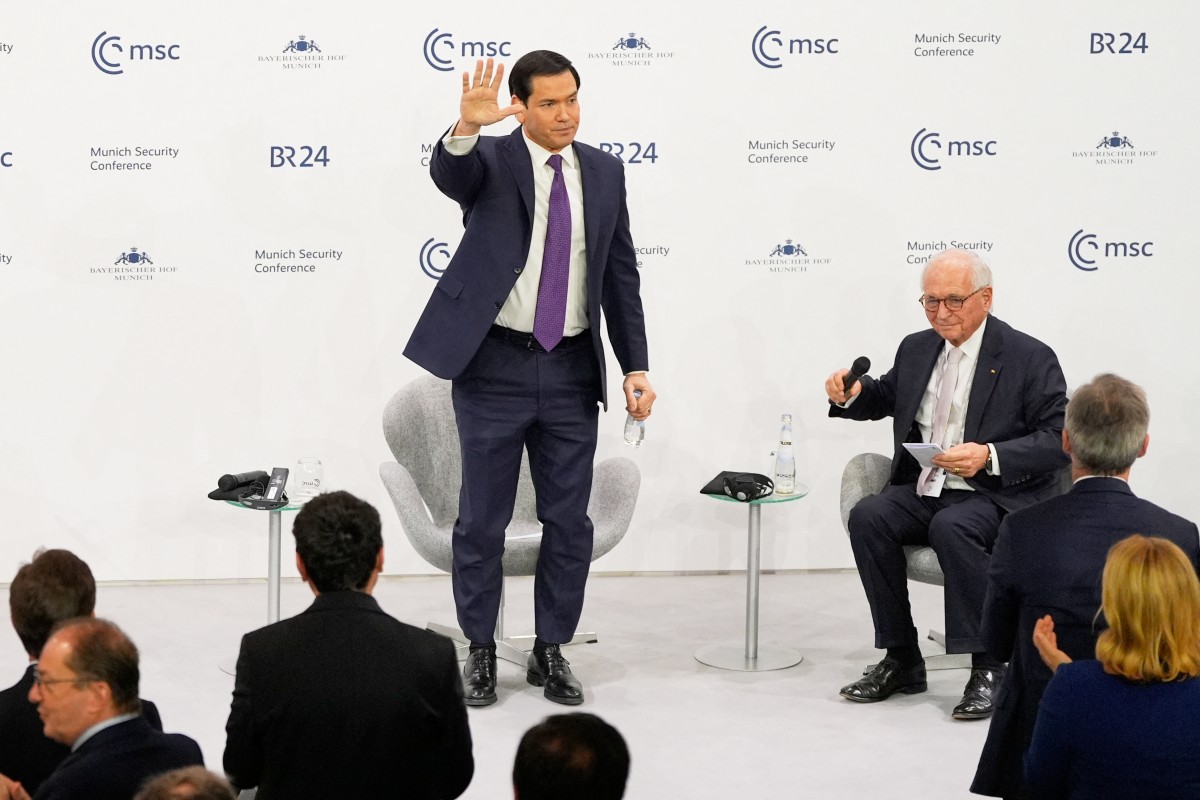
U.S. Secretary of State Marco Rubio’s speech at the Munich Security Conference was not merely a conventional diplomatic address. Rather, it was a comprehensive political and civilizational statement that clearly aligns with the themes of the 2025 United States National Security Strategy and serves as a rhetorical and intellectual expression of the worldview of the administration of Donald Trump. While the strategy defines priorities of power, sovereignty, and national interest, Rubio’s speech provided these priorities with historical, cultural, and existential meaning, offering a new narrative about the West’s place in the world and the rationale for reorganizing the international order.
At the core of the speech, Rubio redefines the transatlantic relationship as a civilizational bond before it is a military or economic alliance. He speaks not of an alliance of interests but of a single civilization that unites Europe and the United States, shaped by Christianity, shared history, language, heritage, and common sacrifices. This argument goes beyond traditional diplomatic discourse and signals a return to the concept of civilizational identity as a guiding framework for international politics. It clearly aligns with the strategic shift described in the National Security Strategy, moving from a rules based global order toward one governed by national sovereignty and deep cultural ties.
The speech offers a sweeping critical reassessment of the post Cold War era. The illusion that prevailed after the fall of the Soviet Union, expressed through the theory of the End of History, borderless globalization, global citizenship, and the idea of trade as a substitute for the state, is presented as a historical mistake that cost the West its industrial capacity, economic independence, and social cohesion. This reading corresponds closely with the National Security Strategy’s emphasis on reindustrialization, protecting supply chains, and restoring economic sovereignty, on the premise that economic security is the foundation of national security.
In this context, Marco Rubio links deindustrialization, mass migration, and the loss of border control as interconnected forces that threaten the continuity of Western societies. Border control, in his view, is not merely an administrative matter but an existential act of sovereignty. This perspective aligns with the National Security Strategy’s emphasis on national sovereignty and protecting society from demographic and cultural pressures, within a broader understanding of security that includes identity and social stability.
On the strategic level, the speech reaffirms the principle of peace through strength, one of the central pillars of the strategy. It adds to this principle a moral and civilizational dimension, arguing that armies do not fight for abstract concepts but for a people, a nation, and a way of life. Military power thus shifts from being a purely technical instrument of deterrence to becoming a means of defending a civilization and a particular way of life. In this view, national security is once again linked to the cultural and symbolic meaning of collective existence.
In his critique of the international system and multilateral institutions, Rubio does not call for dismantling them but for reforming and rebuilding them in ways that serve national interests. The example he offers regarding the inability of the United Nations to resolve major conflicts reflects the shift described in the strategy toward a pragmatic realism. This approach holds that international law cannot substitute for power when hostile forces threaten global stability. Here, the principle of flexible realism becomes clear, rejecting liberal idealism without withdrawing from the international order.
Rubio’s speech presents a vision for the future centered on building a new Western century through innovation, technology, Western supply chains for critical minerals, and economic competition in the Global South. This vision directly intersects with the priorities of the National Security Strategy, particularly in protecting American technological superiority, securing strategic resources, and building an advanced industrial economy capable of competing globally.
The speech also carries a clear message to Europe: the United States does not seek weak allies or dependents, but strong partners capable of defending themselves, proud of their identity, and free from historical guilt. This position is consistent with the strategy’s principle of burden sharing and reflects a shift from traditional American protection toward a partnership based on mutual responsibility.
At a deeper level, the Munich speech reflects an understanding that global conflict is no longer merely a contest of interests or influence, but a struggle between civilizational models and competing visions of the human being, society, and the state. In this sense, it can be seen as a clear critique of Francis Fukuyama’s thesis in The End of History and the Last Man, which argued for the triumph of a homogeneous liberal world shaped by globalization and the gradual erosion of the nation state and sovereign interest. By contrast, the speech restores civilizational identity as a central driver of international politics. In doing so, it moves closer to the perspective of Samuel P. Huntington in The Clash of Civilizations and the Remaking of World Order, where global conflict reemerges as a contest among civilizations and cultural and sovereign models seeking to preserve themselves in a multipolar world. Rubio therefore links defense and security not only to material power but also to the protection of the cultural and spiritual heritage that has shaped the West for centuries. This return to the concept of civilization as a political actor marks a clear departure from the language of liberal globalization toward the language of historical identity and cultural particularity.