


 Messenger
 Whatsapp
 Threads
 Email
Email
 Print
Print
 X
X
 Facebook
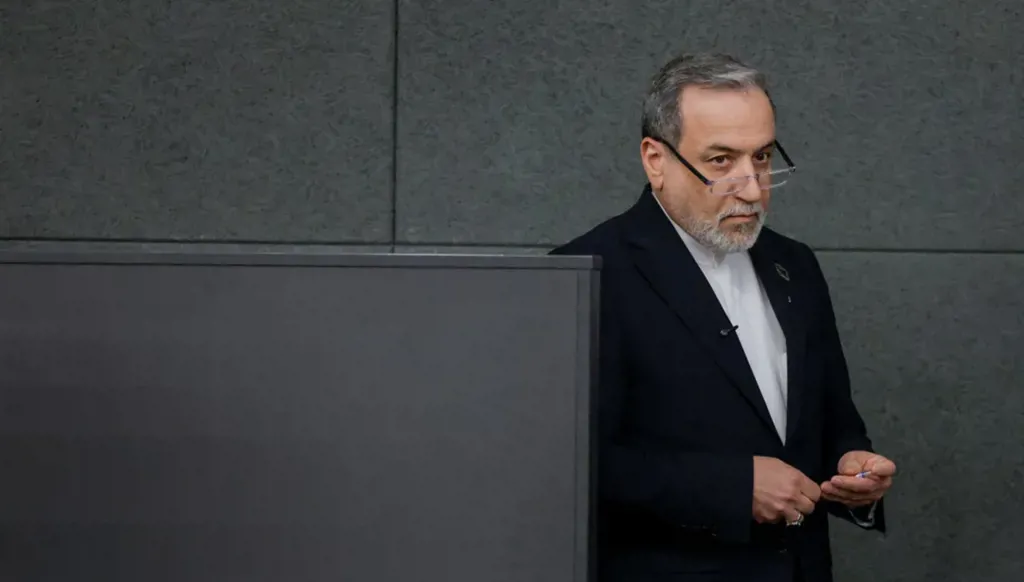


Before Iranian Foreign Minister Abbas Araghchi arrived in Geneva, Tehran had already concluded that the United States was leaning toward “realism.” We scanned the news from Washington but found no, at least publicly or officially, indication of any shift in American conditions for a potential agreement with Iran. Such realism cannot be ruled out, given President Donald Trump’s philosophy on gains and losses, but for now it remains a possibility, while Tehran’s official channels expressed remarkable certainty.
Before Araghchi met the U.S. delegation, led by President Trump’s envoy Steve Witkoff and his son-in-law, advisor Jared Kushner, Iranian outlets were already announcing a series of successive concessions. On the eve of that, President Donald Trump was announcing from his plane that the Iranians "want to make a deal." Something unannounced to the public that Trump learned from Tehran had made his tone more optimistic and prompted him to send his delegation to a new session after the setback in Geneva. This time, Araghchi brought economists with him to address the core issues: lifting sanctions on Iran and signing contracts with the United States.
Observers noted what Iran had conceded even before negotiations began:
1-Iran announced its willingness to reduce its current uranium enrichment level of 60 percent to the level allowed under the previous agreement (Vienna 2015), i.e., below 4 percent, or even to suspend enrichment for several years.
2-It abandoned its denial of knowledge about the fate of its highly enriched uranium stockpile, which it had previously claimed was buried under the rubble of nuclear reactors hit by strategic bombs dropped by B2 bombers in Natanz, Fordow, and Isfahan.
3-It offered solutions for this dangerous stockpile, such as “dilution,” meaning reducing enrichment to minimal levels, even hinting at accepting its removal from the country.
4-It offered the return of international inspectors, including Americans, to act as vigilant eyes ensuring the proper conduct of its nuclear reactors.
Tehran offers conciliatory incentives, relinquishing anything ambiguous that might hint at military purposes for its nuclear program—rewards that could tempt Trump toward a deal. Yet Iran knows this is not enough and is not fundamentally different from what the Vienna agreement offered, from which Trump withdrew in 2018. At this point, Tehran aimed for the “grand prize,” trying to play tunes that would please the American president. Some in Tehran noted that the United States, unlike the Europeans, had gained nothing economically from the old Vienna deal. Others promised Trump trillions in savings from investments and contracts in post-deal Iran. This explains why economists were included in Araghchi’s delegation.
Tehran spoke of Washington’s realism while its own announced concessions (not including any undisclosed ones) went beyond realism into what looks like bending before the storm. Despite the defiance, threats, and bluster from the country’s political and military leaders, the deployment of U.S. fleets to the region pushed Tehran to step back from a brinkmanship policy, wary of a looming abyss. While Iran still clings to its ballistic missile program, viewing it as strategic deterrence and a defensive shield, it sacrifices its nuclear program, accepting its “emasculation” and making it incapable of producing a nuclear bomb.
Iran is making concessions that could cost it a troubling fate, even as it relies on them to secure its survival. These concessions are hidden behind the smoke of showy military maneuvers in the Strait of Hormuz. They are cloaked in the claim of retaining the right to uranium enrichment in Iran, even at minimal levels. Iran proclaims it will not abandon a disintegrating “axis” and refuses to negotiate over its missiles, while questions mount about what will remain of Iran’s “revolution” once its hopes for a nuclear bomb are dashed, companies of the “Great Satan” (the term Iran uses for the United States) enter the veins of its economy, and U.S. guards monitor its nuclear facilities. Will Iran remain the country we have known since 1979?
Disclaimer: The opinions expressed by the writers are their own and do not necessarily represent the views of Annahar