

Between opportunity and instability: The high-stakes push to reconstruct Syria
The reconstruction process in Syria is a major, complex investment opportunity. The political and economic developments have created a unique investment prospect in a country devastated by years of conflict. Recovery needs are estimated at between 250 and 400 billion USD, making it a decades-long task that requires foreign capital and expertise across all sectors.


 Messenger
 Whatsapp
 Threads
 Email
Email
 Print
Print
 X
X
 Facebook
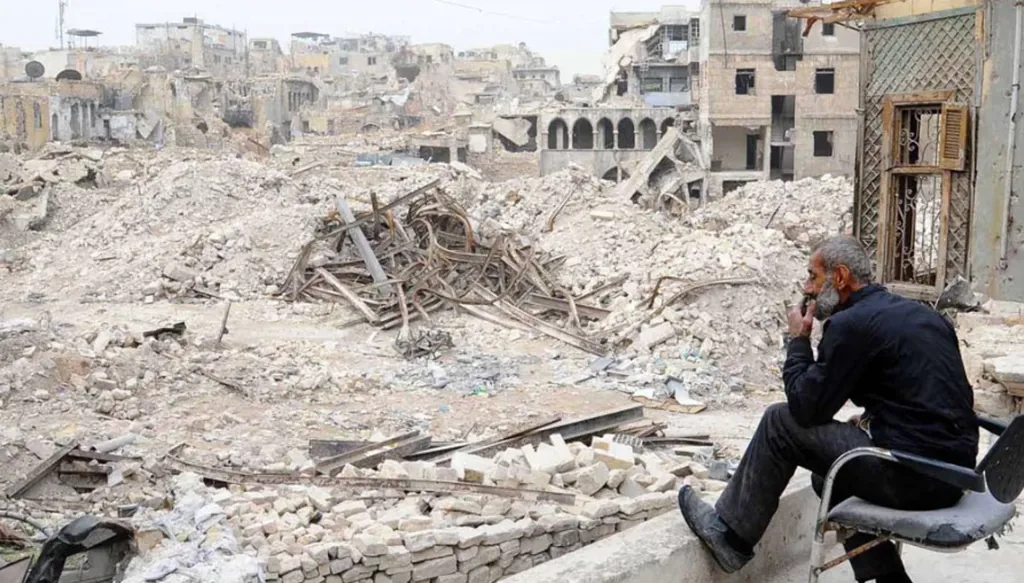


National reconstruction and infrastructure are considered the largest and most urgent investment opportunities. The catastrophic destruction in the housing, transport, and public utilities sectors has necessitated substantial capital investment in reconstruction projects. These efforts are currently backed by funding commitments from Gulf countries and international financial institutions. The most prominent factors driving this investment include the political transition from the former regime to the new government, the gradual easing of international sanctions, and a massive influx of capital from regional countries.
Reconstruction efforts hinge on rehabilitating the energy sector and building essential transport networks, including air, sea, and land transport, to connect the country with the world and facilitate the import of necessary development materials. Turkey emerges as a central player in this task, utilizing improved diplomatic relations to attract investment in the construction, energy, and transport sectors. The resumption of flights from Istanbul to Damascus and Aleppo after 14 years of a stop is a tangible symbol of this new partnership. On the other hand, Qatar has chosen to invest in air facilities, presenting a $4 billion project to modernize the capital's airport. In the same context, the UAE has announced plans to invest $800 million in developing the strategically important Tartus port.
It is noteworthy that the motives for this rapid and significant influx of capital are not only economic but also reflect a geopolitical race for influence in Syria after the fall of the Assad regime, pushing the country toward strong regional powers like the Gulf. Hence, the new government in Damascus is aiming to distance itself from Persian control. It approved a World Bank project with an initial grant of $146 million to restore essential electricity infrastructure and connect Syrian networks with Turkey and Jordan, thereby freeing itself from its previous reliance on Iran.
Conversely, certain barriers could impede this reconstruction. These include political risks, as the transitional government faces difficulties in fully asserting its control and administering the country's affairs, making the path to political stability uncertain. Furthermore, there are issues such as corruption and the extensive influence of secret networks within some public institutions, alongside the current weakness of the rule of law, as the judiciary's ability to enforce laws and resolve disputes is not guaranteed at present.
Regarding security risks, the security situation remains fragile due to the continued presence of armed groups and sectarian tensions, in addition to external military intervention such as Israeli airstrikes, which threaten regional stability.
Nevertheless, Damascus is working on a strategy to mitigate these problems by controlling inflation, stabilizing the Syrian Pound, and opening up to World Bank and IMF projects. The new government also continues its efforts to reduce the intensity of military operations in Syria and contain the rebellion of armed groups. This encouraged Riyadh, for instance, to offer $3 billion worth of real estate projects, including residential towers and commercial centres.
It should be noted that on September 4th, the Syrian government announced the establishment of the "Syrian Development Fund" by presidential decree. This appears as a national sovereign body aimed at mobilizing and directing resources toward vital reconstruction projects. Initial donations exceeded $60 million at launch. Experts view the Fund as an important, supportive, and attractive step toward further investments. It works to prepare and rehabilitate damaged areas to create economic activity through the establishment of roads, water and communication networks, and the construction of educational and health institutions, among others.
In summary, many political and security barriers could hinder the reconstruction process. The new government's ability to face these challenges and secure a stable environment remains the main condition for whether these stakes will pay off or remain ambitions. Will regional and international efforts succeed in transforming Syria into a new economic hub, or will it continue to spiral into instability?
Disclaimer: The opinions expressed by the writers are their own and do not necessarily represent the views of Annahar.