

U.S. pullback from multilateral forums could weaken counter-terrorism efforts


 Messenger
 Whatsapp
 Threads
 Email
Email
 Print
Print
 X
X
 Facebook
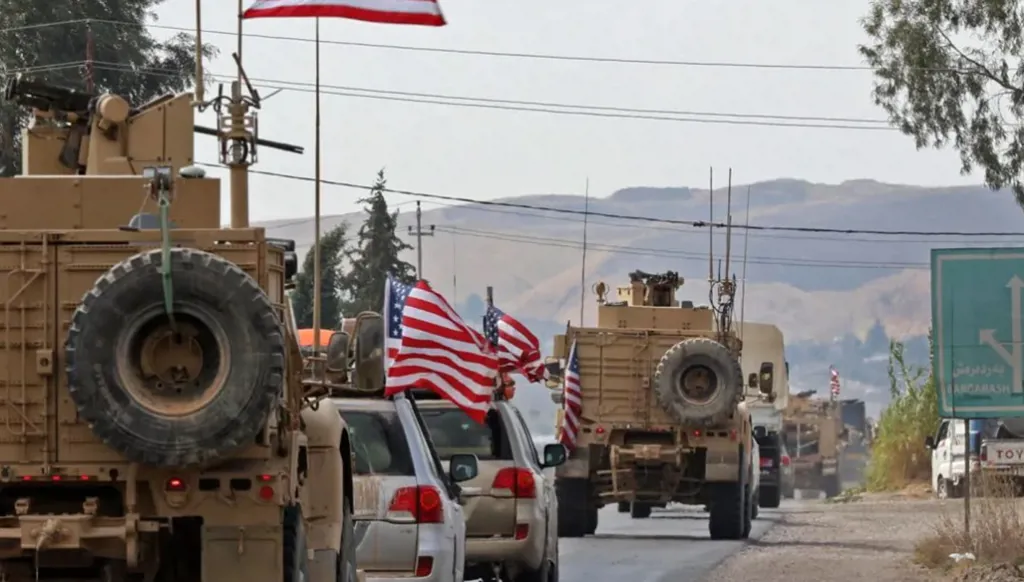


There is growing concern in the United States and internationally that radical steps — such as announcing withdrawal from several international organizations — could send a negative signal to partners, suggesting the Trump administration does not sufficiently value multilateral cooperation to confront some of the most dangerous threats in the Middle East, including ISIS and Iran.
Continuing down this path would be a costly mistake that directly contradicts the administration’s stated objectives in countering these threats. In previous years, the United States established and led two multilateral forums — the Law Enforcement Coordination Group and the Transnational Terrorism Forum — designed to mobilize international partners against Iran-linked terrorism. The initiatives were led by the Departments of State and Justice, with participation from several other U.S. agencies. They remain the only bodies exclusively dedicated to confronting this threat.
More than 30 countries have joined these forums, reflecting the global nature of the terrorist, financial, procurement, and logistical support networks managed by Iran and its primary external proxy, Hezbollah. The two groups enabled counter-terrorism operatives worldwide to exchange expertise, compare methods, and develop more effective strategies for addressing complex threats. This cooperation led to designations, asset freezes, and tangible enforcement successes.
The State Department linked these forums to diplomatic campaigns aimed at raising awareness of threats posed by Iran and Hezbollah and pressing for concrete action. That approach produced significant results: since 2019, 19 governments have banned, designated, or imposed restrictions on Hezbollah, while a growing number of governments have taken similar steps against Iran’s Islamic Revolutionary Guard Corps.
These tools also helped governments intensify law enforcement investigations into IRGC and Hezbollah networks operating on their territories. Today, the Law Enforcement Coordination Group and the Transnational Terrorism Forum are positioned to help the Trump administration pursue its goal of countering Iran and Hezbollah activity in the Western Hemisphere. Many governments in South and Central America have been active members for years, allowing Washington to strengthen its ability to confront these threats.
But without strong U.S. leadership and support, neither forum is likely to continue, undermining the administration’s core priorities.
The same concern applies to the Global Coalition to Defeat ISIS, a U.S.-led body of 90 members that has played a prominent role in countering terrorist elements in Iraq and Syria for more than a decade. While the administration has not indicated it intends to dissolve or withdraw from the coalition, withdrawing from other multilateral counter-terrorism organizations with strong track records would almost certainly alarm other member states.
Even a reduction in U.S. participation could deal a severe blow to the coalition’s effectiveness. Beyond enabling countries to coordinate against a terrorist organization that remains a threat, the coalition has served as a key forum for advocating funding programs for counter-terrorism training, providing equipment, repatriating ISIS detainees, and addressing humanitarian needs and broader stability requirements. Recently, the United States has used the coalition to refocus international attention on ISIS threats in Africa.
How can allies be assured that the United States remains committed to its international leadership role in counter-terrorism — and to the multilateral organizations that contribute significantly to this mission?
An American researcher at a major think tank argues that Washington should seize two upcoming opportunities. In the near term, the U.S. administration is expected to release a national counter-terrorism strategy. Trump’s 2018 strategy stated that the United States would “continue to lead and support its partners in counter-terrorism,” while also warning that America “does not need to bear the primary responsibility for counter-terrorism worldwide.”
While that principle remains valid, the administration will struggle to pressure other governments to increase their contributions if Washington significantly reduces its own. The new strategy, the researcher argues, should explicitly affirm that multilateral participation will remain a core pillar of the U.S. approach.
Next summer, the United Nations is scheduled to hold its ninth formal review of the Global Counter-Terrorism Strategy for 2026. This will be the first such review during Trump’s second term and offers an opportunity to demonstrate Washington’s commitment to maintaining its role in shaping international counter-terrorism norms.
Ultimately, the researcher argues that while Middle East turmoil presents immense opportunities and challenges in counter-terrorism, the best way to apply the “America First” principle is to reaffirm U.S. leadership, and use every available tool to shape events — rather than withdrawing from organizations with proven records of advancing American interests.
The Trump administration has made clear it sees limited value in multilateral platforms for achieving its objectives, but it has yet to specify how it would compensate for their loss or mitigate the negative effects of withdrawing from them.
Multilateral cooperation can be complex, but it has repeatedly enabled the United States to build consensus and generate momentum around priority issues — particularly the threats posed by ISIS, Hezbollah and Iran. Moving away from this approach could also create an opening for adversaries such as Russia and China — both members of some of these organizations — to exploit diminished U.S. engagement and reshape international counter-terrorism norms in line with their own priorities. That possibility alone, the researcher argues, should prompt the administration to reconsider its options.