

Lebanon faces political deadlock as Hezbollah defies disarmament efforts
Negotiations, U.S. pressure, and Israeli threats collide with domestic politics as Lebanon aims to reassert state control and security.


 Messenger
 Whatsapp
 Threads
 Email
Email
 Print
Print
 X
X
 Facebook
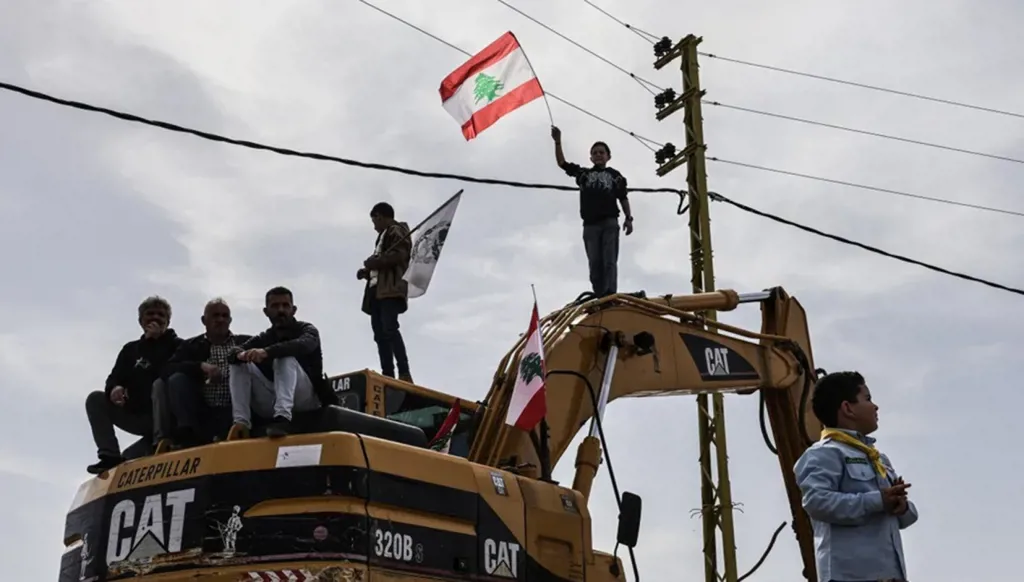


The situation in Lebanon is unfolding in step with the Iranian-American negotiations. Although positive signals emerged from the first round, fears of war in the region persist until the picture becomes clearer in the second round, during which all files—including the role of allies, particularly Hezbollah—will be discussed. There is an effort to capitalize on the negotiations to reach a series of understandings on both the domestic and international fronts, whether through dialogue between the state and Hezbollah or by managing international pressure to disarm while avoiding major Israeli strikes.
Following the meeting between President Joseph Aoun and MP Mohammad Raad, which ended a period of estrangement, Prime Minister Nawaf Salam’s visit to the front-line southern villages came to consolidate understandings limited exclusively to south of the Litani. North of the river, however, remains suspended due to the party’s resistance and conditions. These were preempted by the deputy head of Hezbollah’s Political Council, Mahmoud Qamati, who raised the ceiling by stating that both the president and the prime minister had previously been subject to external dictates and are now seeking to correct the course and address the errors resulting from those pressures.
This stance contradicts the renewed political momentum in the country with the launch of election preparations, as channels have opened between the first presidency and Hezbollah, and between the third presidency and the Shiite duo. Salam’s visit to the south marked a new trajectory in the relationship without resolving contentious issues, foremost among them the limited arsenal north of the river. While Salam sought to underscore the state’s presence in the south by affirming its responsibility for sovereignty, development, and reconstruction, he avoided addressing the issue north of the Litani—a subject the party refuses to discuss—reflecting a wait-and-see approach to the negotiations.
However, the understandings sought by Salam to reestablish the state’s presence in the south and initiate reconstruction do not remove obstacles linked to international conditions. The prime minister is aware that progress on disarmament between the Litani and Awali rivers, extending to the Bekaa, is an American condition, while Israel obstructs construction by targeting completed homes and continues to press for security arrangements with Lebanon through direct negotiations.
Beyond that, Lebanon is awaiting a decision from the United States following the February deadline to finalize the disarmament file. Although Washington continues to bet on the Lebanese Army, ongoing support remains conditional on completing the second phase, which Army Commander General Rodolphe Haykal is expected to present to the Cabinet in a session dedicated to the plan to confine arms north of the river. This is also tied to the next role of the Mechanism and the success of the Paris conference to support the army in March, as the United States has made completion of disarmament a prerequisite—an issue conveyed to the army chief during his recent visit, when he sought military assistance. Even French Foreign Minister Jean-Noël Barrot’s visit to Lebanon, which included a meeting with General Rodolphe Haykal, underscored the need to achieve exclusivity of weapons in order to secure comprehensive army support, while urging preparedness for any regional developments.
As for Hezbollah, it continues to reject the government’s decision to withdraw weapons northward, despite the decisions it has taken to change security leadership. While it has declared its readiness for dialogue, its proposals—according to political sources—are conditioned on not relinquishing what it considers its sources of strength in the “resistance.” One reason behind the party’s willingness to engage in dialogue is the course of the Iranian-American negotiations, which may also reflect an attempt to circumvent U.S. pressure and buy time amid ongoing Israeli threats to expand military operations.
The party also rejects any framework that would place its arms under supervision, reviving the idea of containment but on its own terms—terms that do not lead to its submission. This indicates that it has not yet reached the conviction of ending the arms phase and integrating into the state, thereby undermining the very foundations of dialogue.
Disclaimer: The opinions expressed by the writers are their own and do not necessarily represent the views of Annahar.