Since the invasion of Ukraine in February 2022, the Russian army has undergone a rapid transformation in its military strategy, placing greater emphasis on enhancing its capabilities in positional warfare. This shift has strengthened its ability to conduct static operations, even as its capacity for large-scale maneuver warfare has deteriorated.
Analytical Challenges in Assessing the Russian Army
Western analysts seeking to assess Russian military capabilities and forecast the future of the Russian armed forces face multiple analytical challenges. Managing expectations becomes particularly complex when excessive attention is placed on specific details—such as troop formations or potential timelines for aggression against NATO—without adequately considering Russia’s broader cultural and military context.
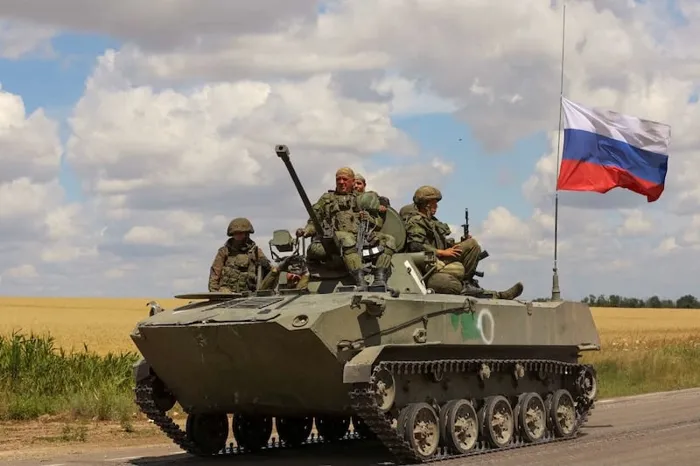
Russian military tank.
It is essential for Western analysts to avoid projecting their own cultural and military concepts onto the Russian army. Instead, they must understand the cultural factors shaping Russian leadership decisions and assess actual Russian military practices, which may differ significantly from Western assumptions prior to 2022. Decisions that may appear illogical to Western observers can carry substantial implications in a confrontation with NATO and should therefore be interpreted within their specific Russian context.
It is also crucial for Western analysts to avoid binary assessments that portray the Russian army as either exhausted or fully rebuilt and ready to attack. Claims that the Russian military will be unable to threaten NATO until a specific date risk creating a false sense of security. NATO cannot assume that Russia will refrain from offensive actions until its forces are considered “rebuilt” by Western analytical standards.
Finally, Western analysts should avoid oversimplifying or imposing a level of coherence on the Russian army’s rebuilding efforts that exceeds what the army itself demonstrates. Assessments should examine what the Russian military declares about its intentions, compare those statements with its actual actions, and consider how discrepancies between stated goals and execution shape its future effectiveness.
Russia's Efforts to Rebuild a Capable Force
It is likely that the Russian army will seek to rebuild a force capable of mechanized maneuver, strengthening mechanized units with enhanced anti-drone capabilities and investing in precision strikes of strategic significance. This effort will likely incorporate some of the adaptations developed in Ukraine into future force structures. Nonetheless, despite recent experiences, it is unlikely that the Russian military will adopt a sustained institutional focus on positional warfare in the medium term.
Rebuilding the Russian army is a colossal challenge, as it seeks to expand and reorganize its forces simultaneously—a task made far more difficult by the ongoing war. At the same time, pressure from the Russian government, media constraints, and the prevailing leadership culture may limit the army’s ability to adapt and absorb lessons effectively. Although the rebuilding process is likely to involve missteps and incoherence, this will not eliminate the threat posed by Russian forces. Even an imperfectly rebuilt army can continue to threaten NATO’s interests and European security.
Western Assessment of the Russian Army
Current Western assessments that highlight weaknesses in the Russian army should not be taken as evidence that it poses no threat. Russia’s forces remain capable of achieving a partial victory in Ukraine, particularly if Western support for Kyiv were to cease. Moreover, despite the army’s ongoing commitment in Ukraine, it could still mount a limited attack against a NATO member.
The Rebuilding and Future Development of the Russian Army
It is important for Western analysts to recognize that Russian prospects for rapid progress are shaped primarily by conditions on the battlefield in Ukraine. The Ukrainian armed forces have significantly improved their defensive capabilities, creating challenges that NATO countries would not necessarily replicate in the same way. Analysts should therefore avoid assuming that Russian forces pose no real threat simply because they have struggled to achieve rapid advances in Ukraine.
Ultimately, the Russian army will continue pursuing multiple avenues to rebuild its military strength while experimenting with new operational concepts and technologies. Although it currently suffers from numerous weaknesses, these efforts will gradually reshape them. NATO should therefore study Russian military culture closely and closely monitor the army’s ongoing rebuilding process in order to identify emerging vulnerabilities, rather than assuming the Russian army will remain in its current state.
Disclaimer: The opinions expressed by the writers are their own and do not necessarily represent the views of Annahar.
"النهار" تلقي الضوء على تفاصيل المشروعات السورية الخمسة لربط الخليج بالبحر المتوسط وأوروبا، وأهميتها والتكلفة الاستثمارية لها، والتحديات التي تواجه هذه المشروعات، والعائد الاقتصادي لهذه المشروعات سواء على الاقتصاد السوري أو على اقتصادات الخليج
وكانت إيران قد أعلنت، في وقت سابق من اليوم الجمعة، أنها أسقطت طائرة من نوع إف-35 أميركية الصنع فوق أجوائها، وأشارت إلى أن مصير الطيار "ما زال مجهولاً".



 مسنجر
مسنجر
 واتساب
 ثريدز
ثريدز
 بريد إلكتروني
 الطباعة