

Hezbollah, Iran, and the threat of war: What the U.S.-Iran talks mean for Lebanon


 Messenger
 Whatsapp
 Threads
 Email
Email
 Print
Print
 X
X
 Facebook
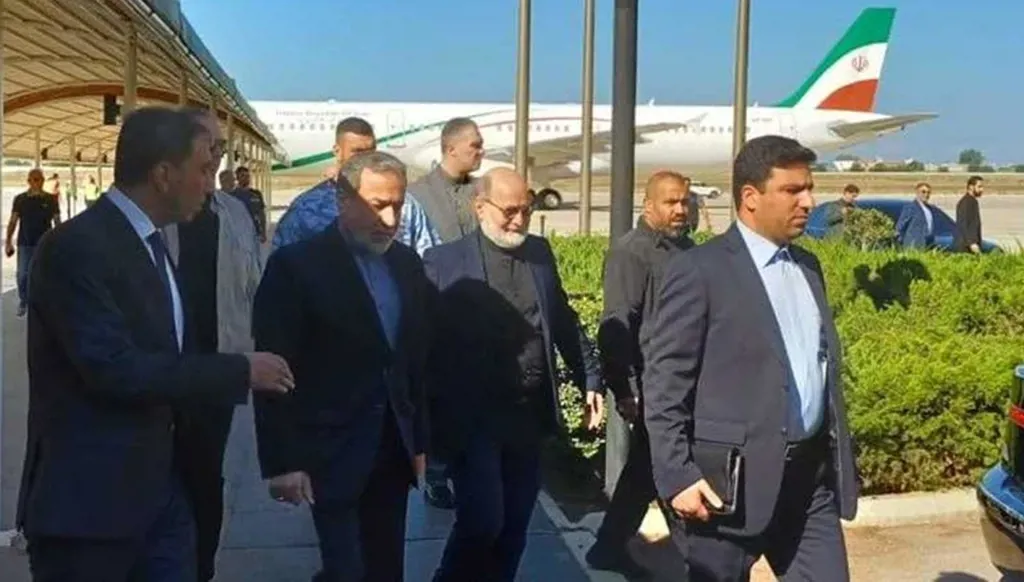


The region seems suspended on the rhythm of U.S.-Iranian negotiations in Muscat, as regional monitoring reflects fears of the failure of the diplomatic solution that several countries are working on to avoid the explosion threatening their stability.
However, the negotiations come amid massive American military mobilizations, met by Iranian alertness and the threat of extending the battle to include its branches or allies, among them Hezbollah, whose Secretary-General, Naim Qassem, declared support for Iran if attacked, asserting in a new speech that Iran is capable of defeating the United States and Israel in confrontation.
The meeting in Istanbul or Muscat falls within the framework of intense efforts to reach a deal, while Israel pressures the United States to carry out military strikes, and President Donald Trump is setting conditions for Iran in the negotiations to prevent those strikes.
Although Iran refuses to discuss its ballistic missile program, limiting negotiations to the nuclear file and the lifting of sanctions, the American conditions propose a comprehensive package, including the abandonment of missiles, the cessation of uranium enrichment, changes in the regime's policy, control over Iranian oil, and, finally, the dismantling of its arms in the region—which would mean ending its influence and ensuring Israel's security.
Regardless of the negotiations' outcome, whether failure or success, their repercussions will significantly impact the region, particularly Lebanon, Iraq, and Yemen. In the event of war, Lebanon would be the most threatened country, with Israel threatening to expand operations against Hezbollah, while the latter publicly commits, through its officials, to follow the decision of its Iranian reference and provide support in any battle.
Hezbollah also rejects the government's plan to confine its weapons north of the Litani, which leaves two possibilities: either facing Israeli strikes against Lebanon and Hezbollah, or the party cooperating with the state to hand over its weapons and facilitate the army's mission north of the river.
But the party, which announced its readiness to support Iran, is fully aware that if war occurs, it will also be drawn into the conflict. It also faces exposure in the event of a deal that aims to curb its role, as the Americans insist in negotiations on ending Iran's influence project in the region, including the party's structure and weapons. The party cannot ignore the possibility that Iran might abandon certain cards if its interests dictate, while the American plan calls for the dismantling of Hezbollah as part of the conditions imposed on Lebanon, starting with the weapons issue and extending to financing.
Any U.S.-Israeli attack on Iran will not spare Lebanon if Hezbollah continues its current approach, unable to open the southern front—unless it repeats its previous adventure, this time under the guise of self-defense. However, if the party is concerned about Lebanon and its surroundings, it cannot continue in uncalculated resistance. How, then, could it join the Iranian confrontation when its structure has already been targeted, and Israel has assassinated its senior leaders in the 2024 war? Even if it claims to be rebuilding its strength, it is incapable of fighting at the level of Gaza front support, which could lead to catastrophic consequences for the entire country.
It is not enough for Qassem to say, “We are in the defense stage of our land, rights, and existence, and we face an existential aggression that wants to eliminate us,” to justify continuing resistance against the state. Unless Hezbollah breaks its ties and repositions itself within a Lebanese framework—by engaging in the state project and leaving it to the Lebanese to develop ways later, when conditions are ripe, to liberate occupied points—it will not withstand the repercussions of an Iranian confrontation and Israeli aggression on Lebanon.
Disclaimer: The opinions expressed by the writers are their own and do not necessarily represent the views of Annahar.