Gold did not collapse and Beirut knows why


شارك على
 مسنجر
مسنجر
 واتساب
 ثريدز
ثريدز
 بريد إلكتروني
 الطباعة
شارك على


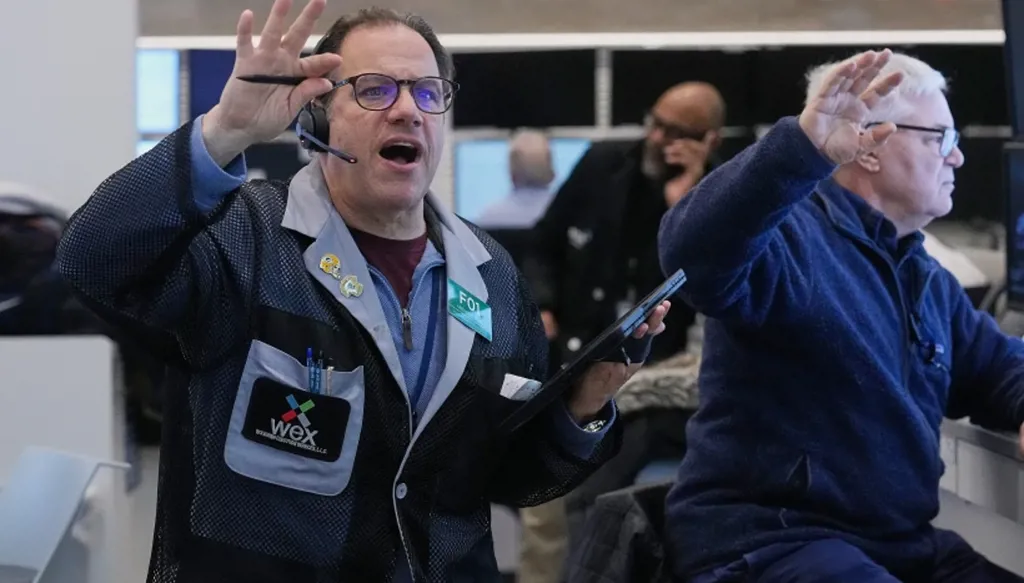


In the Middle East, the price of gold falling no longer brings calm. It brings questions. And gold rising too smoothly no longer reassures. It unsettles. That unease is not cultural; it is structural. The region has lived long enough with currency breakdowns, banking failures, and policy improvisation to understand that price movements are rarely just price movements. Yet the rules of engagement have changed. Screens now move faster than memory, leverage travels faster than caution, and even societies shaped by hard lessons are pulled into the same reflexive market behavior they once observed from a distance.
What unfolded in the past forty-eight hours was not the failure of gold as a monetary anchor. It was the exposure of a global market that increasingly struggles to distinguish between money and trade, between custody and speculation, between insurance and momentum. Gold was not rejected; it was temporarily misused.
Because we have lived long enough inside broken monetary systems to know that straight lines are a lie. We have seen currencies die quietly, banks close politely, and promises evaporate with signatures still wet on paper. We have learned, often the hard way, that stability announced is usually instability deferred.
So, when global headlines screamed that gold and silver had “collapsed,” the reaction in this part of the world was not fear. It was recognition.
This was not the failure of gold. It was the exposure of how markets, especially Western markets, have forgotten what gold is for. Gold did not abandon its role. It was temporarily miscast.
For forty-eight hours, gold was treated the way Lebanon treats bank deposits: as something liquid, tradable, levered, and available until suddenly it wasn’t. And when that illusion cracked, the sell-off that followed looked violent only to those who had mistaken liquidity for permanence.
In Beirut, we know better. Gold is not a trade here. It is custody. It is not a chart. It is a drawer, a safe, a memory passed quietly from one generation to another.
What happened in recent days was not a vote against gold’s relevance. It was a correction of a narrative that had run too far, too fast, driven by markets that had begun to behave as if uncertainty could be priced cleanly and indefinitely.
Such an assumption is foreign to this region.
When Markets Forget Memory, They Overreact.
The recent rally in gold and silver was real. It was rooted in real fears: geopolitical fragmentation, fiscal indiscipline, central banks stretching credibility, and a growing sense that the global monetary order is held together more by habit than by trust.
But the rally became crowded.
And crowded trades are dangerous everywhere, but especially dangerous when they pretend to be safe.
When too many participants hold gold not as insurance but as a position, gold stops behaving like money and starts behaving like momentum. It becomes something to be chased, margined, flipped. At that point, it no longer anchors risk; it amplifies it.
That is when the Middle East starts stepping back.
Because we have seen this movie before, not with gold but with currencies, banks, and sovereign promises. We know what happens when an asset meant to preserve value is absorbed into the machinery of leverage; it becomes fragile.
So, when positioning turned one-sided and markets began reacting to themselves rather than fundamentals, the reset was inevitable. The trigger hardly mattered. Rate expectations, dollar moves, central-bank signaling; it could have been anything. What mattered was the mechanism: forced unwinds, margin calls, evaporating liquidity.
This was not collapse; this was excess being flushed.
Silver Always Breaks First—and Beirut Knows Why.
Silver suffered more, as it always does. And again, this is not a failure of silver. It is its nature. Silver lives in between worlds. It wants to behave like gold, but it is constantly dragged back into speculation, industry, and leverage. In calm uncertainty, silver performs. In violent uncertainty, it cracks.
In Lebanese terms, silver is not the gold coin hidden away for a daughter’s wedding. It is the shop inventory that is useful, valuable, but exposed to the street.
So, when volatility spikes sharply, silver absorbs the shock first. This is what markets call “high-beta volatility.” In this region, we call it something simpler: being closest to the door when the room catches fire. Silver will remain unstable until either leverage is fully wrung out or expectations stabilize. That will take time. It always does.
Gold Is Not an Investment; It Is an Admission of Doubt.
What the recent correction did not do is far more important than what it did.
- It did not restore trust in fiat money.
- It did not signal fiscal discipline.
- It did not repair institutional credibility.
None of the reasons that pushed central banks, households, and even states toward gold have disappeared. On the contrary, they are becoming more entrenched.
Gold is not a growth asset. It is not a bet on optimism. It is not even, strictly speaking, an investment. Gold is what people hold when they no longer believe that systems will protect them from their own excesses.
That is why central banks accumulate gold quietly. That is why Lebanese families hold it silently. And that is why markets panic when they try to trade it loudly.
Gold is not meant to perform daily heroics. It is meant to sit patiently while policy mistakes accumulate.
And those mistakes are still accumulating.
The Real Crisis Is Credibility, Not Volatility.
What this episode truly exposed is not the fragility of gold, but the fragility of the institutions meant to anchor trust.
When markets can no longer distinguish between a reserve asset and a trading chip, the problem is not volatility. It is credibility.
In Lebanon, we learned this lesson early. When money becomes narrative-driven rather than discipline-driven, people flee to things that cannot be printed, promised away, or restructured overnight.
Gold survived this sell-off because it was never the problem. The problem was a system that tried to turn it into something it was never meant to be.
Markets did not lose faith in gold and silver. They lost patience with exaggeration. And from Beirut to Riyadh to Cairo, that lesson feels uncomfortably familiar and quietly reassuring.
Because corrections cleanse excess; but memory preserves value.
And in this part of the world, memory has always been the most reliable asset of all.
Disclaimer: The opinions expressed by the writers are their own and do not necessarily represent the views of Annahar.
العلامات الدالة
الأكثر قراءة