

United Nations under attack: Navigating threats to legitimacy


 Messenger
 Whatsapp
 Threads
 Email
Email
 Print
Print
 X
X
 Facebook
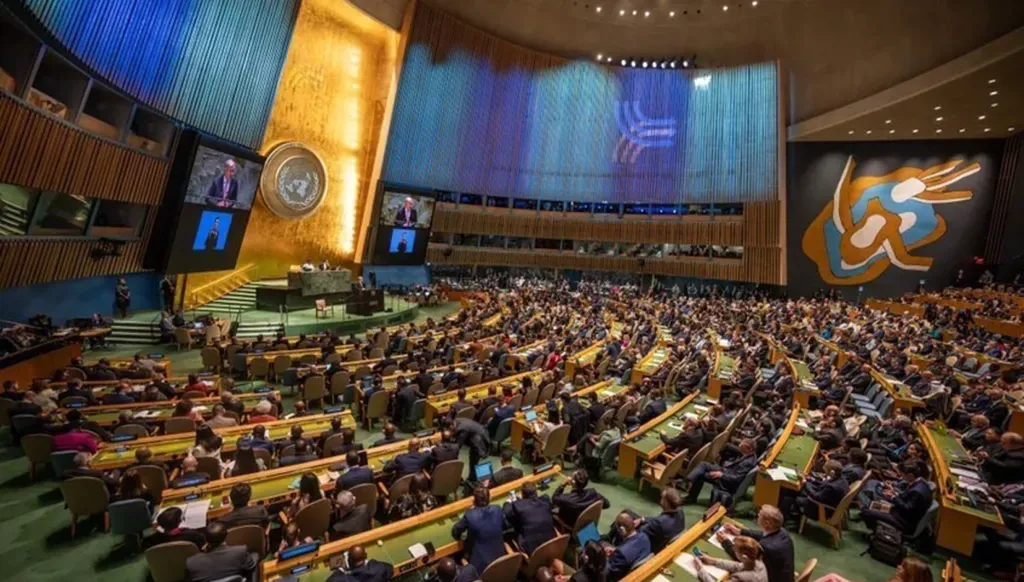


The United Nations is used to facing significant global challenges, but many today threaten to undermine its very existence. Among these, U.S. President Donald Trump has pushed for a "Peace Council," not only to address the crisis in Gaza, but possibly to build a parallel institution capable of addressing future international conflicts.
Following the UN's establishment post-WWII, the Cold War provided the institution its first major challenges. Global polarization between the Eastern and Western blocs and the rise of the Non-Aligned Movement ensured that the UN system was never free of significant obstacles. Since the Cold War's bipolarity collapsed, the international system has drifted from unipolarity towards multipolarity, driven forward by discontented parties seeking solutions outside the UN mandate. The United Nations, however, grew into its new role, providing frameworks like the "Millennium Development Goals" and subsequent "Sustainable Development Goals" around the turn of the century.
Prior to these successes 1980s, the United Nations faced continuous waves of criticism, political and media attacks, and serious threats from some major Western countries, particularly the United States under President Ronald Reagan and the United Kingdom under Prime Minister Margaret Thatcher. During the same period, several Western countries also withdrew from membership in various specialized international agencies within the UN system. However, during that period, no comprehensive alternative to the UN system was proposed, nor did anyone call for its complete abolition or replacement. The demands were for reform, a process that soon began at both the governmental and Secretariat levels.
The latest proposal from U.S. President Donald Trump could threaten the very existence of the United Nations, going further by proposing an alternative to the UN Security Council in the form of a "Peace Council." However, it has not yet received the international support it seeks—not only from countries competing with the United States on the global stage but also facing criticism from significant states within the broader Western coalition. Some of these states have expressed reservations about the continuation of the "Peace Council," calling instead for its mandate to be limited to conditions in Gaza.
Although many agree that the UN system has achieved less than was hoped, there is also broad recognition that it remains a useful forum for discussion. It has helped stave off global conflict, established foundations for international cooperation, supported economic and social development—particularly important to Global South countries—and provided a platform for tackling existential risks. The UN system has enabled humanity to make significant strides in the empowerment of women, the protection for children and the elderly, the construction of public health and education infrastructure, and thousands of other discreet issues globally.
Consequently, the UN system finds defenders across the globe—from states leaders to civil society organizations, and thousands of others. UN Secretary-General António Guterres announced in March 2025 a series of reform measures within the Secretariat, emphasizing that the future of the system depends on the support of member states.
Disclaimer: The opinions expressed by the writers are their own and do not necessarily represent the views of Annahar.