

Iran’s crisis from the GCC perspective: the risks of political upheaval
Assessing the political, military, and economic repercussions of instability in Iran and their impact on Gulf and regional security.


 Messenger
 Whatsapp
 Threads
 Email
Email
 Print
Print
 X
X
 Facebook
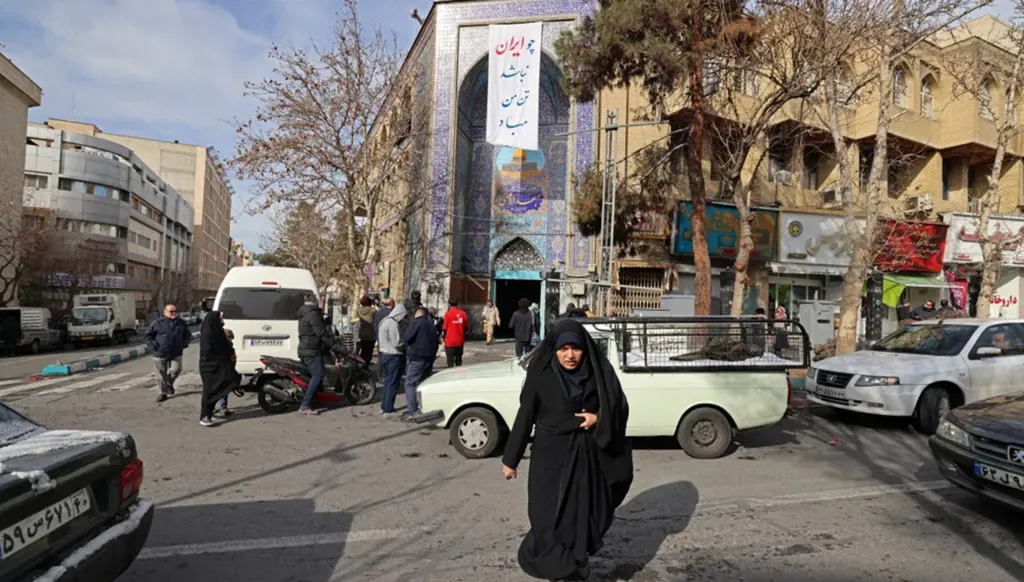


The widespread Iranian protests which began in December 2025 led to the deaths of hundreds of civilians and security personnel. When President Donald Trump seemed to encourage protestors and threaten the regime, commentators braced for potential U.S. strikes. However, it appears that several diplomatic contacts and regional mediations prevented this outcome, seeking to curb the ongoing escalation and to spare the Gulf region the consequences of any negative repercussions.
Countries of the “Gulf Cooperation Council” treated the demonstrations as an internal matter between the people and the government, in line with their policy of good neighborliness and non-interference in the internal affairs of states. The alternative—persistent chaos, the proliferation of armed groups, the rise of ethnic, sectarian, or religious dogma—is seen as far more threatening.
This “chaos” is not in the interest of the Iranian people, who have the right to live with a degree of dignity, development, and economic well-being. Therefore, it is not in the interest of the Arab Gulf states for chaos to exist near them, producing a vacuum for which there is no institution or qualified leadership capable of filling it.
Anyone who reads the scene with a neutral political mind will reach the conclusion that the political system in Iran will not collapse quickly, but will instead erode gradually and deeply if genuine, structural reforms do not emerge from within the institutions. However, in the event of a sudden collapse of the Iranian regime as a result of external military intervention, a scenario that is currently unlikely, a complex danger would emerge, namely the disintegration of central authority within a state that possesses non-conventional military capabilities, drones, ballistic missiles, and cross-border networks of influence. This would lead to the proliferation of armed actors that are not subject to conventional deterrence.
This would coincide with threats to maritime navigation security and oil supplies, which would automatically lead to higher shipping and insurance costs, as well as political and economic pressure on Gulf producers.
Added to all this are the growing risks to nuclear security in the event that institutional control over materials and facilities became weakened, a situation that could trigger external interventions and expand the scope of military confrontation. At the same time, regional proxies would shift from being tools of influence to semi-independent actors seeking to impose their influence through potentially more-bellicose missile attacks, maritime sabotage, and the targeting of the economic infrastructure in neighboring states.
Repercussions would quickly spill over into fragile arenas, foremost among them Iraq, Yemen, and even Syria and Lebanon, threatening commercial security and possibly aiding the ongoing drug-smuggling networks connecting Afghanistan to the region.
Reaching practical, peaceful solutions to regional grievances on Iran would help improve its economy and ease sanctions. If this is accompanied by a change in the way the regime is governed and in its political doctrine, the outcome might serve the interests of the Iranian people and the broader region.
Disclaimer: The opinions expressed by the writers are their own and do not necessarily represent the views of Annahar.