

Iran in turmoil: What today’s protests reveal about the 1979 Revolution


 Messenger
 Whatsapp
 Threads
 Email
Email
 Print
Print
 X
X
 Facebook
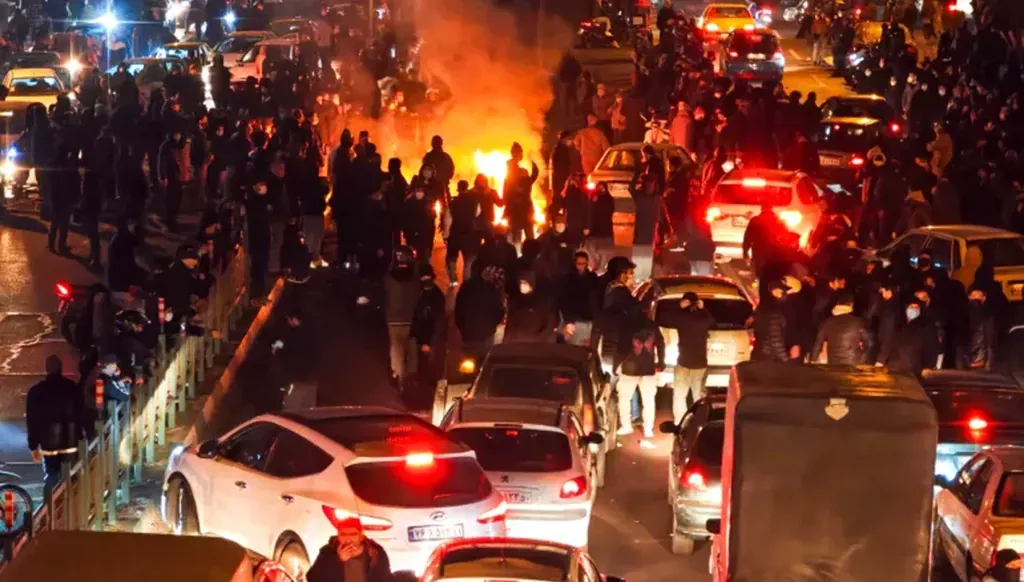


The recent protests in Iran may bear some resemblance to the demonstrations against Shah Mohammad Reza Pahlavi between 1978 and 1979, but that is largely where the similarity ends. At the time, I was in Tehran as a journalist covering the revolution that ultimately gave rise to the Islamic Republic of Iran. Like today, the government then used mass repression against protesters. However, the Shah failed to implement the extreme measures his successor Ayatollah Ali Khamenei uses today.
This is not to say that the Shah’s supporters and senior military leaders were unwilling to act decisively against the revolutionaries. On the contrary, they were fully prepared for a military confrontation. Among them was Ardeshir Zahedi, the Shah’s influential son-in-law, who held key roles including ambassador to the United States. Also included were General Manouchehr Khosrodad, founder of the Iranian army’s aviation wing; Nematollah Nassiri, head of the feared SAVAK intelligence agency; General Reza Naji, a prominent commander enforcing martial law in Isfahan; and Police Chief Mehdi Rahimi, tasked with implementing martial law decisively, including authorizing the killings of thousands to protect the Shah’s regime.
What became of these individuals after the Islamic Revolution took hold? General Khosrodad and Police Chief Mehdi Rahimi were executed on the roof of a school just days after power shifted decisively to Ayatollah Ruhollah Khomeini, who replaced the Shah on February 11, 1979. That day marked a turning point for the Shah—an irrevocable loss of power as his army, once considered unbeatable, failed to suppress the revolution. Faced with the inevitability of defeat, the Shah decided to leave Iran with his son and heir, Reza Pahlavi.
Today, some Iranians still demonstrate with pictures of Reza and chant his name, hoping for a restoration of the monarchy even fifty years after his father’s exile—but such hopes are largely unrealistic. At 4:30 PM on February 11, 1979, the Shah officially exited the country. In the immediate aftermath, millions flooded the streets of Tehran in support of Khomeini, who had returned from exile days earlier, defying the state of emergency imposed by Shah-appointed Prime Minister Shapour Bakhtiar.
With the departure of some of the Shah’s leaders aboard military helicopters, protesters quickly took control of government buildings, military bases, and the main radio headquarters. The Shah could have walked through Tehran amid hundreds of thousands of bodies if he had chosen to resist, but he instead acknowledged defeat. Although the army had declared its neutrality, Khosrodad waited for the Shah’s order to fire on demonstrators—but that order never came, as the Shah feared that a massacre could jeopardize his son’s succession.
A key difference between then and now is the state of the military: on February 11, 1979, it began to disintegrate and fracture from the moment of the Shah’s departure, sealing the fate of his regime.
What is the difference between yesterday’s Islamic Revolution and today’s protests in Iran, which resemble the early days of that revolution? The difference is that today, the military, the Revolutionary Guards, and other significant forces established by the Islamic Revolution remain firmly on the side of the regime. They have not abandoned it—at least not yet—unlike what happened with the Shah. These forces have all demonstrated cohesion, ideological commitment, and deep integration within Iran’s oppressive system. None have shown signs of potential division, whether in the Basij paramilitary militia, the police, or the intelligence services.
It appears that the Revolutionary Guards are responsible for the large number of demonstrators—whether hundreds or thousands—who have been killed. Iran has held funerals for more than one hundred Revolutionary Guards members and other security personnel who have died in clashes with protesters.
In 1979, Khomeini relied on a network of mosques and charitable organizations as the infrastructure for a new national administration. Khomeini enjoyed support from various sectors of society, including Iranian conservatives, labor unions, secularists, technocrats, and ethnic minority leaders, all of whom believed the clergy would need them to govern Iran in the long term after expelling the Shah from power.
What differentiates the 1979 demonstrations from today’s outpouring of discontent with the regime? Even before Khomeini appointed Mehdi Bazargan as the first prime minister under the revolution, he and his son and son‑in‑law Hossein Ali Montazeri were actively working to show what the Islamic Republic meant, both in structure and organization.
As for Reza Pahlavi, the Shah’s son who has not visited his country since leaving it 47 years ago; he has supporters in the Iranian diaspora, but his support within the country is unclear. Furthermore, he has yet to announce a comprehensive plan for Iran were he to return as a leader or politician.
It’s worth noting that the pillars of the 1979 revolution, such as the bazaar and the clergy, now seem divided. There is no doubt that today’s demonstrators will be able to demand inevitable change once the street calms down and order is restored, but it is likely that change will come from within the regime. Any regime dominated by the Revolutionary Guards will be very strict, possibly experiencing a situation similar to that of Maduro in Venezuela.
In 1979, Khomeini expelled or rejected American supporters. His followers seized the U.S. Embassy in Tehran and held 52 Americans hostage there for 444 days. Even if the United States lifts sanctions on Iran today, the country would struggle to solve its economic crisis—a crisis that could pave the way for numerous popular demonstrations, causing fractures within the regime that might topple it entirely.
This historical and informational analysis is based on careful research conducted by a non-Arab Asian scholar who has closely followed the Iranian Revolution since its inception.
Disclaimer: The opinions expressed by the writers are their own and do not necessarily represent the views of Annahar.