

On the edge of conflict: U.S. and Iran trade threats amid military moves


 Messenger
 Whatsapp
 Threads
 Email
Email
 Print
Print
 X
X
 Facebook
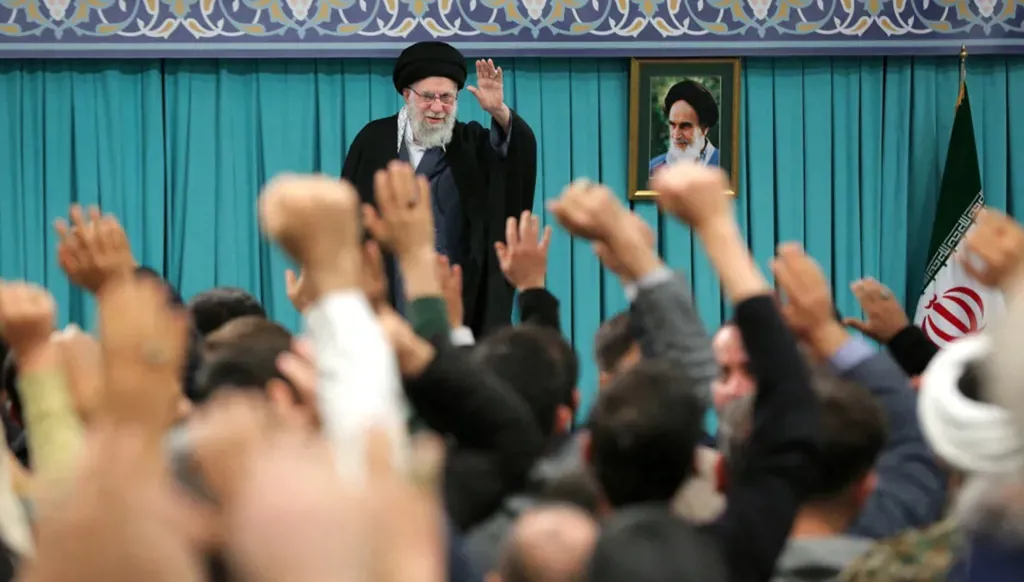


In recent days, mutual threats between Iran and the United States have escalated, raising concerns about the possibility of another war in the Middle East. This threat has been reinforced by the deployment of American military reinforcements to the region, including the aircraft carrier Abraham Lincoln and accompanying fighter jets.
The threats, along with the accompanying military buildup, come at a time when U.S. President Donald Trump is sending mixed signals regarding his actual policy toward Iran. Last week, he told "Reuters" that he doubts Reza Pahlavi, the son of the former Shah, will gain sufficient support within Iran. Yet, in an interview with "Politico," he suggested that “the time has come for Iran to look for new leaders,” implicitly referring to Supreme Leader Ayatollah Ali Khamenei.
This statement provoked the Iranian government, leading President Masoud Pezeshkian to warn on Sunday that "any attack on Supreme Leader Khamenei will be considered a total war against the Iranian nation."
Subsequently, the spokesperson for Iran’s Armed Forces General Staff, Major General Abolfazl Shekarchi, told Iran’s official media: “Trump knows that if a hand of aggression reaches toward our leader, we will do far more than cut off that hand. This is not merely a slogan—we will set their world ablaze and leave them nowhere safe in the region.”
Trump was quick to respond to the Iranian warnings, saying in an interview with News Nation on Tuesday: “I have given very strict instructions. If anything happens, they will be wiped off the face of this earth.”
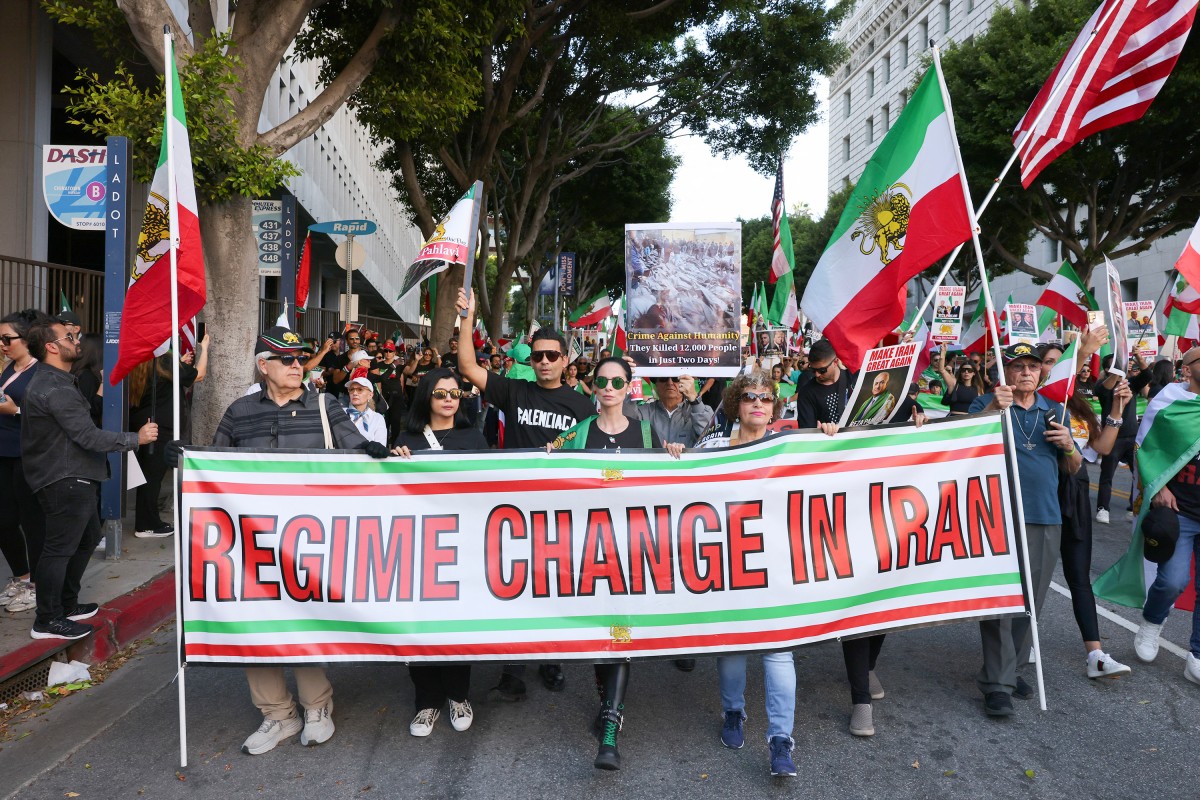
Last week, Trump stepped back from his threat to bomb Iran after noting that Iranian authorities had refrained from executing 837 participants in protests that began on December 28 of the previous year. The demonstrations initially demanded improved living conditions but later escalated into calls for the regime’s overthrow. Security forces suppressed the protests, framing them as a continuation of the Israeli-American campaign against Iran launched last June.
According to The Wall Street Journal, despite stepping back from authorizing a strike, Trump continues to press his aides to explore what he describes as “decisive” military options against Iran. These range from pursuing a strategy aimed at overthrowing the regime to more limited measures, including targeted strikes on facilities belonging to the Islamic Revolutionary Guard.
The central question in the American debate remains whether aerial strikes alone could bring about the regime’s collapse—and, if protesters were to return to the streets and appeal to Trump for protection, whether such strikes would last for weeks or stretch into months.
While the Trump administration weighs its options, it deployed F-15E fighter jets to Jordan on Sunday, and the aircraft carrier Abraham Lincoln, along with its strike group, is sailing from the South China Sea toward the Gulf. Onboard are F-35 fighters, additional aircraft, and electronic warfare planes. The U.S. is also expected to position Patriot and THAAD air defense systems in the region.
American officials recognize that any military intervention in Iran would not resemble the swift operation in Venezuela that resulted in the capture and removal of President Nicolás Maduro to U.S. custody.