

Syria’s Kurds cut out again: Power and politics over autonomy


 Messenger
 Whatsapp
 Threads
 Email
Email
 Print
Print
 X
X
 Facebook
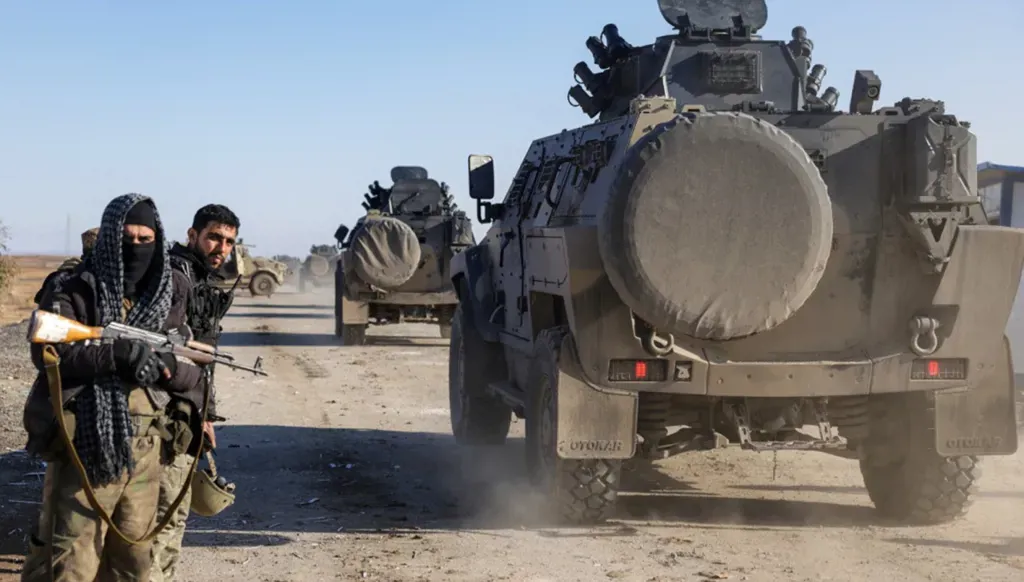


A significant regional and international moment has unfolded in Syria in recent hours. This appears to be part of the ongoing external response to the major shift on December 8, 2024—the day the Bashar al-Assad regime fell—which has since gone through several phases, ultimately strengthening the position of President Ahmad al-Sharaa’s government. Observers tracking tensions between Damascus and the Syrian Democratic Forces (SDF) can clearly see foreign capitals actively seeking to shape a new turning point in Syria’s unfolding trajectory.
Damascus’s decision to end the armed standoff in Aleppo’s Sheikh Maksoud and Ashrafiyah neighborhoods appears to have set in motion a series of developments unfolding by the hour. The SDF recognized that the Aleppo front was merely one link in a broader chain of events. This helps explain why the SDF avoided engaging in what they saw as a peripheral battle, distancing themselves from a confrontation that Damascus was able to resolve swiftly, ultimately leading to the city’s evacuation.
While the swift resolution took many by surprise—especially those anticipating the “Mother of All Battles” in the city—the SDF appeared focused on delaying any major confrontation. They downplayed the likelihood of such a battle, instead relying on a signal from their primary backer in Washington to secure a favorable outcome amid a chain of events teetering dangerously toward tragedy.
Reports indicate that the SDF was taken aback by the rapid advance of Damascus’s forces—not only militarily, but also by the confidence with which they moved. The development suggested that the Syrian state had received a green light to establish successive on-the-ground realities before the international environment, particularly in Washington and the White House, could shift. Earlier this month, a Paris meeting that brought together Syrian and Israeli officials, attended by U.S. Special Envoy Tom Barrack, pointed to a significant step forward in the process toward finalizing an agreement between the parties.
No information has emerged regarding the SDF’s involvement in those talks. Yet the conspicuous silence of Israeli official channels—even as some SDF leaders issued “SOS calls”—suggests that the agreements reached between Damascus and Tel Aviv in Paris were clearer, more concrete, and better supported by Washington than those reportedly made in Baku in July 2025. At that time, the parties were said to have reached understandings on the Sweida file, yet the subsequent Israeli military action, including airstrikes on Damascus, exposed what U.S. Secretary of State Marco Rubio later described as a “misunderstanding.”
In recent days, Damascus’s forces crossed the “forbidden” Euphrates River to the east, signaling that a military option had become part of the strategy to resolve the dispute. Observers and the SDF quickly recognized that this move was likely backed by the United States, aimed at pushing negotiations toward a final resolution. The SDF fully grasped the shifting dynamics and sought to gauge Washington’s position. A meeting in Erbil between U.S. Special Envoy Tom Barrack and SDF leader Mazloum Abdi, attended by President Masoud Barzani, conveyed clear messages and expectations. Just hours after the meeting, it was announced that Damascus and the SDF had reached a comprehensive agreement, formalized by the in-person signature of President Ahmad al-Sharaa and the remote electronic signature of General Mazloum Abdi.
In the past few hours—particularly during a period described as critically dangerous—following the collapse of a five-hour meeting in Damascus the previous day, which was meant to finalize a new agreement, communications intersected between Riyadh, Doha, Ankara, Paris, and Washington to persuade the undecided parties that the matter should be concluded. It required direct communication from U.S. President Donald Trump to President al-Sharaa, with Trump’s subsequent praise of al-Sharaa reflecting the sentiment conveyed later by Barrack’s statement: “The SDF mission is over.”
The “Game of Nations” has once again dealt a harsh blow to the Kurds in the region. Excluded from the original Sykes-Picot arrangements, their aspirations for autonomy—most notably President Masoud Barzani’s 2017 referendum aimed at opening a path toward regional independence—were thwarted, with even leader Abdullah Öcalan eventually recognizing its futility. The SDF underestimated the severity of this geopolitical “game” and the calculated interests of powerful actors, which can swiftly crush ambitions that once seemed within reach.
Disclaimer: The opinions expressed by the writers are their own and do not necessarily represent the views of Annahar.