

When Hezbollah’s weapons outlive their purpose


 Messenger
 Whatsapp
 Threads
 Email
Email
 Print
Print
 X
X
 Facebook
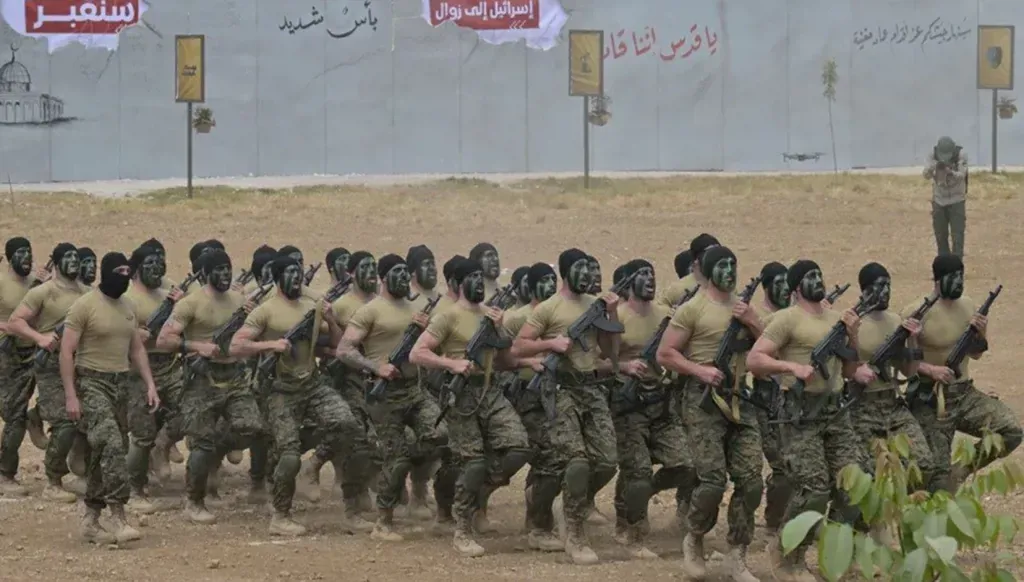


Lebanon cannot remain detached from the developments unfolding across the region and their repercussions on its internal situation. From Iran coming under continued U.S. attacks, to Syria entering a new phase following the government’s confrontation with the SDF, the region is experiencing a period of instability that is bound to affect Lebanon. These dynamics must be closely monitored, particularly in light of Israel’s persistent threats to expand military operations against Hezbollah, which continues to reject placing its weapons under state authority.
Attention is focused on forthcoming U.S. decisions regarding key regional issues, as any operation against the SDF cannot take place without American approval and an understanding with Turkey that addresses Ankara’s national security concerns and its objectives on the Kurdish issue. These dynamics are accelerating Syrian-Israeli negotiations over security arrangements. As a result, Lebanon remains caught in a tug-of-war and exposed as a potential battleground, with Washington pressing for Hezbollah’s disarmament while Iran works to rebuild its capabilities in preparation for confrontation or a possible war.
The Lebanese state has taken a decision to pursue disarmament, with President Joseph Aoun laying out guiding principles that begin with demanding an end to attacks and Israel’s withdrawal from occupied positions, followed by diplomatic negotiations and a rejection of reckless ventures. The real challenge, however, lies in implementation and in persuading Hezbollah to relinquish its weapons, which were originally justified as tools of resistance against Israel.
Alongside implementing its disarmament plan, the state is required to develop a comprehensive roadmap that would spare the country an Israeli war and shield it from ventures that could plunge it into uncalculated risks—especially as Israel seeks to impose additional negotiating conditions within the existing Mechanism committee and reveals plans for a buffer zone.
The state bears the responsibility of clearly informing Hezbollah that escalating its position in line with its external reference, openly rebuilding its military capabilities, and clinging to its weapons only provides pretexts for continued occupation and undermines the state’s plan to assert its authority. Hezbollah, fully aware that the region is entering a new phase, cannot indefinitely maintain its denial—particularly as its ally Hamas has agreed to surrender its weapons in Gaza. If Hezbollah’s current opposition is framed as confrontation while it remains unable to respond to the occupation’s attacks, this suggests that it is retaining its weapons for a later stage linked to U.S.–Iranian negotiations. In doing so, it neither intends to hand over its arms to the state nor to facilitate its mission. Instead, the weapons are leveraged in support of Iran and positioned within the context of Iranian negotiations as a bargaining card in Lebanon, with the party presenting its structure as existing outside state authority to invite direct negotiations.
Hezbollah continues to bet on the regional negotiation track, repositioning itself as a regional power despite being fully aware that Israel is waiting for opportunities to carry out broader strikes against its positions under the pretext of its refusal to disarm. While Washington does not currently seek such escalation and instead favors arrangements aligned with its own vision—thereby granting Lebanon time and giving the state an opportunity to advance the disarmament process—this window will not remain open indefinitely. The United States is expected to intensify pressure on Lebanon to make greater progress in parallel negotiations with Israel, moving beyond the stalled Mechanism committee meetings. The focus, as defined by Washington, is on drawing Lebanon into comprehensive negotiations as a condition for halting Israeli military operations.
It has become evident that the party is retaining its weapons to serve its reference rather than to defend Lebanon, while its internal structural crisis is constraining its regional maneuverability and fueling fears of a slide toward chaos and catastrophe.
Disclaimer: The opinions expressed by the writers are their own and do not necessarily represent the views of Annahar.