

Between weak budgets and absent strategies: The crisis of cultural governance in Algeria


 Messenger
 Whatsapp
 Threads
 Email
Email
 Print
Print
 X
X
 Facebook
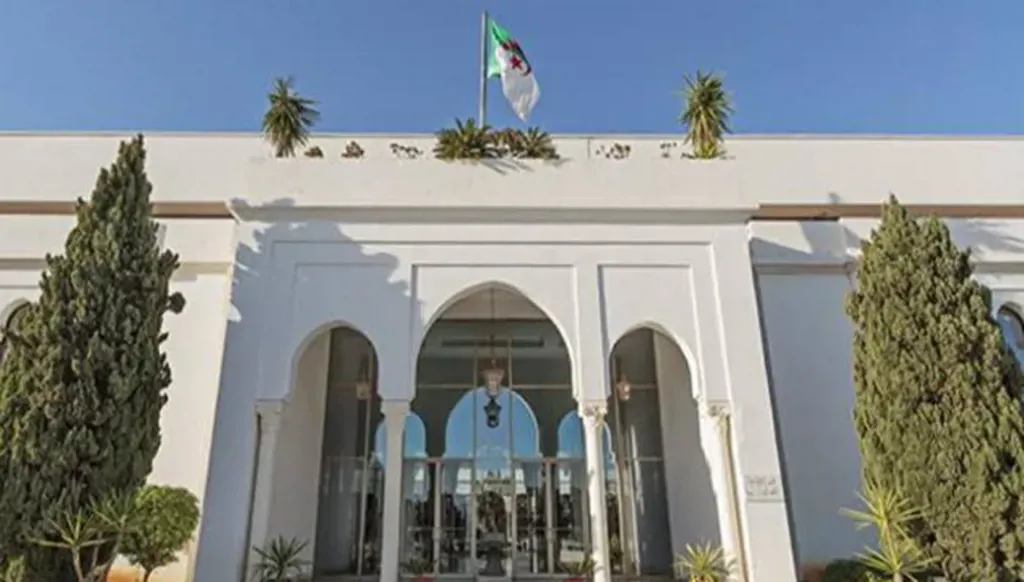


The financial budget of Algeria’s Ministry of Culture is the weakest compared to the budgets of other ministries. Politically, the Ministry of Culture is not classified among the “sovereign ministries” such as Education, Defense, Interior, or Foreign Affairs, even though all threads of national unity and Algeria’s historical, civilizational, social, and psychological national identity are tied to this ministry.
The French-Algerian confrontation since independence up to the present, for example, stems from France’s questioning of whether there was an Algerian state identity before colonial occupation. This means that the cultural issue is at the core of this identity and represents the fundamental pillar in its structural framework.
The ethno-linguistic and cultural question in Algerian society is supposed to occupy a central position, yet for years it has been exploited by certain parties known for their project aimed at dividing the country.
Despite the crucial importance of the cultural dimension in Algeria, most of the officials entrusted with the Ministry of Culture are either party members, diplomats, administrators, or ordinary university graduates, whose relation to culture is limited to political protocol or to very traditional, occasional cultural and artistic activities.
In reality, the higher councils affiliated with the Presidency of the Republic that have cultural and linguistic functions, such as the High Council for the Arabic Language, the Amazigh Observatory (the High Commission for Amazigh), and the Algerian Academy for the Arabic Language, are run by university graduates or cultural activists coming from civic associations and organizations. In all these cases, serious cultural work is entirely absent.
If we take the Amazigh Observatory, which is supposed to specialize in promoting, disseminating, and developing the Amazigh language and culture, we find that at the level of concrete, on-the-ground results it has not achieved any modernization of the Amazigh language, which has not even settled until now the question of which alphabet it should be written in. Nor has this Observatory produced even a single regional newspaper in this language, which still lacks the foundations of a "metalanguage", such as the language of intellectual critique, or scientific concepts and terminology in fields like physics, medicine, and the other human sciences.
The Amazigh Observatory has not played any active role in collecting, publishing, printing, or translating the cultural and artistic output that characterizes Amazigh culture.
In this climate, we find that Algeria’s Ministry of Culture continues to confine its role to routine formalities, such as honoring writers and artists loyal to the regime, issuing paper diplomas for those honored, and holding repeated meetings with provincial cultural directors. As a result of this approach, it does not possess major cultural initiatives of national, regional, Arab, or international scope, except for organizing the Book Fair, which repeats the same generic books and the same invited figures every year. As for cultural decision-making, it falls under the authority of the adviser to President Abdelmadjid Tebboune for media and cultural affairs.
Furthermore, the Ministry of Culture does not have the authority to appoint or recommend cultural attachés in foreign countries, a responsibility that has remained under the Ministry of Foreign Affairs since independence.
There is another structural problem: the Ministry of Culture’s building is devoid of prominent intellectuals and experienced cultural management specialists with long, productive experience in designing and activating major cultural strategies, such as developing the book industry according to modern standards.
In addition to this, the cultural legislation governing the Ministry’s administration is unfair to artists, writers, and cultural actors involved in national cultural production. These prevailing laws undermine the rights of impoverished authors and block the pathways for the free distribution of cultural and artistic output at the Maghrebi, Mashreqi, Arab, and international levels.
Disclaimer: The opinions expressed by the writers are their own and do not necessarily represent the views of Annahar