


 Messenger
 Whatsapp
 Threads
 Email
Email
 Print
Print
 X
X
 Facebook


This narrative, which gained traction in some circles and was sold to a wide audience without scrutiny, prevailed during the days of the Arab Cold War. This idea was debunked by the American expert Gregory Gause when he published a book in 2011 titled "The Power and Legitimacy in Saudi Arabia." The book refuted that claim by emphasizing a fundamental truth in international politics: interests are not static, alliances are not contracts of submission, and states that efficiently manage themselves know when to say "yes" and when to say "no" in international issues.
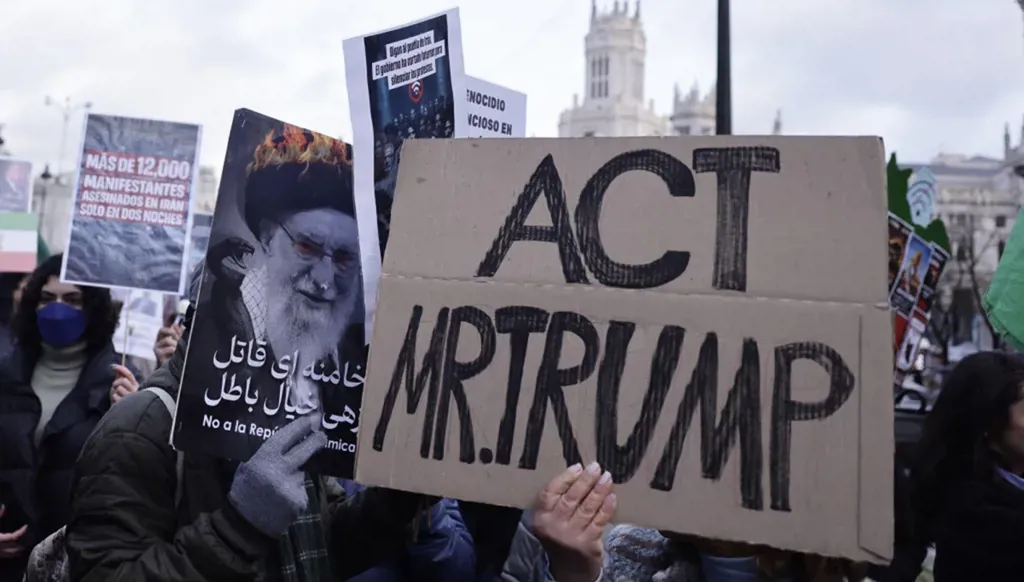
From this perspective, Saudi Arabia's stance on key global and Middle Eastern issues can be understood. For instance, despite repeated American calls for war against Iran, especially during the peak of recent internal Iranian unrest, Saudi Arabia took not just a political stance but an ethical one by opposing the idea.
Had Saudi Arabia been acting as a follower, as those ideas promoted by some Iran-aligned platforms claim, it would have logically engaged in the escalation, or treated the Iranian crisis as a strategic opportunity to reshape balances through force, given Iran's long-standing actions that have destabilized regional security under ambiguous slogans such as "exporting the revolution and supporting the oppressed." However, the opposite happened; Riyadh chose to reject war, driven not by sympathy for the Iranian regime, but by state calculations and a deep understanding of the costs of open conflicts on the entire region.
In this context, the aforementioned book, published by Cambridge Press and later translated into Arabic, provides an important explanatory framework as the author refutes the simplistic portrayal of the Saudi state. The book does not deny the strong ties between the U.S. and Saudi Arabia but deconstructs the myth depicting Saudi Arabia as a will-less state.
The relations between Riyadh and Washington, as Gause wrote, have always been based on mutual interests, constant negotiation, and adaptation to international changes. When Arab interests are endangered, Saudi Arabia takes an opposing stance, as happened in the 1973 War (oil embargo). The relationship between the two poles is not one of orders and execution but of understanding and negotiation. This understanding explains why Saudi Arabia does not see itself obliged to automatically agree with any military option against Iran when it sees that the results would be catastrophic.
The rejection of war on Iran reflects Saudi awareness of shifting power balances and the nature of the international stage. The world is no longer governed by the logic of single polarity, and military adventurism is no longer an effective tool for achieving stability. Recent regional experiences have shown that toppling states is much easier than rebuilding them, and chaos, once it begins, does not recognize borders. Hence, the Saudi position, coupled with a Gulf stance, is a sovereign decision aiming to shield the region from another confrontation for which the Gulf would bear the cost.
Yet this stance was not purely political; it carried a clear ethical dimension rarely present in extreme tension moments. Saudi Arabia did not gamble on the collapse of Iran's interior, nor did it use street protests as a pressure tool or negotiating card, considering that an internal affair for the Iranian people to decide. It chose to separate the disagreement with the regime from the society's suffering and its right to express that suffering, a precise distinction reflecting an advanced understanding of a state's responsibility in its regional surroundings. States that respect themselves do not build their strategies on others' pains, nor see chaos as a gateway to achieving gains.
In this sense, Saudi Arabia offered the Iranian regime a political and ethical opportunity at once. An opportunity to rethink the relations with its neighbors, which the Iranian regime has long disrupted, and to realize that rejecting war does not mean acceptance of the ongoing Iranian policies in the region or overlooking interference in Arab affairs. Rather, it is a message that the door to state transformation remains open, moving away from revolutionary ideas that have only brought ruin to Iran.
At the level of Gulf security, this choice had a tangible impact. It contributed to lowering tension, alleviating internal polarization, and preventing maritime routes and energy markets from becoming confrontation arenas.
The question remains directed to Tehran: will it grasp this signal? The political ethics that governed the Saudi stance do not imply leniency towards expansionist policies or the use of proxies to destabilize security and obstruct development. These are disciplined ethics, recognizing that pragmatism detached from values turns into destructive pragmatism, accumulating crises instead of solving them. Experience has proven that interference in Arab states' affairs has not resulted in stable influence for Iran or political gains, but in open conflicts and a prolonged drain on Iranian resources at the top of the list, rather than being used in internal development, which the Iranian society urgently needs.
Saudi Arabia's stance towards Iran shows that Riyadh operates according to the logic of the modern state: balancing interests, awareness of costs, and ethical limits on what can be done even in the peak of disagreement. It thus provided a genuine opportunity to reset regional behavior. The question is not why Saudi Arabia opposed the war, but whether the other party, namely Iran, can comprehend this message and change its policies in the region. The biggest mistake the Iranian regime can make is to interpret the "pause period" as a victory for the Iranian narrative, as some promote, and thus continue on the same path; herein lies the disaster!
For many years, the Arab political discourse, especially among those who call themselves "revolutionaries of the stage," has been dominated by the notion that Saudi Arabia moves within a margin drawn by Washington and is summoned when needed to execute major policies without the option of refusal.