

January 17: UAE Day of Solidarity


 Messenger
 Whatsapp
 Threads
 Email
Email
 Print
Print
 X
X
 Facebook
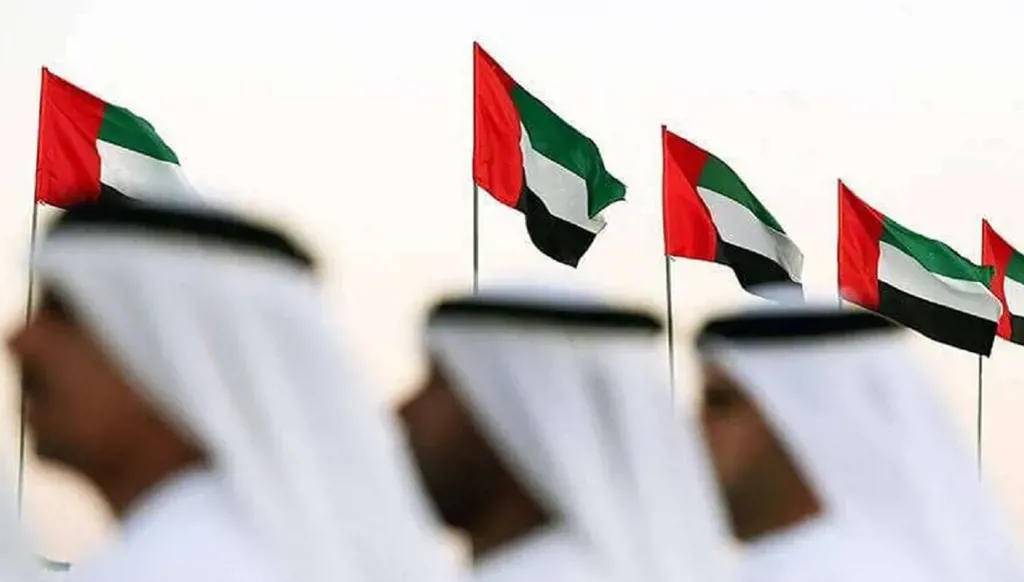


On 'Day of Solidarity,' the seventeenth of January returns not as a tale to be told, but as a stance to measure the essence of a state when targeted.
On January 17, 2022, the UAE faced a terrorist attack executed by the Houthis in an attempt to test its security and stability and to disrupt the image of a nation confidently pursuing its path. The targeting was renewed after a few days, confirming that the objective was to target civilian facilities and disrupt an entire lifestyle, not merely sending a security message. However, the response was neither reactionary nor confused; it was a display of national cohesion and swift institutional action, uniting the community and affirming that the union does not retreat when its security is compromised, and that readiness is not a temporary condition, but part of the state's identity and its ability to maintain its superior model.
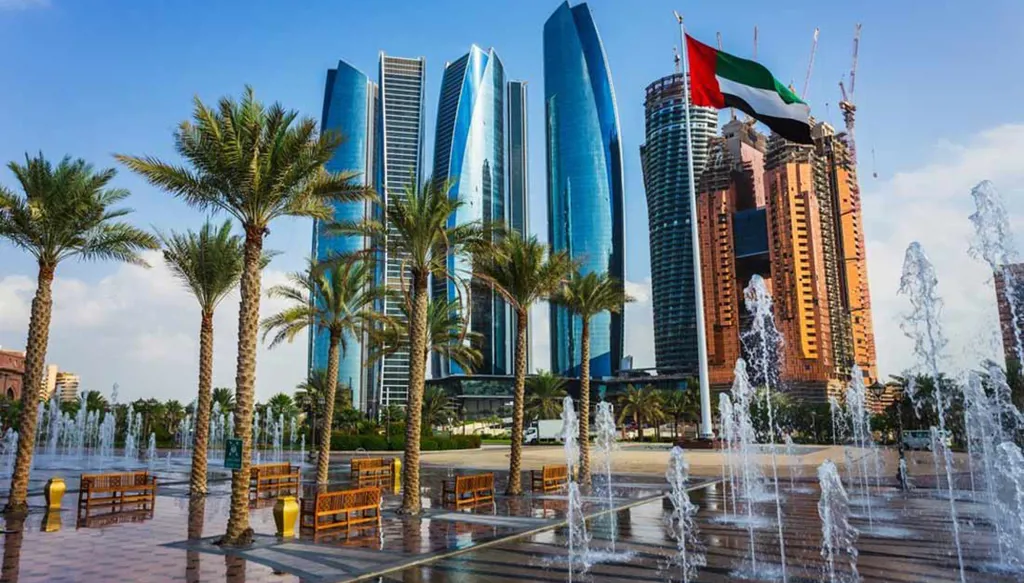
Thus, the name 'Day of Solidarity' was born; solidarity is the title that befits those hours when the UAE stated that its security is not open to compromise. As His Highness Sheikh Mohammed bin Zayed Al Nahyan emphasized, "We are advocates of peace, goodness, and love, but at the same time, we possess determination and resolve when it comes to threats against our security." Therefore, the commemoration does not come to alter the country's approach, but to reaffirm it as it has been since the union was established. A state that opens its doors to peace and work, knows when to close them to danger, and continues its journey with confidence.
The fourth anniversary of 'Day of solidarity' reiterates what happened on that day as it was. Both citizens and residents experienced the same hours and saw how state institutions operated with calmness, effectiveness, and transparency, maintaining the regularity of life. This highlights the natural image of cohesion between leadership and people, with steadiness in decision-making and unity in stance.
It was evident that day that the message extended beyond the borders of the UAE. International stances issued were not merely procedural but a clear stance against the logic of targeting stability through terrorism. This was reflected in statements of condemnation and solidarity from major Western capitals, alongside clear regional positions affirming the UAE's right to protect its security. The UAE is not a state targeted alone, but a pillar of stability in its regional environment and an active international partner in trade, energy, and economic movement. Thus, the solidarity came as a defense of an idea beyond an incident, a defense of the right of states to build and thrive without being extorted by chaos.
The meaning of 'Day of solidarity' is complete when seen within the image the UAE has chosen for itself. Security here is not an alternative to development but its practical condition. In January 2026, coinciding with the anniversary, Abu Dhabi gathered the world during its Sustainability Week through meetings and economic and developmental partnerships reflecting the continuation of the same approach. In the same climate, the UAE officially joined the 'Pax Silica' declaration with the United States in mid-January 2026, a step connected to securing advanced technology supply chains related to artificial intelligence, semiconductors, and digital infrastructure.
These partnerships are understood within the broader idea reiterated by the UAE in its foreign policy: strategic independence is a constant choice fed by a diversity of relationships and expanded options, from economic partnerships to presence on various international platforms, reducing dependency on a single party and providing broader decision space in a turbulent world. Those who target the UAE with terrorism try to disrupt its rhythm, but the response comes in reality every day. Institutions function, the economy moves, and partnerships are built on mutual interests, with investment in sustainability as part of the future economy.
At the heart of this image lies readiness. The armed forces possess the ability to deter and protect, and state institutions operate in unison when the moment demands speed and precision. With the changing nature of threats, readiness advances as a composite effort involving the armed forces, emergency agencies, and law enforcement institutions. In the background, early warning systems and information exchange with allies are integrated, and technology becomes a practical lever enhancing the speed and accuracy of response while maintaining the stability of essential services. 'Day of Solidarity' summarizes this equation as experienced by the UAE, with security preserving stability and granting the path of development a broader space to move forward.
If terrorism bets on weakening the state from within, the Emirati response affirms the state's essence and protects society from the chaos's impacts.
Therefore, 'Day of Solidarity' is inseparable from the humanitarian aspect of the UAE's foreign policy, nor from its relief and development presence wherever the need intensifies. Combating extremism is not solely reduced to security, but extends to human protection, support for stability, and opening paths to recovery in conflict-burdened societies.
On January 17, the commemoration comes as a quiet reaffirmation of a clear principle. Those who target the UAE with terrorism face a nation that knows how to protect its security without altering its tempo, continues its development, expands its partnerships, and maintains its humanitarian presence where needed.
*Emirati Writer