

Hezbollah’s Civil War Rhetoric Sparks Broad Lebanese Rejection


 Messenger
 Whatsapp
 Threads
 Email
Email
 Print
Print
 X
X
 Facebook
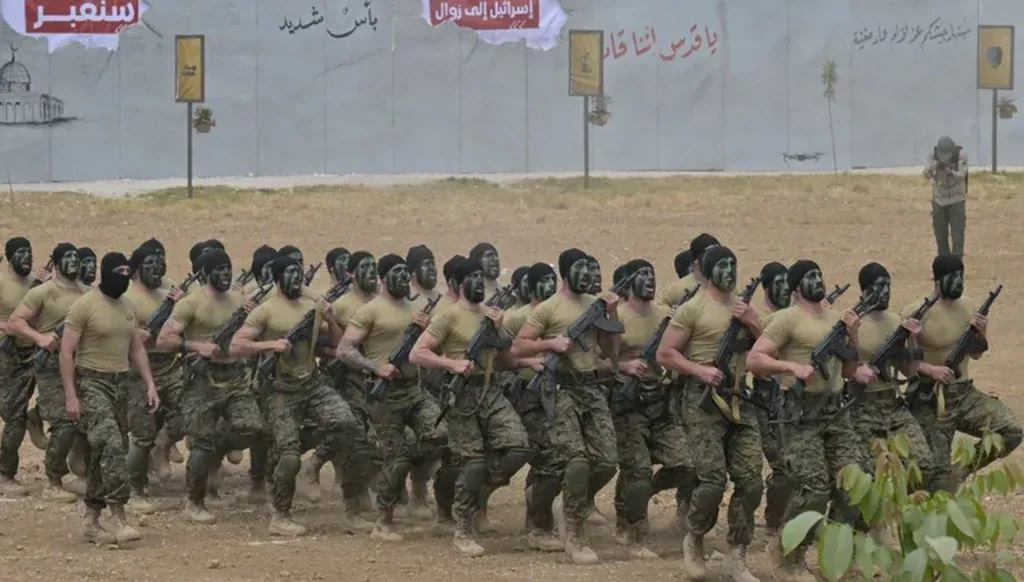


The language of threatening civil war continues to be expressed by deputies and leaders of "Hezbollah," similar to what Mahmoud Qamati stated when he threatened civil war, leaving significant repercussions, especially since his remarks came in the context of President Joseph Aoun's position regarding the party's weapons.
The President was clear in his insistence on implementing the inaugural speech, hinting that these weapons do not benefit the environment or the country, which led to Hezbollah's alertness and response to the President, with Qamati even mocking the role and weapons of the Lebanese army.
Does the party have the ability to ignite a civil war which all factions of Lebanese society reject, because its causes no longer exist in the first place, given the role of the Lebanese army, security forces, and the Taif Agreement? The words of the Hezbollah official might be a "venting" amid the party's current distress. However, many parties did not accept this and considered it catastrophic, calling for the summoning of anyone who threatens with civil war, regardless of their political and party affiliation, and from any side.
Deputy Ashraf Rifi tells "An-Nahar": "I have confirmed more than once that Hezbollah is over, and Iran is on the path to the same. This is based on information and data I possess, since the party's delusion and deception of its environment and Lebanese people have led it to this point."
Regarding Qamati's statement, Rifi describes it as "empty and politically miserable, thus it is a sign of political and military bankruptcy, and all Lebanese state apparatuses should deter anyone threatening civil war, as such talk cannot be taken lightly, and those threatening war among Lebanese should be brought to justice and held accountable, for such talk is categorically unacceptable."
He concludes, "This shows bankruptcy on all levels, and what is happening in Iran is the end not only of this hollow axis, the axis of resistance, but also the end of 'Hezbollah', which has previously gone bankrupt militarily, and even politically, evidenced by Qamati’s words falling within this context. In this frame, we assert that we stand with the esteemed Shiite community, and the civil war in Lebanon has ended. There is the Taif Agreement and civil peace, and no Lebanese party will engage in a civil war regardless of the circumstances and atmosphere."
Former Deputy Fares Saeed points out that "Since the days of Syrian guardianship, there are those who threaten the Lebanese with civil war whenever they demand their country's independence, as if internal unity is artificial and liable to dissolve at any moment."
He continues: "What Qamati said is untrue and is rejected by its proponents, and what the party indicates is slander and lies about the Lebanese reality, and on the history of Lebanese people. It’s as if the party, having lost everything, is passing through graveyards shouting loudly so as not to be afraid."
Disclaimer: The opinions expressed by the writers are their own and do not necessarily represent the views of Annahar