

Key Questions Surround Trump’s Phase Two Plan for Gaza


 Messenger
 Whatsapp
 Threads
 Email
Email
 Print
Print
 X
X
 Facebook


The announcement of the commencement of the second phase of President Trump's plan to halt the genocide waged by Israel against the Gaza Strip (October 2023) comes under pressing, complex, and unpromising conditions for Palestinians.
This is due to the fact that Israel is the party responsible for implementing the plan, including stopping the war by refraining from bombing and shooting, withdrawing from occupied territories, allowing the opening of crossings, and facilitating the entry of food and basic necessities for two million Palestinians.
It also involves enabling reconstruction projects, ultimately empowering the Palestinian administrative committee mandated to manage the Gaza Strip during the transitional phase.
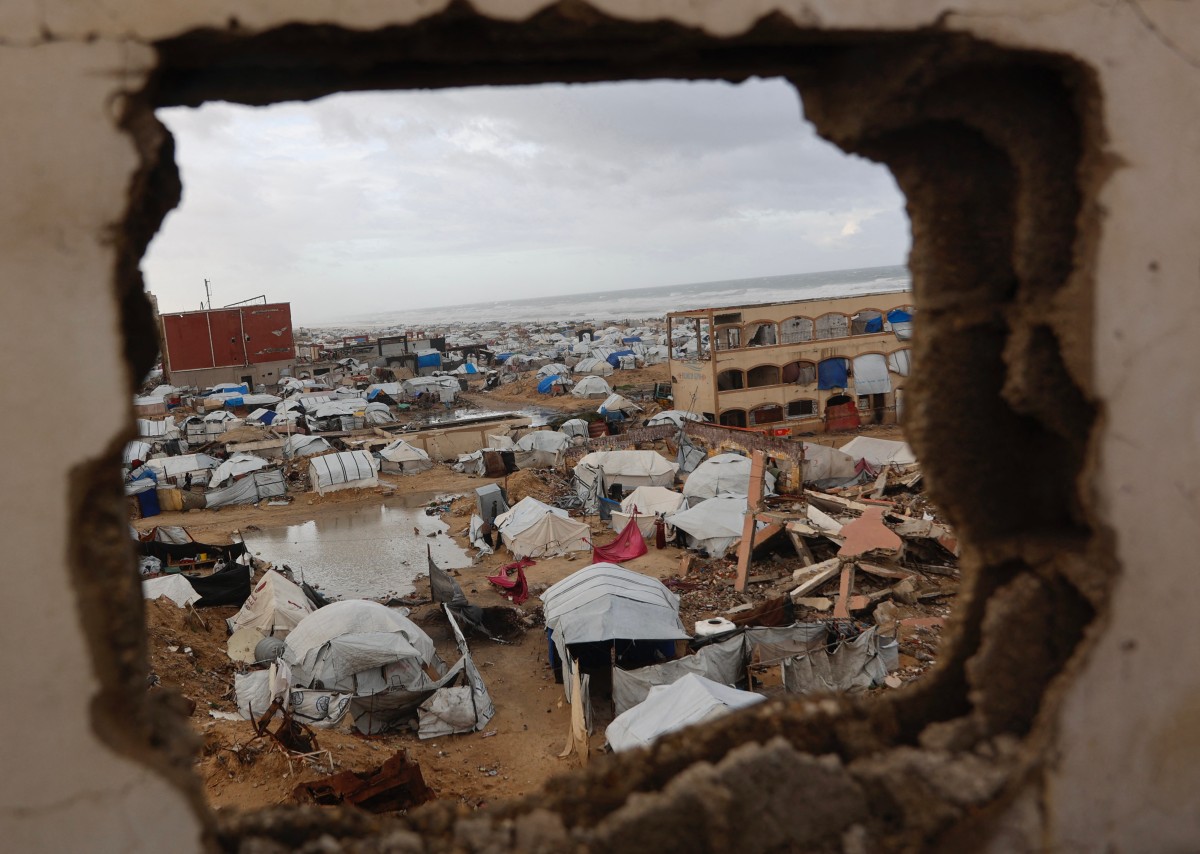
However, as usual, Israel does not adhere to any agreement or commitments, nor is there anything binding it. It conditions everything on what it considers its national security and internal sensitivities. For instance, it demands the start of phase two upon retrieving the last Israeli body held by "Hamas". Even if retrieved, Israel is unlikely to run out of excuses to resume attacks, claiming the presence of a weapon here or a Hamas fighter there.
It should be noted that Israel justifies its brutal genocide against Palestinians in the Gaza Strip by claiming to retrieve its captives, disarm Hamas, and end its presence as an authority in the area.
However, its real objectives go beyond this to separate the Gaza Strip from the West Bank, in the context of its attempts to undermine Palestinian political entity, eventually reducing the Palestinian population in the sector as much as possible. Israel, which has evaded the Oslo Accord (1993) for three decades, will find excuses indefinitely to avoid its obligations and impose a fait accompli.
This situation implies, according to the Palestinian experience since the Nakba (1948), that a temporary situation could become permanent. This is what happened with the Palestinian refugee issue (1948), the segmentation of the Palestinian people across various regions and under different authorities, and the Israeli occupation of the West Bank and Gaza (1967), where Palestinian and Arab demands were limited to its withdrawal from those lands. Today, we face the imposition of a new reality in the Gaza Strip, detached from the status of Palestinians in 1948 areas and the West Bank, leaving the future of the sector or the entity that will emerge in it, as well as the fate of the large Palestinian population in Gaza, uncertain.
Trump's plan was based on ignoring the core issue, i.e., the rights of the Palestinian people, turning it into merely a real estate issue and a demographic needing assistance, proposing to transform Gaza into a "Riviera" and creating economic and tourist areas. This covered up the genocide Israel committed against Palestinians to the extent of regarding Israel as a victim and aggressed party, entitled alone to self-defense.
The problem is that the Palestinian side, the party directly involved, remains powerless. They can do nothing practically against the brutal genocide or what Israel plans against them, except to minimize losses as much as possible, notwithstanding some rhetorical statements.
Thus, there is a Palestinian consensus on engaging positively with Trump's plan, despite its risks. The official Palestinian leadership, including the organization, authority, and Fatah, welcomed Trump's plan and his efforts to "complete his peace plan, including forming the Peace Council and its executive structures." This is also true for the Palestinian factions that recently met in Cairo, with representatives of "Hamas," "Islamic Jihad," and the "Popular" and "Democratic" fronts.
While the stance of the Palestinian leadership is known and understood, the surprising position of the gathered factions, especially "Hamas," raises questions for several reasons: First, it did not review the "Al-Aqsa Flood" operation or provide a report on its consequences for the Palestinian people.
Second, the factions' statement valued President Trump's efforts, despite his partnership with Israel in the war. Third, the statement confirmed "the factions' full commitment to continue implementing the cease-fire agreement and the remaining phases of President Trump's plan," although this clause contradicts the slogans of these factions and contradicts the reasons behind the "Al-Aqsa Flood" operation.
Fourth, the factions welcomed the formation of the transitional Palestinian National Committee to manage the Gaza Strip, to run basic services and life affairs in cooperation with the "Peace Council" and its international executive committee, knowing that this is a recipe to fortify the separation of Gaza from the West Bank and impose guardianship over it, with the possibility of the temporary status turning permanent.
The question arises, if "Hamas" and its associated factions have reached these convictions, who is responsible for all the high costs paid due to wrong choices? Why do these factions not confess to or explain to their people the reasons for their conclusions, as reflected in the Cairo statement?