

Tunisia 15 years later: The fragile path of an Arab Spring revolution
What began as a wave of hope on January 14, 2011, now faces the harsh realities of political, economic, and social challenges that still shape the nation.


 Messenger
 Whatsapp
 Threads
 Email
Email
 Print
Print
 X
X
 Facebook
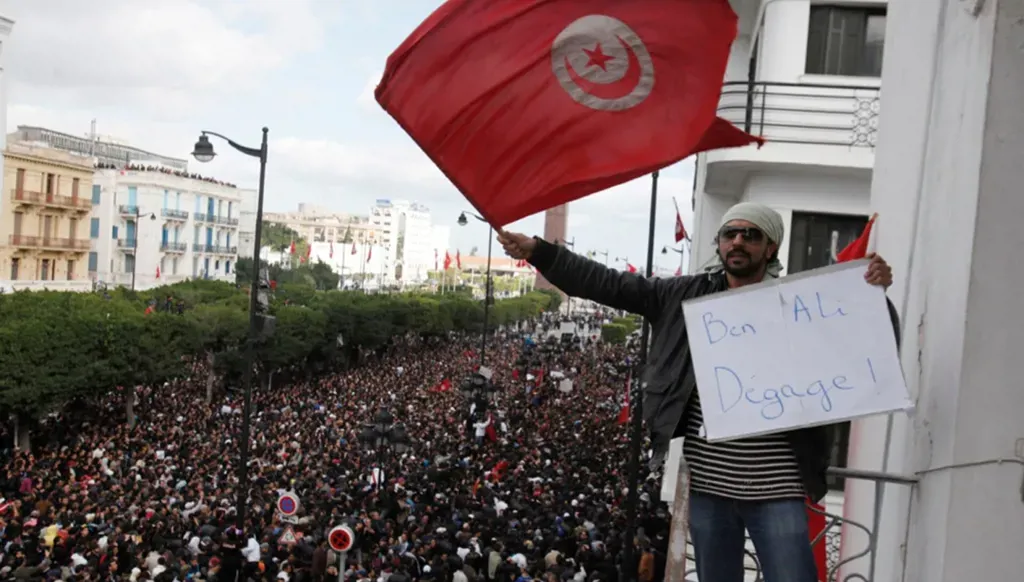


Every year on January 14th, Tunisia is marked by a memory that resonates far beyond its borders, casting a shadow across the entire Arab world. On this day in 2011, Tunisians took to the streets to overthrow a regime that had ruled for over two decades, sparking a regional upheaval. As the 15th anniversary is commemorated today, familiar questions resurface: "Why did the democratic transition falter? And is democracy unattainable dream for our people?"
Demands for freedom and democracy
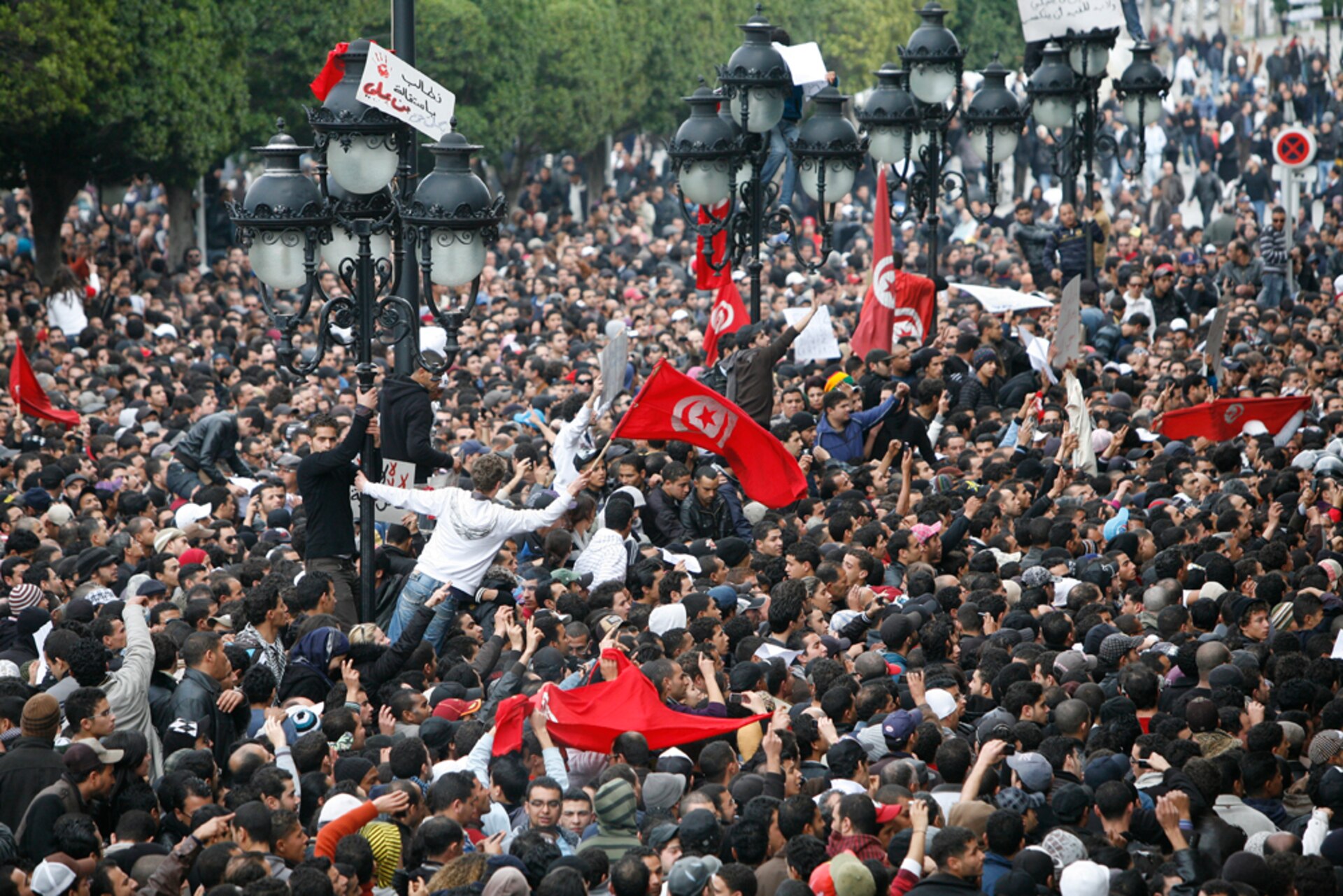
From the streets of Sidi Bouzid in central Tunisia to Habib Bourguiba Avenue in the heart of the capital, just meters from the gray building of the Ministry of Interior, January 14th marked a pivotal day in the history of both the country and the region. On that day, Tunisians took to the streets demanding freedom and democracy, raising the slogan: "Freedom, National Dignity." January 14, 2011, ended with the fall of Zine El Abidine Ben Ali’s regime, opening a new chapter in Tunisia’s history - a chapter that continues to navigate a difficult and uncertain path, with high costs and ongoing challenges.
Co-option of the revolutionary project
Many observers argue that the failure of Tunisia’s democratic transition was not the result of a single factor, but a complex process. In some countries, power was consolidated with stronger tools, while in others, revolutions erupted into open conflict. Tunisia, though spared the bloodshed seen elsewhere, has faced a long and crisis-laden path. Political analyst Mohsen Nabti notes that a key challenge in Tunisia lies in the lack of consensus on both the timing and the nature of what truly happened during the revolution.
Nabti, speaking to Annahar, highlights what he calls a “terminological chaos,” noting the lack of agreement over whether the events should be described as a revolution, an uprising, a revolutionary path, or the beginning of a revolutionary project.
In Nabti’s view, what unfolded “was a revolutionary project that ultimately became a project of creative chaos and regional empowerment, after the internal actors and symbols of the revolution were overthrown and replaced by the Brotherhood as instruments of an alternative agenda.”
He adds that the “Brotherhood, brought in as a substitute, co-opted the revolutionary project and transformed it into a so-called democratic transition that was, in reality, a transition toward chaos, as violent forces emerged during popular protests in countries such as Egypt, Libya, Syria, and Yemen.”
Nabti also discusses subsequent empowerment operations carried out through alternative projects, which aimed to weaken state institutions, embed chaos within constitutional frameworks, and manipulate societies through religious, takfirist, and sectarian mobilization. At the same time, economic control was handed to so-called “Golden Boys,” a move that facilitated the rise of black-market economies that funded terrorism and extremism, further accelerating the collapse of national economies.
The Project is not over yet
Nabti believes that Tunisia was the least affected by the forces unleashed during the Arab Spring, which he says ended on July 21, 2021, after Tunisians rejected it. He adds that “the most alarming aspect of this system emerged in countries like Syria, Yemen, and Libya, where partition plans began taking shape to serve the interests of the Greater Israel project.”
However, according to the Tunisian political analyst, the fall of this system does not signal the end of the project, which he believes remains active. He warns: “After its success in the Middle East, the Maghreb will this time be its target.”
Nabti adds that the danger persists, “because the region has entered a phase of ferocity whose outcomes cannot be predicted.”
He argues that “shielding the region from the impacts of this project can only be achieved by building internal resilience through a comprehensive plan that addresses the aspirations of the people and accounts for strategic transformations in the region.”
Fragile foundation
A significant number of analysts agree that Tunisia’s main challenge after January 14, 2011 - like other Arab countries that experienced similar uprisings - was attempting to build political democracy on a fragile economic foundation.
Former Tunisian Foreign Minister Ahmed Wanis told Annahar that the failure of the democratic transition stems from two main factors, the first being “the absence of democratic maturity.” He explained that the peoples affected by the Arab Spring were enthusiastic about democracy but “were not sufficiently mature to embrace this transformation.” Wanis adds: “The regimes that followed colonialism and came to power in the region governed using the same mechanisms and repeated the same colonial practices, believing that their peoples were not ready for democracy.” He continues: "This created peoples incapable of accepting transformation despite their enthusiasm and demand for it."
The second reason, according to Wanis, is that “this transformation did not meet the demands of the people, which centered on economic development.” He adds that the aspirations voiced by the people—beginning on January 14 in the heart of Bourguiba Avenue in Tunis and spreading to other Arab capitals—were “higher than what could realistically be achieved.” He adds that the masses who took to the streets demanding dignity did not see tangible improvements in their living conditions, opening the door to widespread disappointment and a nostalgic longing for “stability,” even at the expense of freedom. In his view, this shift turned “democracy in popular consciousness, for some, from a promise of salvation into a daily burden.”
Disclaimer: The opinions expressed by the writers are their own and do not necessarily represent the views of Annahar.