

The Lebanese case: Foreign revolutions and internal wars



 Messenger
 Whatsapp
 Threads
 Email
Email
 Print
Print
 X
X
 Facebook
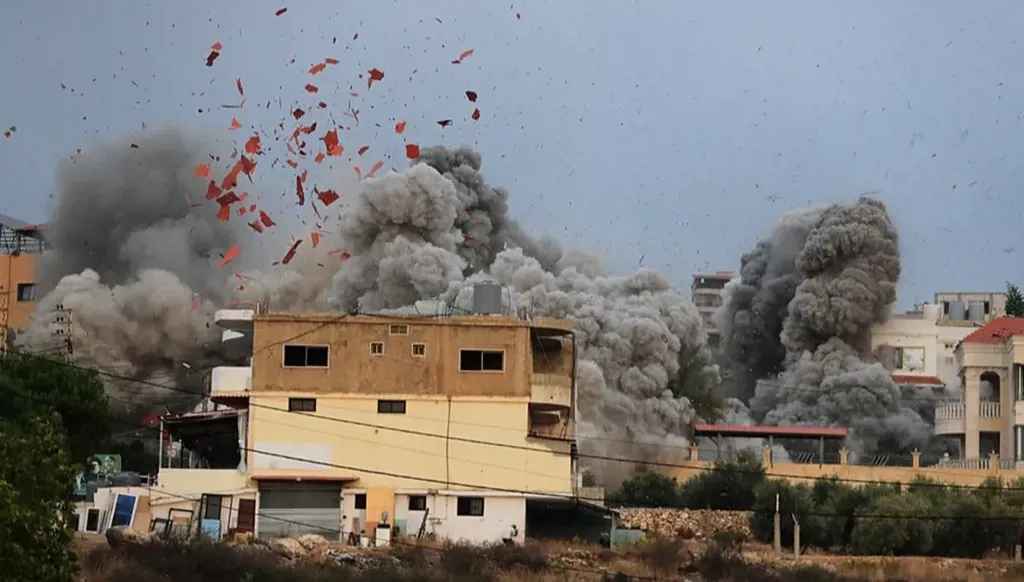


For at least five and a half decades, Lebanon has been hit by a succession of earthquakes, security and sectarian unrest, crises, and wars whose underlying causes were tied to regional shifts. Their repercussions would first reach Lebanon through Lebanese factions connected to foreign powers, or because the Lebanese sectarian political fabric was so fragile that it would anticipate external events by pulling their effects into the internal arena.
We may not need, at the outset, to revisit the frightening impact of Nasserist Arab nationalism. It quickly produced internal tremors that led to sectarian polarization. The matter then escalated into the catastrophe of vertical division over Palestinian guerrilla activity, and the imposition of the Cairo Agreement. That agreement became the symbol of sacrificing Lebanon on the altar of Arab internal conspiracies.
Consequently, the nation erupted in a Lebanese-Palestinian war, which spiraled into a mix of internal and external wars, in equal measure. An ironic saying took hold, reflecting the absence of national immunity and the absence of loyalty and belief in Lebanon first among factions tied to external actors who divided up the sects and parties as if they were owned tribes moving to the rhythms of dependency: “Wherever it is conceived in the world, it will be born in Lebanon.”
Lebanon was experiencing the throes of war, fragmentation, and fighting nearly four years after its eruption when the Khomeinist Revolution occurred in Iran, unleashing major questions about the hidden forces driving and igniting it, both internally and externally. The most widespread and famous claim at the time was that, at the height of the Cold War between the two “superpowers,” the United States and the now-defunct Soviet Union, the American intelligence agency CIA moved toward sacrificing America’s greatest ally in the Middle East and Asia, the Shah of Iran, the Shahanshah (King of Kings) Mohammad Reza Pahlavi, whose power had been legendary. According to that historical claim, he became the greatest victim of a religious sectarian revolution that was intended to form a solid barrier against the communist tide in the Middle East.
It was hardly surprising, as Lebanon was sinking in blood, that an infernal alliance should “invade” its land and deepen its violation through that pact between Hafez al-Assad and Khomeini. From the training camps set up by the Revolutionary Guard in Baalbek, they brought forth the “Islamic” movement, devising bombing operations and hostage-taking against Westerners, until the official announcement of the birth of Hezbollah in the early 1980s.
Nor did matters stop at this development. The Assad–Iranian alliance went on to exploit Lebanon for the better part of two decades afterward, even after the Taif Agreement was reached, which Assad tore apart by assassinating President René Moawad, a symbol of international, Arab, and Lebanese peace, and by imposing a “graveyard peace” and a pattern of assassinations that became a hallmark of the Assad regime and that he passed on to his son Bashar. Meanwhile, his partner, the clerical regime in Tehran, squeezed the Lebanese Shiite reality to the last drop, at times in the name of Palestine and the march on Jerusalem, and at other times in the name of Islamic movements, even when that led to sectarian wars between Sunnis and Shiites, as in the 7 May strife, the “glorious day” in the discourse of the late Sayyed Hassan Nasrallah, consuming one young man after another from the South and the Beqaa among Hezbollah’s youth in the ongoing violation of Lebanon for the sake of Tehran’s influence.
Now the wheel of an event is turning that may become the other face of the Iranian Islamic Revolution, by toppling the clerical regime, even if it has endured for a long time, amid the expansion of the counter-revolution to almost total proportions for a thousand and one reasons, especially poverty and hunger as a result of exporting hundreds of billions of dollars to Iran’s regional arms. So what lies in wait for Lebanon tomorrow if the Iranian regime collapses, or if it is allowed to remain under a deal with the strongman Donald Trump?
Disclaimer: The opinions expressed by the writers are their own and do not necessarily represent the views of Annahar