

Why Hezbollah's weapons strategy is backfiring in Lebanon


 Messenger
 Whatsapp
 Threads
 Email
Email
 Print
Print
 X
X
 Facebook


The image of Lebanon’s sovereign authority is “blurred” and satisfies almost none of the major actors, both domestically and internationally. Israel and domestic opponents of the “Islamic Resistance in Lebanon” view it as inadequate, arguing that its measures fall short. Meanwhile, Hezbollah considers it either complicit or “unwise,” believing it grants the enemy undue concessions.
However, this “consensus” against Lebanon’s authority does not alter its approach, as it remains committed to the equation it has set: no illegal arms, whether Lebanese or Palestinian, and no risk of war, whether with Israel or Hezbollah.
The equations upheld by Lebanon’s authority compel all parties to temper their opposition, as they are rooted in shared vulnerabilities affecting everyone. Israel, under pressure from President Donald Trump, is forced to remain at the table for military and security negotiations within the Mechanism Committee chaired by Washington, and to accept the constructive elements of Lebanon’s proposal, which aims to neutralize the Lebanese front “permanently,” as long as it does not restrict Israel from carrying out “targeted” strikes against Hezbollah or limit its maneuverability in Lebanon.
Domestic opponents of Hezbollah cannot ignore the risk of civil war if the authority were to act as swiftly as they desire, even if rapid action would ideally free Lebanon from its prolonged state of attrition. Hezbollah itself fears that, given its isolation, the weakening of its regional axis, and the toll on its fighters, supporters, and surrounding environment, it could be forced into a new war with Israel - one in which any potential gains would be far outweighed by likely heavy losses.
If Hezbollah’s gain lies in buying time to reorganize its scattered forces while retaining its arsenal, its opponents’ gains may seem significant - but they are fragile and require constant upkeep.
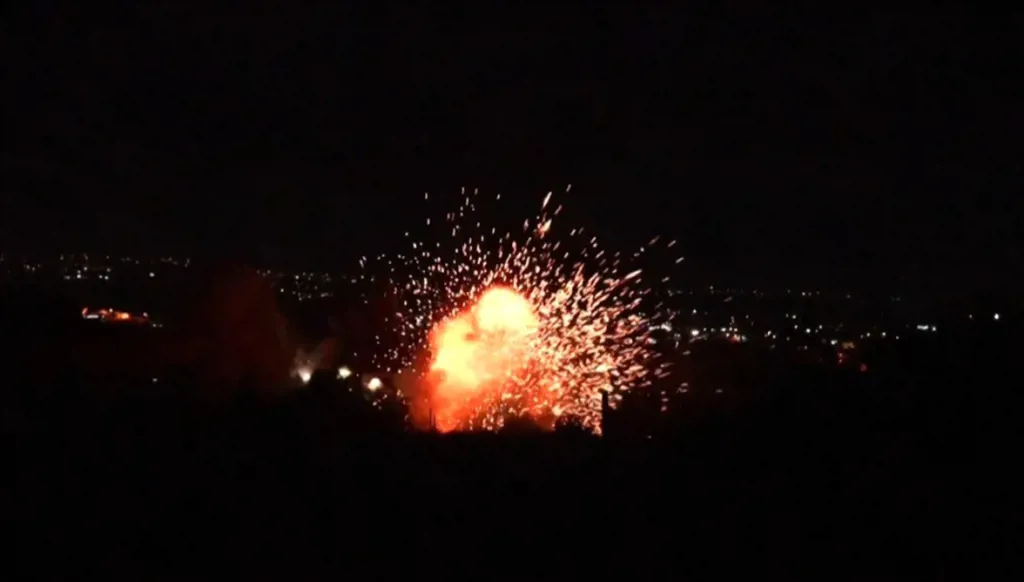
Israel, facing Lebanon’s “peaceful” authority, leverages its superior air power to impose the costs of Hezbollah’s insistence on retaining weapons north of the Litani River and its “secret” positions in the south. No one can stop it, operating with the green light from the United States. It carries out targeted assassinations of Hezbollah activists and affiliates around the clock and raids the sites it identifies, even when they are close to residential areas. This has created a negative perception of Hezbollah among observers, Lebanese citizens, and officials alike, portraying the party as irrational - wasting its youth, people, and resources unnecessarily. Its actions are seen as futile, since the fate of its weapons is already predetermined: sooner or later, it will relinquish them, whether due to internal pressure or the overwhelming force of war, which only surrender could halt.
The President of the Republic of Lebanon, General Joseph Aoun, is among the most prominent voices criticizing Hezbollah’s lack of rationality. His military background shapes this perspective: anyone who insists on paying the cost for weapons that serve no practical role or benefit - especially given the stark imbalance of power - demonstrates a clear absence of basic rational judgment. In reviewing his first year as president, he was unambiguous on this point.
Sometimes an official does not need a field force to deliver a decisive blow to someone who opposes him; it is enough to point out their lack of sound judgment.
Before Joseph Aoun, Michel Suleiman took a similar stance during the second half of his presidential term, but internal and regional dynamics ultimately made him pay the price. Today, Hezbollah bears the cost. Current internal and external realities strengthen the position of the President of the Republic if he openly acknowledges this truth to the Lebanese - but it could be very costly if he chooses to remain silent.
The blurred image of authority - though far from popular and lacking the ideal vision for a state struggling to escape the chaos it has been cast into - serves a purpose. As defenders explain, it effectively strips Hezbollah of the legitimacy of its arms, denies the party the appearance of modernization and diversification, and places its fate at the mercy of “favorable conditions.” At the same time, it frames Hezbollah as an organization losing rationality, bringing disasters upon itself and its people, while protecting the Lebanese from a devastating internal confrontation. In this sense, the patience of the population becomes part of the broader effort to build the state they deserve.
Disclaimer: The opinions expressed by the writers are their own and do not necessarily represent the views of Annahar.