

Why Egyptians have turned away from politics: Lessons from a decade of turmoil


 Messenger
 Whatsapp
 Threads
 Email
Email
 Print
Print
 X
X
 Facebook


The reluctance of Egyptians to engage in political life can no longer be dismissed with superficial explanations such as "apathy" or "exhaustion." It is a logical response to a shocking political experience that revealed politics, as practiced in recent years, to be less a tool for reform than a gamble with the fate of the state.
The society that once eagerly surged into the public sphere after the events of January 2011 did not withdraw suddenly or without reason; it did so after realizing that what had been presented as a path to salvation often led instead to chaos, division, and ruin.
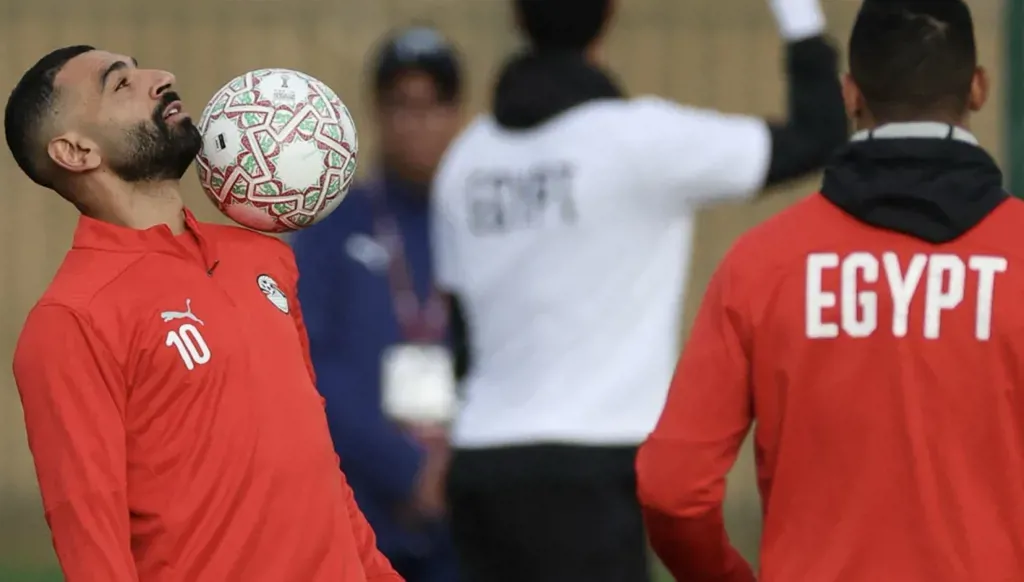
In this political vacuum, the need for public discourse and collective engagement has not disappeared - it has simply shifted. Football, celebrity news, artist divorces, personality clashes, and social media debates have become alternative arenas for interaction, analysis, polarization, and “theorizing.” Ironically, these topics are now discussed with the same intensity that laws, constitutions, and political alliances once commanded, as if society has recreated politics in a safer, less psychologically costly form of social entertainment.
The problem was never with the idea of politics itself, but with those who monopolized it and spoke in its name. The parties that emerged after 2011 quickly revealed structural weaknesses, intellectual shortcomings, and, at times, moral failings, transforming from instruments of organization and representation into arenas for power struggles. Over time, many Egyptians also realized that some political forces showed little regard for the national state, willing to forge dubious alliances or seek external support to advance their ambitions. This is where trust collapsed - not in individual figures, but in the political system as a whole - and subsequent events only confirmed these suspicions. Before January, politics functioned under the regime’s watchful eye, and when it briefly loosened, events unfolded as they would. After January, there was no organized transition to democracy - only a series of clashes, security breakdowns, and economic crises, revealing that many political forces had little faith in pluralism or genuine partnership.
When the Muslim Brotherhood assumed power, a large segment of society felt that the worst fears had come true: exclusionary rhetoric, attempts to dominate state institutions, the politicization of religion, and a descent into violence and terrorism. This period left a lasting mark, embedding a deep fear that transformed politics itself from a space for discussion and debate into what many saw as an existential threat, rather than a forum for determining the nation’s best path forward.
Thus, the aversion to politics became a conscious defensive response. People did not withdraw out of ignorance - they understood far too well. They recognized that participation could be exploited, that slogans might be traps, and that elites claiming to champion change could prove more dangerous than stagnation itself. Yet the need for expression and debate did not vanish; it simply found lower-cost alternatives. Football became a stage for polarization, excitement, and analysis, while celebrity news and high-profile divorces turned into public opinion debates treated with the same enthusiasm and theorizing once reserved for crucial political matters. Society did not lose interest in public affairs - it lost trust in politics.
This disengagement extends beyond domestic politics to foreign affairs as well. Regional and international crises, once central to Egyptian political consciousness, are now followed mostly as passing news or fodder for mockery on social media, with little serious engagement with their implications or risks. Even issues directly tied to Egyptian national security - most notably the situation in Gaza - arouse humanitarian sympathy but fail to inspire popular political action, despite effective official involvement. There is no organized grassroots pressure, widespread movement, or readiness to translate sentiment into public advocacy. The reason is clear to most Egyptians: the political and organizational ties between Hamas and the Muslim Brotherhood, a group that lost virtually all popular legitimacy in Egypt following its governance and the ensuing violence, create a psychological barrier. Sympathy for civilians is thus separated from any movement perceived as aligned with forces rejected by society.
This abstention is most clearly reflected in the parliamentary elections, which today proceed in near-complete silence. In many provinces, the vote draws little public interest, engaging mostly a small number of voters with direct interests. For citizens, Parliament is no longer a genuine arena of representation or influence; it has become an institution detached from daily life, unworthy of anticipation, attention, or hope.
Ultimately, Egyptians’ disengagement from politics is not a sign of weakness, but the outcome of bitter awareness and costly experience. It stems from elite betrayals, party failures, and the disasters of political Islam, convincing the public that even imperfect stability is far less costly than uncalculated political experiments.
Reintegrating politics into society will not happen through speeches or moral exhortations; it will only occur when actors emerge who understand that the state is not a prize to be seized, and that after everything that has transpired, this society’s trust will not be easily earned again.
Disclaimer: The opinions expressed by the writers are their own and do not necessarily represent the views of Annahar.