

Aleppo’s Kurdish battle: How the U.S. shapes Syria’s political transition


 Messenger
 Whatsapp
 Threads
 Email
Email
 Print
Print
 X
X
 Facebook
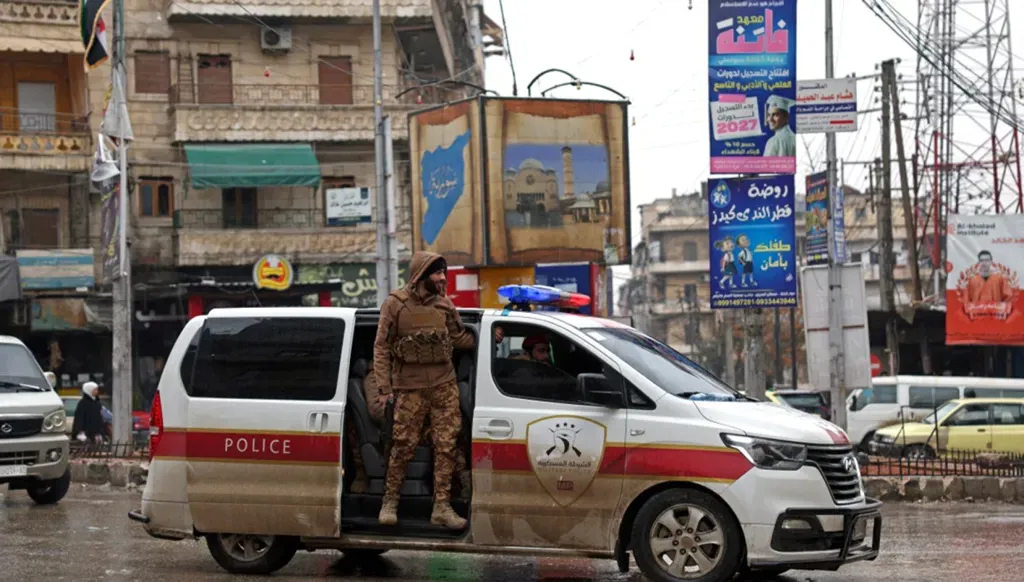


The battle for Aleppo’s predominantly Kurdish neighborhoods unfolded within a carefully controlled political margin, rather than in an international vacuum, as the situation might superficially suggest. Damascus faced no direct external pressure to halt its use of force, while the Syrian Democratic Forces (SDF) did not fully mobilize their military capabilities to defend the neighborhoods, adhering instead to an unspoken commitment to rules of engagement set beyond the battlefield. This so-called "international neutrality" was less a matter of political impartiality than a deliberate management of escalation limits and boundaries.
The shift in the control map did not bring a structural change to power balances but instead removed a limited negotiating card from the Kurdish forces, giving Damascus time to recalibrate its approach to the East Euphrates issue. While these neighborhoods were strategically encircled, they were not tactically captured, and their eventual resolution carried both political and symbolic costs.
The most significant revelation from the battle was the resurgence of the tribal card as a means of penetrating the ranks of the SDF and its areas of control. The Ashrafiyah gap, linked to members of the Al-Baggarah tribe and formerly part of the "Al-Baqir Brigade," highlighted the vulnerability of this route within the SDF structure. This exposed pathway allowed Damascus to leverage tribal influence in its strategy toward the East Euphrates issue, particularly with Jihad al-Sheikh (Abu Ahmad Zakour) serving as a presidential advisor for tribal affairs—well-known for his extensive tribal connections and his own membership in the Al-Baggarah tribe.
From the outset of the battle, international actors closely monitored developments, revealing a clear alignment of interests, though often expressed in measured, calming language. France, leveraging its strong ties with the SDF, sought early on to influence the battle’s trajectory through diplomatic channels. In contrast, Turkey, with a direct stake in undermining the SDF, leaned toward supporting a military resolution, especially in light of its prior threats to intervene if the March agreement was not enforced. At the same time, communications between President Ahmad al-Sharaa and Kurdish leader Masoud Barzani conveyed a direct message signaling Damascus’s intent to maintain the existing balance of power.
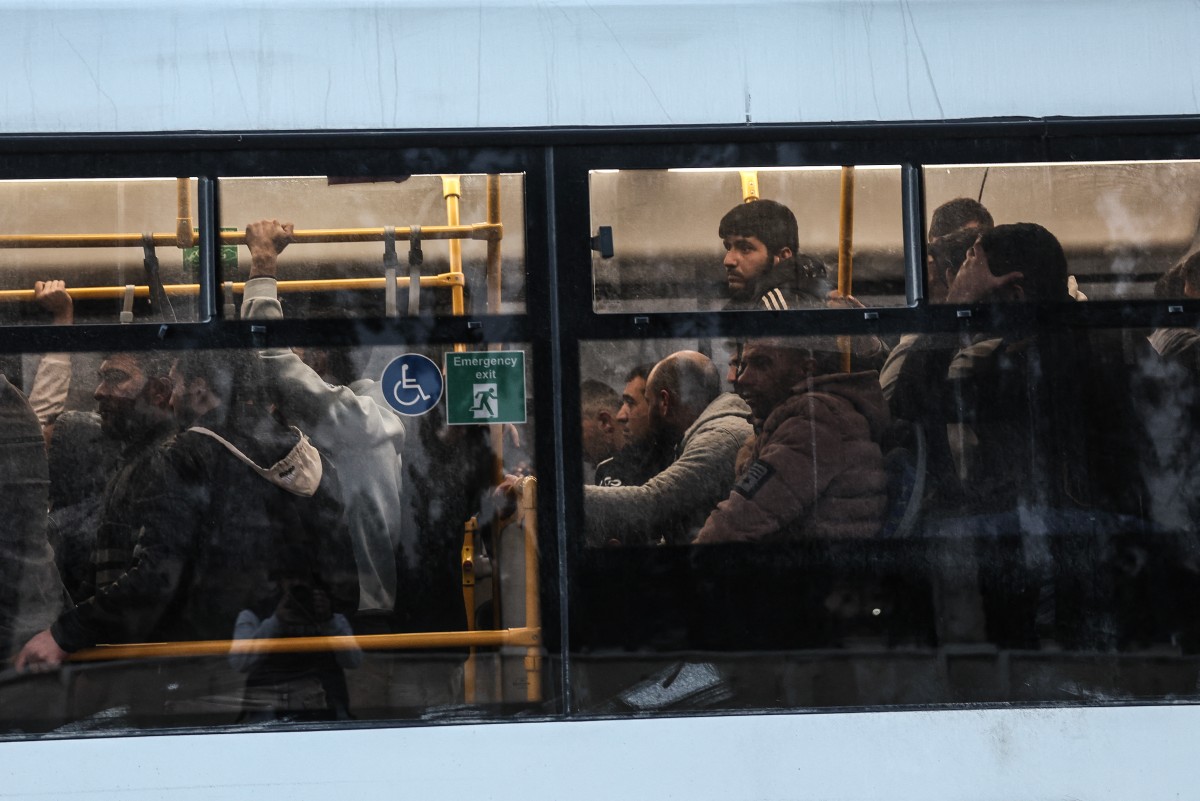
In the same context, the American position—from statements by President Donald Trump to the actions of envoy Tom Barrack—reflected a cautious approach to the battle’s developments before taking a definitive stance. Meanwhile, Russia’s relative absence appeared less a sign of incapacity and more a deliberate decision to step back from managing this file.
While President Trump remained careful with his wording when addressing the escalation between the SDF and Damascus, emphasizing the United States’ positive relations with both parties, envoy Tom Barrack offered a more detailed statement. His remarks went beyond the immediate battle developments to outline broader U.S. policy regarding the Syrian file.
Barack’s statement focused more on "securing the framework" than on commenting solely on the Aleppo battle. It directly connects developments on the ground to the "transitional phase" and to the notion of "opportunity" associated with the decision to lift sanctions, making the key criterion not territorial gains, but whether the transitional authority—together with partner forces or opponents—can manage the conflict according to political and institutional rules, thereby preventing a slide into the logic of dominance and violence. In this sense, the statement clearly supports the establishment of a unified state and national institutions, but frames this support within a behavioral ceiling: respect for diversity, meaningful participation in governance and security, and the non-conversion of field realities into alternatives to the political path.
In balancing the parties, the statement deliberately employs neutral language, avoiding any verbal advantage. It affirms the legitimacy of the Syrian transitional leadership through official meetings on behalf of Trump and Secretary of State Marco Rubio, while simultaneously granting the SDF substantial recognition for its role and sacrifices as a fundamental pillar in the fight against ISIS within "Operation Inherent Resolve."However, this recognition does not serve to consecrate an existing status; rather, it is tied to a clear integration framework: the March 2025 agreement and subsequent agreements, which are considered the governing framework for Damascus-SDF relations. Accordingly, Washington’s concern over developments in Aleppo centers not on military outcomes, but on the risk of undermining the integration path, potentially opening the door to a return to purely security-driven approaches and foreign interventions, which the statement explicitly warns against.
Regarding tools, the most significant shift is the assignment of the "facilitator" role to the Secretary of State’s team, signaling that Washington intends to move conflict management from traditional military channels toward a political-executive approach tied to institution-building and the integration of forces under a "one national army" and a single sovereign state. Here, facilitation does not mean guaranteeing or imposing solutions, but rather establishing the rules of the game and ensuring that all parties remain within them: halting hostilities, returning to dialogue, and adhering to agreements. In this way, the statement functions as a tool to orchestrate the rhythm of the upcoming phase: providing conditional support based on adherence to the agreed path, maintaining balanced language toward all parties, and emphasizing that the true test of Aleppo lies in everyone’s ability to return to politics before field costs escalate.
Despite this, returning to negotiations remains a complex task. Damascus is expected to demonstrate that resolving matters on the battlefield is not a substitute for the political path, while the SDF faces the challenge of rebuilding trust within its environment and reengaging with integration arrangements. Between the parties, the element of time serves as a testing ground for the seriousness of commitments, rather than simply reflecting external pressure.
In this sense, the battle for Aleppo does not mark the end of negotiations between Damascus and the SDF, but rather represents a phase that has reshaped the conditions and tempo of engagement within the broader transitional context.
Disclaimer: The opinions expressed by the writers are their own and do not necessarily represent the views of Annahar.