

UNIFIL replacement talks begin over Lebanon–Israel border


 Messenger
 Whatsapp
 Threads
 Email
Email
 Print
Print
 X
X
 Facebook
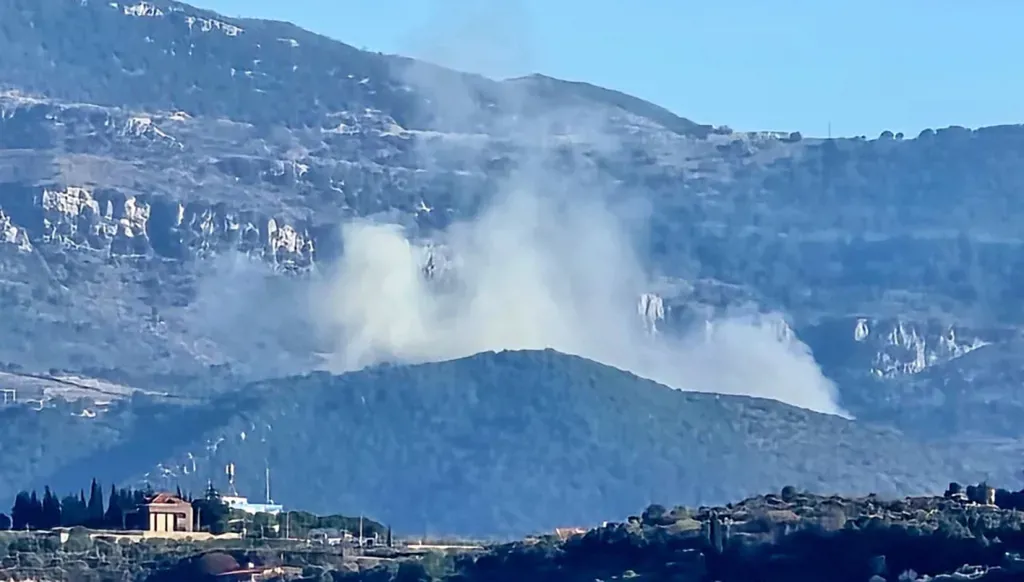


It was no secret that Washington, in recent weeks, moved to push the French away from the “Mechanism” Committee, with the possibility that membership would be limited to military personnel assessing the situation in the south amid escalating Israeli strikes, while civilians would be involved only when necessary.
It has become clear that Israel is at the forefront of efforts to sideline the French within the committee, while envoy Jean-Yves Le Drian was preparing to participate in its most recent meeting, until attendance was restricted to camouflage-uniformed military. If civilians do not participate in the next meeting on the 17th of this month, that means confirming the non-acceptance of the French.
Israel accuses Paris of adopting the Lebanese viewpoint and praising the role played by the Lebanese Army in collecting weapons south of the Litani River, while Tel Aviv rejects this conclusion and does not agree to verify everything Lebanon has done and what the government committed to before Washington and the entire international community.
Diplomatic sources report that contacts are still underway for the participation of Le Drian and US envoy Morgan Ortagus to relaunch the committee’s work at a faster pace.
The effort to sideline the French goes beyond the committee itself, reflecting a tug-of-war, albeit undeclared, with the Americans. When drafting the terms of the ceasefire agreement in the final days of the Democrats’ administration, Parliament Speaker Nabih Berri insisted, in front of former envoy Amos Hochstein, on including Paris in the committee, something that was not well received by the Republicans’ administration.
Observers of this process affirm that “it is illogical to exclude France from the committee, because that would target the entire European Union, whose countries form the backbone of UNIFIL since its deployment in the south in 1978.” In practice, Lebanon’s interest requires holding onto the French and their role in the committee, even if the final word belongs to the Americans.
It is no secret that the French “understand” the position of the Lebanese government and the pressures placed upon it, without ignoring the position of Hezbollah, which was already unsatisfied with the “Mechanism” and objected to it even more after it was supplemented with civilian members.
What comes after 'UNIFIL'?
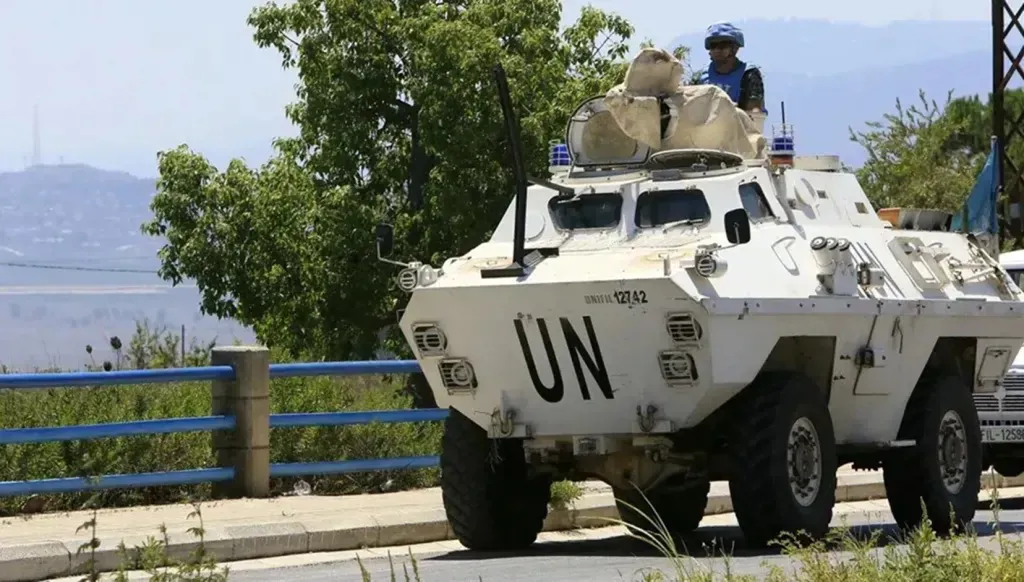
If Israel does not adhere to all the provisions of the cessation of hostilities, then the search for an alternative to UNIFIL (United Nations Interim Force in Lebanon) has begun today, accompanied by a wave of concern.
Diplomatic information suggests that officials in Lebanon, notably from President Joseph Aoun's side, have been approached by several European countries about the possibility of a replacement force for 'UNIFIL.' France, Italy, and Spain have shown a willingness for this direction, though it has not been finalized yet. And while these countries are interested in how matters will end on the Lebanon-Israel border, they have also begun today to ask about the future of Lebanon’s territorial waters in the Mediterranean, with concerns over potential smuggling boats heading to European states on the Mediterranean, which are already under economic pressure due to the war between Russia and Ukraine.
The United Nations Under-Secretary-General for Peace Operations Jean-Pierre Lacroix has also been approached regarding what will happen on the Lebanon-Israel border, at a time when Israel shows no signs of withdrawing from the five contested points and other occupied areas, as if it intends to keep them as a buffer zone in preparation for imposing bigger conditions on Lebanon.