

Syria’s path to stability: Minority integration and institutional reform


 Messenger
 Whatsapp
 Threads
 Email
Email
 Print
Print
 X
X
 Facebook
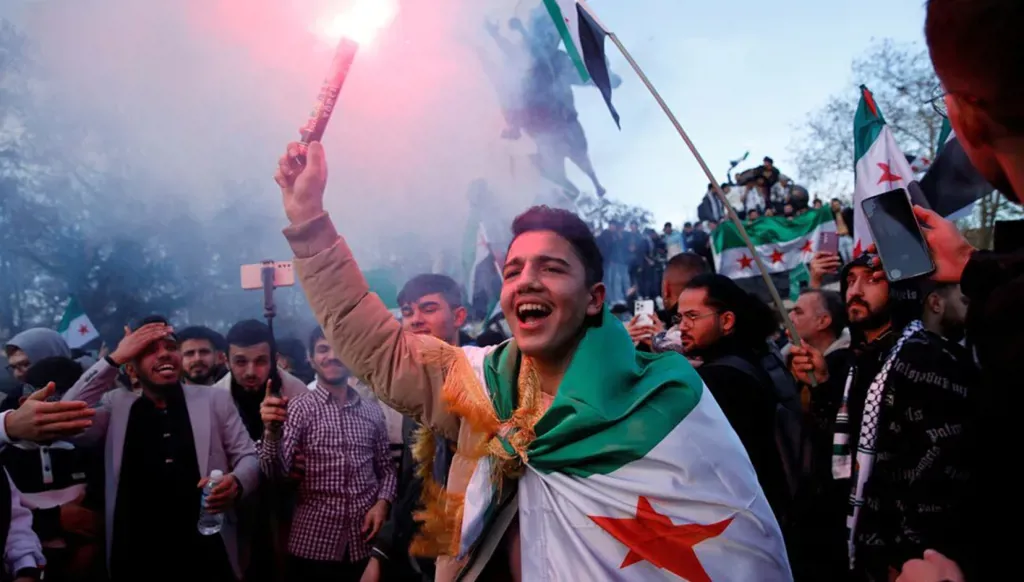


Syria, under Ahmad Al-Sharaa, has entered a new phase just over a year after its founding, following the victory over the Assad regime, which forced President Bashar al-Assad to flee to Russia.
In this context, numerous questions are emerging about Syria’s new future, particularly within American research centers and regarding proposals for the country’s new regime. The United States is preparing to lift the Caesar sanctions to ease pressure on the Syrian economy, and has already taken steps in that direction.
The transitional Syrian government’s primary focus should be on building state institutions and strengthening governance. While significant progress has been made, concerns persist about the potential emergence of a shadow government and an unofficial economic network, similar to what appeared in Idlib during the war, reportedly under the influence of Ahmad Al-Sharaa, Syria’s current president, through groups such as Hayat Tahrir al-Sham (HTS).
The government’s non-transparent economic system and the concentration of decision-making in the Ministry of Foreign Affairs have hindered transparency and increased the risk of corruption. For example, the government has made clear progress in constructing and improving roads, removing many security checkpoints established by the previous regime, and rehabilitating the water transport network and other infrastructure.
However, many Syrian citizens have had to rely on their own efforts to repair destroyed properties, highlighting gaps in the national reconstruction policy.
Efforts must also focus on increasing transparency in reconstruction funding, as the government still lacks robust accountability mechanisms to manage these resources. Another major challenge is ensuring transitional justice and transparency in the aftermath of the bloody civil war and decades of power abuses under Assad’s rule.
As Syria’s new government enters its second year, it must prioritize strengthening institutional capacity and addressing endemic corruption. Damascus, for instance, should empower mid- and lower-level employees rather than marginalize them, especially if doing so enhances governance and allows ordinary citizens to feel included in the workings of the state.
Moreover, if all sanctions are lifted in the coming months as expected, the resulting influx of funds will test the government’s ability to prevent corruption and produce financial and budget reports that can withstand scrutiny. The United States could play a role in supporting the development of Syria’s constitutional and financial institutions. For instance, the Ministry of Finance should assist the Central Bank of Syria in combating entrenched corruption by establishing a financial intelligence unit and strengthening anti-money laundering and counter-terrorism financing measures.
If complications arise in the partnership, Washington should avoid reverting to the sanctions applied under the Assad regime and instead encourage the new government’s development, giving it the opportunity to demonstrate responsibility both domestically and internationally.
According to an American researcher specializing in Syria, Turkey, Iraq, and Iran, stabilizing Syria is now the most critical issue facing the region, particularly in light of the decline—or potential collapse—of Iranian influence in the Middle East. The researcher warns that, as was the case under the Assad regime, continued instability could trigger terrorist threats, facilitate Captagon smuggling to neighboring countries, and invite significant external intervention in Syrian affairs.
These challenges must not be allowed to recur. The United States is expected to play a key role in supporting Damascus as it manages its internal and international affairs to ensure stability. In the second year of the transitional period, Syria’s most important benchmarks for progress will include reaching a security agreement with Israel, integrating Kurdish SDF forces into the Syrian Army, and expanding efforts to contain ISIS while preventing sectarian and confessional violence.
To achieve these goals, Washington should lead the international community in supporting efforts to extend state authority over sectarian and ethnic groups.
Accomplishing this task will require a coherent international strategy and cooperation with key external players such as Turkey, Israel, and major Arab countries, while maintaining a unified approach with the new Syrian government—particularly on issues involving the Druze and Kurdish populations. Supporting Damascus in local and national governance will be essential to promoting the integration of minority communities.
In return, these groups must recognize state sovereignty by relinquishing control over border crossings and oil exports. While Washington’s achievements in Syria last year were significant, these gains now need to be institutionalized with the support of international partners. A practical first step would be to align U.S. allies with its policy by forming a Syrian contact group that includes European and Arab countries. Additionally, Washington should provide technical assistance to key Syrian institutions, particularly in the oil and banking sectors.
As U.S. relations with the new Syrian government deepen in its second year, Israel will need to clarify its strategy toward Syria. To date, Israeli military operations in the country, including around Damascus, have not fully aligned with its political objectives—particularly securing its borders and preventing Hezbollah and other Iranian operatives from reestablishing a presence in Syria or regaining control over it. Addressing these issues aligns with both Israeli and broader regional interests. Regardless of strategic clarity, Israel is unlikely to engage militarily with Turkey, given their differing objectives in Syria. To maintain strong ties with the United States, both countries appear to prefer preserving the status quo, particularly as they share security concerns related to terrorism and Iran-backed proxies.
Disclaimer: The opinions expressed by the writers are their own and do not necessarily represent the views of Annahar.