

In the wake of Syria’s currency reforms, Lebanon rethinks its banknote denominations



 Messenger
 Whatsapp
 Threads
 Email
Email
 Print
Print
 X
X
 Facebook
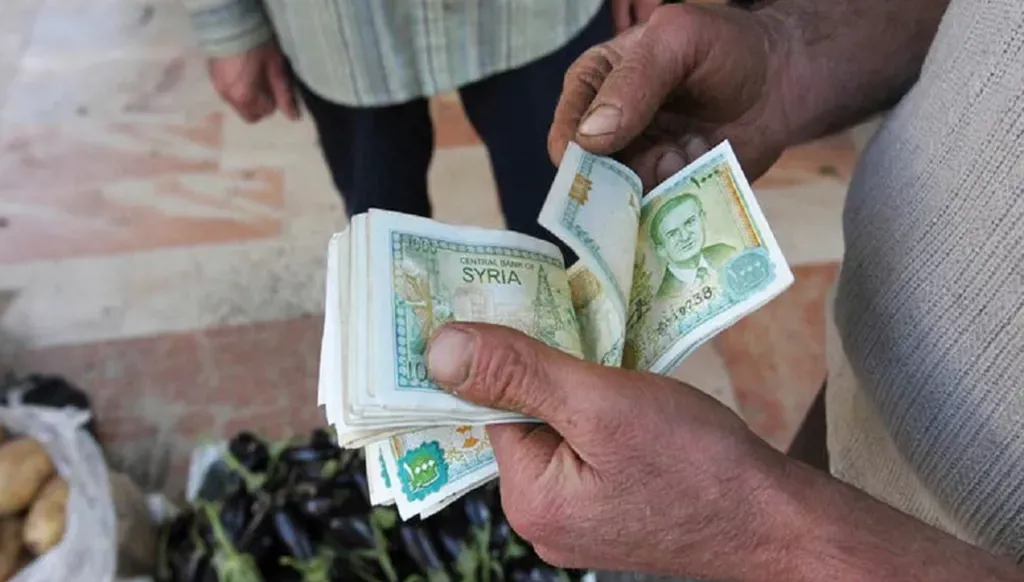


Syria’s decision to amend its currency has reignited a broader debate about the relationship between a currency’s form and the underlying economic reality, particularly in countries that have faced severe monetary collapses. Such a move goes beyond symbolic or political significance; it is part of efforts to align monetary tools with the realities of eroding purchasing power and inflation, while easing technical and everyday burdens on both the state and society.
Although Lebanon has never altered its currency in modern history, discussions about its form have resurfaced out of daily necessity rather than broader monetary policy considerations. The ongoing collapse of the Lebanese pound has not only driven up prices and distorted exchange rates but also created a new monetary reality in which the payment system itself has become a burden for citizens, government institutions, and businesses. Amid calls to remove zeros or replace the currency, a more practical solution is emerging: adjusting the value of currency denominations to reflect actual price levels.
Monetary expert Sarkis Khoury argues that "what is happening in Syria is not merely about removing symbols or figures from the previous regime, but is directly linked to the currency’s devaluation, requiring a reorganization of cash circulation. Countries adjust their currency in response to changing economic conditions, not just for aesthetic reasons."
In Lebanon, the monetary collapse that began years ago has not only eroded exchange rates and purchasing power but has also created a significant gap between the economic reality and the currency in circulation.
From this perspective, Khoury views the issuance of larger denominations as neither extraordinary nor surprising, noting that "the crisis is no longer hidden, so aligning the currency with this reality is a natural step rather than a new acknowledgment of the situation."
Moreover, social factors play a crucial role in this proposal. Radical changes, such as a complete currency overhaul or removing zeros, could confuse large segments of the population who may struggle to adapt quickly. "Therefore, increasing the value of currency denominations emerges as a practical and less costly solution, easing daily transactions without undertaking a complex and expensive process," says Khoury.
Daily life reflects this reality: citizens are now paying millions of Lebanese pounds in supermarkets and stores, making it impractical to continue relying on smaller denominations.
This reality also affects legal and administrative professions. Drawing from his experience as a lawyer, Khoury points out that legal fees and lawsuit registration costs are now calculated in tens or even hundreds of millions, sometimes reaching billions. Without the use of bank checks, carrying such large sums in cash has become a serious burden, making the increase of currency denominations an urgent necessity that cannot be ignored.
Conversely, some argue that issuing larger denominations could fuel inflation. However, Khoury contends that this link is not economically justified. He explains that inflation is driven not by the size or face value of banknotes but by fiscal and monetary policies, budget deficits, and government spending, while increasing denominations simply makes everyday transactions easier.
New Banknotes
International experiences, especially in the European Union during the transition to the euro, have shown that changing pricing units can trigger price increases. Accordingly, removing zeros does not appear to be a viable option in Lebanon’s current context. Sources note that "there is no intention to add zeros, and the proposed approach is limited to printing larger denominations without altering the currency’s structure."
Ahead of the anticipated law permitting the Central Bank of Lebanon to issue higher-value denominations, the bank may print notes of 500,000, 1 million, 2 million, and 5 million Lebanese pounds. A 5 million-pound note would be worth roughly $55, whereas a 100,000-pound note previously held more value than that. Sources argue that keeping the highest denomination below $50 no longer makes sense in an economy where numerical values have drastically shifted.
Completely changing the currency, however, remains a separate option that would require special legislation, a lengthy process to withdraw old notes, and extensive adjustments to accounting systems, salaries, and exchange rates. This costly and complex approach does not appear to be under consideration at present. According to sources, issuing higher-value denominations in the near future is seen as the most practical solution.
Disclaimer: The opinions expressed by the writers are their own and do not necessarily represent the views of Annahar.