

The UAE’s quiet power play


 Messenger
 Whatsapp
 Threads
 Email
Email
 Print
Print
 X
X
 Facebook


In politics and media, stances are not measured by the heat of the moment, but by the logic of the state and the depth of direction. Resilient countries do not make decisions based on a loud wave or a fleeting campaign, but according to clear ethical standards and awareness of the cost of positions and their implications for stability, security, and the reputation and future of the region.
Since its founding, the United Arab Emirates has presented a balanced model in the region: a developmental state domestically and a responsible one abroad, prioritizing peace and stability over adventurism, criminalizing chaos, and rejecting anything that affects human life or threatens the national state. These are not slogans used when convenient, but a path embodied in political choices, humanitarian initiatives, and Arab and international partnerships built on respect for sovereignty, combating extremism, and rejecting the dominance of militias.
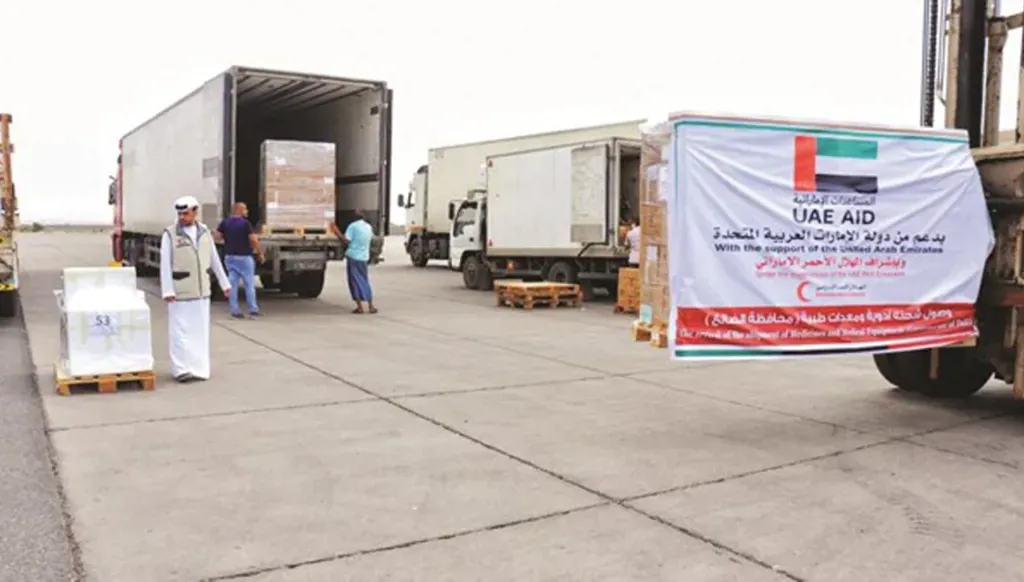
The UAE’s relationships were never merely temporary arrangements of convenience; in many cases, they were alliances forged through a mix of duty, sacrifice, and responsibility before weapons and money. And in Yemen specifically, the UAE was not seeking a foothold or additional influence; rather, it moved based on a strategic reading that understood that leaving the region to forces of chaos would ultimately impose a greater cost on everyone: dismantling the state, expanding militant organizations, and eroding shared Arab security. Whatever different assessments emerged later, the logic of intervention was, at its core, a defense of the region from scenarios of collapse.
What is painful is when divergences, which are natural between states, turn into manufactured hostilities driven by escalation, and by media tools that are less interested in solutions than in scoring points or reaping quick gains. The real question here is not: who speaks the loudest? But: who benefits most from moving disagreements out of negotiation rooms and into polarization platforms? And who wins when trust fractures between brothers in a critical regional moment - one in which states are collapsing, wars are burning, and ambitious powers are waiting to seize opportunities?
What is presented to the public as a “difference in viewpoints” may, in reality, be a turning of backs at a time when no one can afford to turn their back. In an Arab world burdened with crises, the UAE believed in sharing the cost of protecting stability through developmental support where needed, humanitarian assistance where the need was greatest, and a willingness to carry burdens when the danger expanded. And it did not do so as a favor to anyone, but as a commitment to the concept of Arab partnership, and a belief that disagreements have ceilings that must not be broken - because once broken, they open doors that are difficult to close.
From a purely pragmatic angle, shaking core alliances in the region does not remain confined to bilateral relations; it reshapes regional balances and emboldens rivals. When crises are managed publicly without restraints, disagreements become “shifting sands” that swallow what remains of stability, and give lurking powers misleading signals about the fragility of the Arab house and its vulnerability to penetration. For this reason, Emirati diplomatic wisdom prefers to contain emotional escalation and keep pathways back to reason open - because politics is not a game of settling scores, but the art of minimizing losses and maximizing shared interests.
The UAE is not under a test of intentions, nor under an exam of patience or capability. A country that offers its sons as martyrs in defense of the region’s safety is not to be viewed with suspicion, nor met with doubt or disrespect. And with its political, economic, and social model, the UAE is not a state seeking to prove its status through loud voices; its status rests on developmental achievement, international trust, and clarity of priorities: national security first, and regional stability as a pillar of national security.
The conclusion is that major states are not governed by reactions, nor dragged into side battles that strip the region of its foundations. It was said long ago: “When conflict intensifies, wisdom narrows,” and the UAE understands that wisdom is what expands options and prevents sliding into dangerous paths. The United Arab Emirates will remain a banner that storms cannot shake, because it knows that impulsiveness is costly, and that managing disagreements with a cool head is the shortest path to protecting others before protecting oneself, and to preventing the region’s rivals from writing its future on its behalf.
An Emirati media professional specializing in strategic communications and media discourse analysis.
Disclaimer: The opinions expressed by the writers are their own and do not necessarily represent the views of Annahar