

Iraq’s presidency at the center of a political clash
Political parties in Iraq clash after election results to secure their share in the executive and legislative authorities, often raising demands to the point of negotiation deadlock.


 Messenger
 Whatsapp
 Threads
 Email
Email
 Print
Print
 X
X
 Facebook


Political parties in Iraq clash after every election result to secure their share in both the executive and legislative authorities, and to assert their strength before their supporters and their rivals, whether from the same sectarian/ethnic component or from others, which raises the demands of the competing sides, often reaching moments of complete negotiation deadlock.
This is what appeared clearly during the first session of the Iraqi Parliament in its sixth term. For although the position of Speaker of Parliament, based on an informal sectarian power-sharing custom established in 2005, is allocated to Sunni parties, this did not prevent division, as the presence of a “rival candidate” signaled a lack of consensus among parliamentary blocs.
This dynamic extended as well to the positions of First Deputy Speaker, allocated to the Shia, and Second Deputy Speaker, allocated to the Kurds, both of which saw multiple candidates competing. These were attempts to break established agreements and prevailing political wills, and ultimately ended with withdrawals after mutual concessions, leading to the completion of the first required entitlement in the map of Iraq’s political leadership.
The situation is no different regarding the position of President of the Republic. The clash is at its highest level between the two Kurdish parties - the Patriotic Union of Kurdistan (PUK) and the Kurdistan Democratic Party (KDP) - who are considered the “exclusive rightful holders” of this position based on political custom.
Since 2018, the former strategic agreement between them - which used to determine who would represent the Kurdish component in Iraq’s three top leadership posts - is no longer the governing reference for their positions. This comes amid clashing interests within the Kurdistan Region, disagreements over distributing responsibilities within the regional government, and a historical rivalry over who represents the Kurds in Baghdad or beyond Iraq’s borders.
There is also the emergence of a new generation of party heirs adopting more dynamic political ideologies than the founding fathers of the two parties, as well as the openness shown by the PUK toward Baghdad after the so-called Kirkuk Crisis in 2017. This reached the point where its leader adopted a political narrative stating that “the strategic depth of the Kurdistan Region is Baghdad.”
Such a stance is almost contradictory to the Kurdish dream of establishing a “Greater Kurdistan” - a proposed state uniting Kurdish populations across Iraq, Syria, Turkey, and Iran. This reflects a shift in how the party views traditional alliances with its partner, the KDP, and an adaptation to shifting internal balances of power by opening up to strong Shia and Sunni parties, while also recognizing regional changes in the Middle East that have begun to impose their effects on local actors in Iraq.
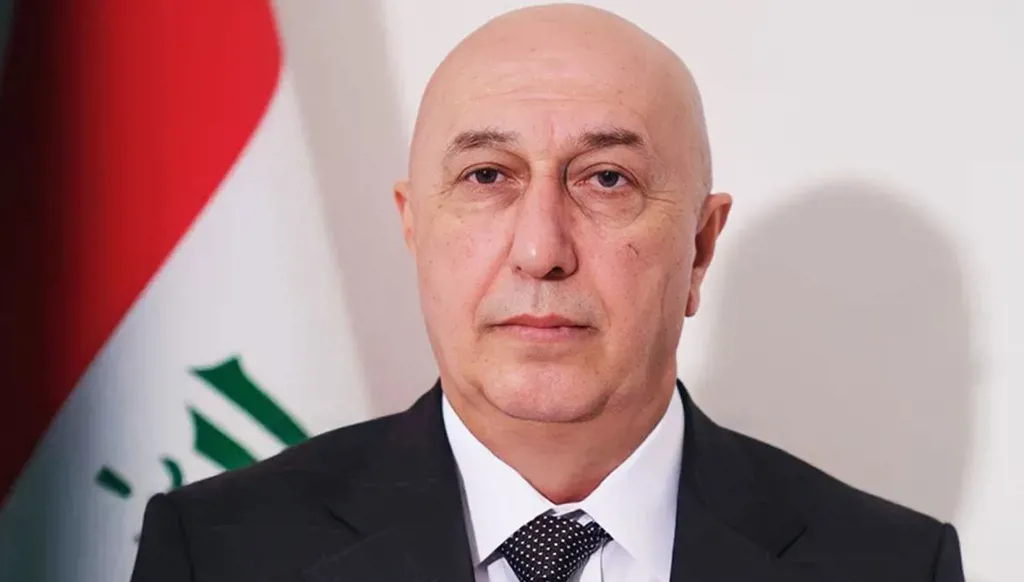
Although both Kurdish parties each presented their own candidate for the presidency to signal political parity, the official nominee of the Patriotic Union of Kurdistan (PUK), Nizar Amidi, currently has the strongest chance of taking the position. His party is still counting on its strategic alliance with the Shia, who hold the largest parliamentary bloc with around 180 seats and successfully in attracting the Taqaddum (Progress) party, the biggest Sunni winner, in addition to several other parliamentary blocs with diverse orientations.
It is also worth noting that the PUK was careful, in order to avoid political deadlock, to choose a figure who would not provoke controversy that could force them to change him later, similar to what happened to the Kurdistan Democratic Party’s nominee for the position of Second Deputy Speaker of Parliament. Moreover, Amidi is close to the party’s founder, the late President Jalal Talabani, one of the founding fathers of Iraq’s post-2003 political system - which gives him broader national acceptability.
For this reason, Amidi may be confident that the clash with the Kurdistan Democratic Party’s candidate will not prevent him from reaching the presidency and that the matter is likely to be settled in his favor. This feeling coincides with the possibility of an agreement between Sulaymaniyah and Erbil (the two major Kurdish power centers) on dividing positions in the Kurdistan Regional Government, whose vote has been postponed for nearly a year, which may push the Kurdistan Democratic Party to withdraw its presidential nominee before the voting session takes place.
Disclaimer: The opinions expressed by the writers are their own and do not necessarily represent the views of Annahar