

Trump’s broad pressure on Iran spans Venezuelan crisis and Iranian unrest


 Messenger
 Whatsapp
 Threads
 Email
Email
 Print
Print
 X
X
 Facebook
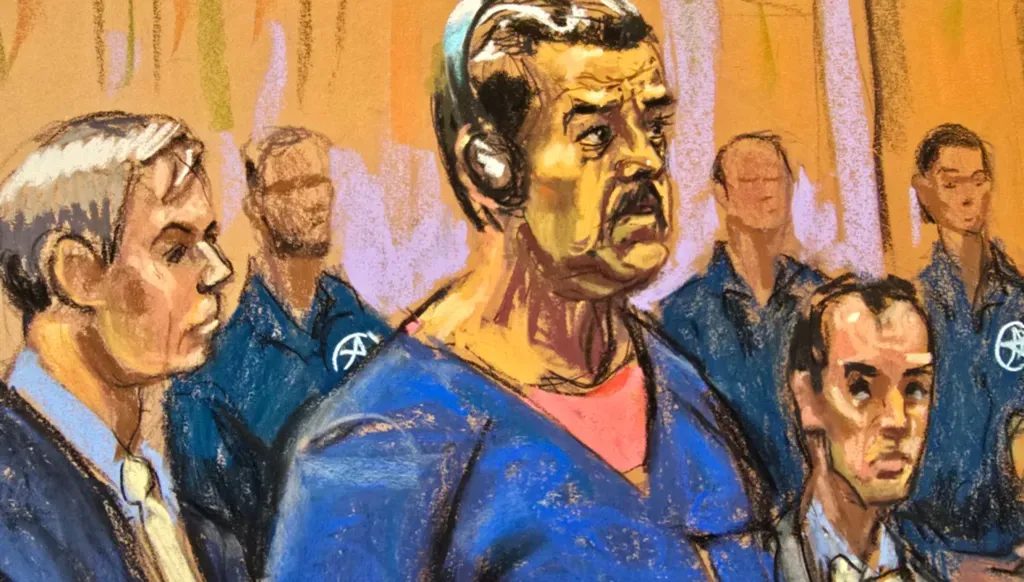


Iran is watching with concern the fate of its ally in Venezuela, Nicolás Maduro. While the anxiety does not extend to imagining a “Delta Force” operation in Tehran similar to the one in Caracas, the loss of Iran’s Latin American branch of the “Axis of Resistance” adds to Tehran’s setbacks since the outbreak of the “Al-Aqsa Flood” war, marking yet another blow in a continuing decline.
The first troubling news came from Venezuela, a partner Tehran once saw as a strategic asset it could use against its rivals. Iran has already suffered significant setbacks across the Middle East - its influence in the Gaza Strip has been weakened, its allies in Iraq have been sidelined by internal debates over exclusive state control of arms, and its support networks in Yemen have been undercut by external pressures and local conflicts. In Lebanon, its closest proxy has faced blows and uncertainty, and the most significant loss came with the collapse of Bashar al‑Assad’s regime in Syria.
A decision by U.S. President Donald Trump resulted in the removal of Venezuela’s leader on January 3 and his transfer to New York to face U.S. courts, just as the same president ordered the killing of Quds Force commander Qassem Soleimani in Baghdad on January 3, 2020. With Trump still actively operating from the White House, and after his decision to send B‑2 strategic bombers to strike Iran’s nuclear sites at Natanz, Isfahan, and Fordow in June 2025, Iran sees him as a looming threat who has demonstrated his willingness to use military force in intimidating ways.
In 2009, widespread protests known as the Green Movement erupted in Iran to challenge what many described as the manipulation of presidential election results in favor of Mahmoud Ahmadinejad over opposition candidate Mir Hossein Mousavi. Tehran authorities responded with a harsh crackdown, placing opposition leaders such as Mousavi and Mehdi Karroubi under house arrest. The U.S. administration under President Barack Obama remained notably silent at the time, reportedly signaling a cautious approach as Washington prepared for a new phase in relations with the Tehran regime - a period that culminated in the signing of the landmark nuclear agreement in 2015.
Trump is not Obama. The current global circumstances and balance of power are very different from those during Obama’s presidency in 2009. Recently, Trump took a position directly opposing Obama’s approach. In a post at 4 a.m. last Friday, Washington time - deliberately timed to reach Iran at a suitable hour - he warned that if Iran fired on peaceful protesters, the United States would intervene to protect them.
On his “Truth Social” platform, he added: “We are locked and loaded and ready to go."
Tehran takes Trump’s threats seriously. Washington has already set a precedent by striking Iranian nuclear reactors months ago, and nothing suggests Trump would hesitate to repeat such action. Discussions about potential attacks on Iran were reportedly part of Trump’s recent meeting with Israeli Prime Minister Benjamin Netanyahu. According to media leaks, the president rejected a proposal from his special envoy, Steve Witkoff, to resume nuclear negotiations with Iran on terms that would freeze uranium enrichment and allow monitoring of current stockpiles.
It appeared that the United States was acting in line with a saying attributed centuries ago to Iraq’s governor Al‑Hajjaj ibn Yusuf al‑Thaqafi, who declared, “By God, I see heads ripe for harvest," a metaphor for decisive action against enemies. External pressures, combined with the effects of sanctions, intersected with street protests to create a picture suggesting to Washington that Tehran might concede on matters it had long resisted. Within Tehran, some have taken cautious optimism from Trump’s willingness to deal with the Maduro regime in Venezuela without Maduro himself, hoping that a similar scenario could unfold in which Washington engages with the Tehran regime on its own terms.
Disclaimer: The opinions expressed by the writers are their own and do not necessarily represent the views of Annahar