

Saudi Arabia’s 2025 Syria strategy: Diplomacy, aid, and investment to stabilize the region


 Messenger
 Whatsapp
 Threads
 Email
Email
 Print
Print
 X
X
 Facebook
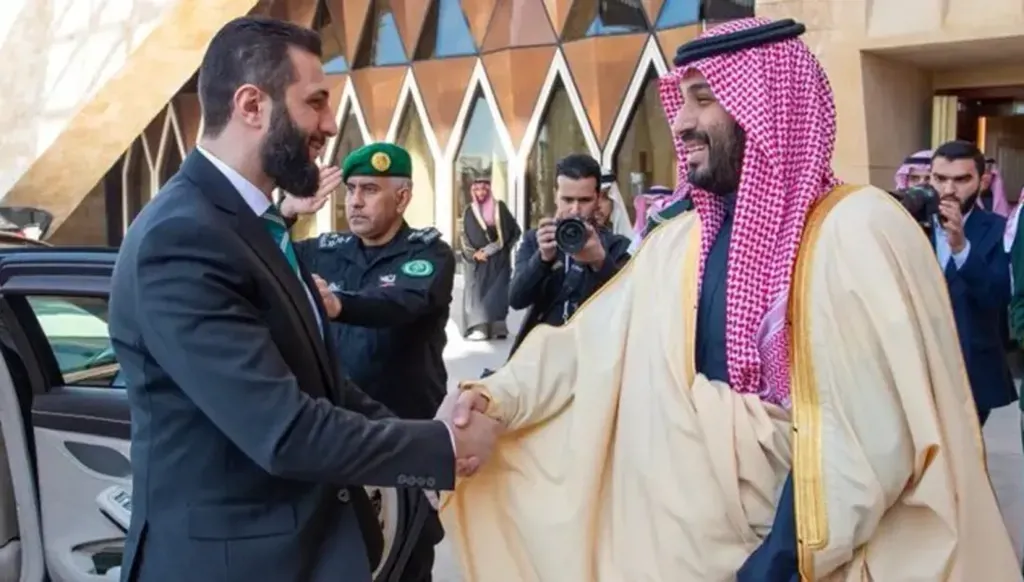


"We are pleased to send Your Excellency the most sincere congratulations and best wishes for success and guidance in this stage where the brotherly Syrian people aspire to achieve their hopes and ambitions." The phrase, included in an official cable sent by Saudi Crown Prince Mohammed bin Salman to Syrian President Ahmad Al-Sharaa at the beginning of 2025, while full of well-wishes and prayers, also signals Saudi Arabia's interest in Syria’s stability and development.
This approach views Syrian recovery as a cornerstone for Middle East security and a critical step toward preventing Syrian territory from being exploited by extremist groups or becoming a pawn in the ambitions of countries seeking to impose a "fait accompli," as Israel is currently doing.
This vision took shape through Saudi diplomacy under Crown Prince Mohammed bin Salman, particularly in his dealings with U.S. President Donald Trump, who responded to the Crown Prince’s request by lifting sanctions imposed on Syria.
The Saudi initiative was met with clear gratitude from Syria, with Al-Sharaa thanking Bin Salman "for his efforts to lift the sanctions." Trump described his response to halt the sanctions as "giving Syria a chance to grow." This was more than a statement: It was followed by an official White House document explicitly outlining the activation of executive measures related to the sanctions imposed under the Caesar Act, including mechanisms for suspension and temporary exemption, moving the decision from the political sphere to actionable executive implementation.
The Saudi initiative was not limited to the issue of sanctions; it began from the very first days following the fall of the former President Bashar al-Assad's regime. Riyadh believed that any political or security vacuum in Damascus would lead to chaos, and it was crucial to prevent such a scenario.
In January 2025, Riyadh hosted an expanded international meeting on Syria, during which the Saudi Ministry of Foreign Affairs stated that the aim was "to support Syria and work toward lifting the sanctions." The ministry emphasized that the continuation of these sanctions hinders reconstruction, delays the return of refugees, and undermines opportunities for stability.
In February, Al-Sharaa’s visit to Riyadh marked a key milestone. After meeting with the Saudi Crown Prince, Al-Sharaa highlighted the "genuine desire to support Syria," adding that the aim is "to establish a real partnership focused on preserving peace and stability in the region."
His remarks reflect a recognition of Saudi Arabia’s role as one rooted in partnership and institution-building.
Saudi support followed parallel paths. On the humanitarian front, the King Salman Humanitarian Aid and Relief Centre established an air and land bridge to Damascus early last year, followed by ongoing food and medical relief programs across various Syrian governorates.
On the economic front, the Kingdom sent a high-level investment delegation to Damascus, led by Minister of Investment Khalid Al-Falih, in July 2025. This was followed by the signing of agreements and the establishment of a joint business council, with the process further advanced through economic and political meetings in Riyadh last October on the sidelines of the "Future Investment Initiative."
In the security sphere, Riyadh has maintained a firm stance, condemning repeated Israeli attacks on Syrian territory, affirming Syria’s sovereignty and territorial integrity, supporting the unification of state institutions, combating terrorism and extremism, and promoting the development of a unified national army guided by a national doctrine.
Saudi Arabia’s active diplomacy toward Syria in 2025 is guided by a clear and realistic vision, integrating political, economic, humanitarian, and security efforts. It reflects an understanding of the challenges facing the government in Damascus and the importance of supporting it to fulfill the aspirations of all Syrians, with no exception.
Disclaimer: The opinions expressed by the writers are their own and do not necessarily represent the views of Annahar.