Sudan at a crossroads: Prime Minister Hamdok’s call for a new social contract amid war and crisis


شارك على
 مسنجر
مسنجر
 واتساب
 ثريدز
ثريدز
 بريد إلكتروني
 الطباعة
شارك على


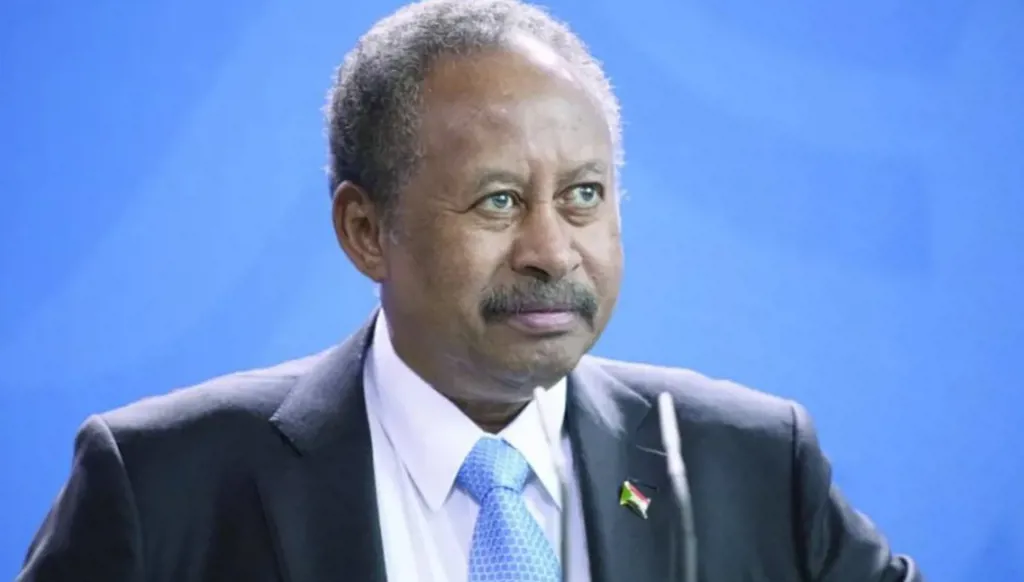


The current situation in Sudan, marked by tragedies that endanger both the state’s survival and the country’s unity, confronts the elites and the people alike with urgent historical responsibilities.
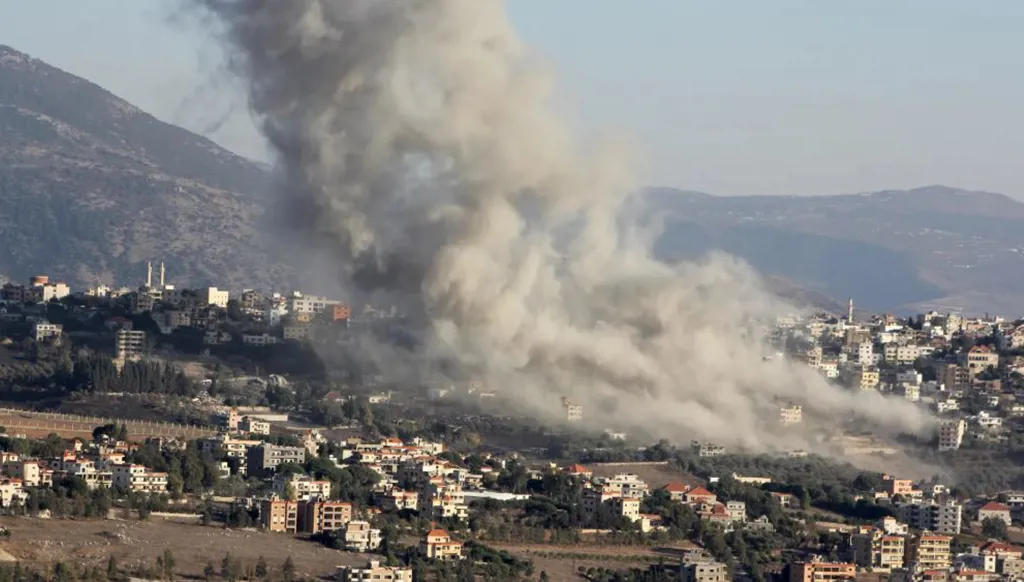
Amid an atmosphere thick with the smoke of fires, the remarks of Dr. Abdalla Hamdok, Prime Minister of Sudan’s civilian government overthrown by the military on October 25, 2021, on the anniversary of the Sudanese revolution and Independence Day, carry weight beyond the usual political narrative. That coup led to a political deadlock and sparked the current destructive war, and Hamdok’s statements highlight the deep-rooted causes of the crisis that has long plagued the Sudanese state.
What Hamdok put forward as head of the Civil Democratic Alliance for Revolutionary Forces (Somoud) goes far beyond a mere “commemorative speech.” It represents an effort to engage thoughtfully with a profoundly uncertain moment, where the contours of war intersect with questions of identity. In this context, envisioning the future becomes an act of civil resistance against a reality dictated by the barrels of guns.
At the heart of Hamdok’s proposal is the revival of the "social contract," moving it from theoretical discussion into practical application. Implicitly portraying Sudan as a “state without a contract,” he highlights a power structure lacking sustainable legitimacy and a military where the line between professional duty and political interference has disappeared. His call for a new contract is not just a slogan - it is a frank recognition that Sudan’s crisis runs far deeper than a mere change of leadership.
A state founded on equal citizenship stands in direct opposition to a state of “privileges and empowerment,” one ruled by a regime that used weapons to serve an ideological agenda. In this context, Hamdok appears to redefine the very “starting point,” refusing to proceed along the flawed path that brought the country to the brink when the democratic trajectory was derailed.
In this analytical framework, the ongoing war is not merely an incidental event but a violent manifestation of the absence of national consensus and the failure of efforts to impose authority through dialogue. When politics is stifled and overthrown by coups, bullets inevitably take the place of conversation, and brute force becomes the only source of perceived legitimacy.
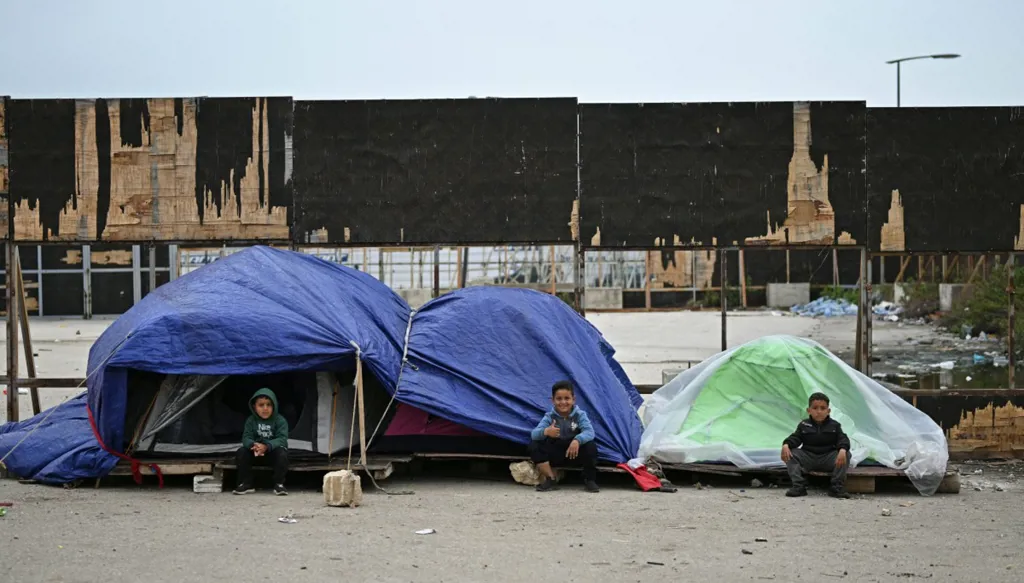
This war is the inevitable outcome of the state’s failure to address fundamental questions: Who governs? How is governance carried out? And for whose benefit? In practical terms, this translates into the breakdown of basic life guarantees - widening destruction, vanishing security, a collapsing economy, and disappearing public services - while ordinary citizens, who had no role in deciding the conflict, bear its heaviest burden and become its primary fuel.
There is a political courage in Hamdok’s approach to confronting the legacy of the defunct regime. His references to models like “de-Nazification” or “ending apartheid” are not meant as historical showpieces but as structural warnings: societies that fail to hold destructive projects accountable remain vulnerable to their recurrence under new names and masks. The call is not for exclusion or revenge, but for restoring politics as a civic practice governed by law - not as a veil for religion or a pretext for coups.
Hamdok’s position on the military strikes at the very “nerve of the crisis.” Redefining the military’s role is not a matter of idealism but a fundamental condition for the state’s survival. A country with multiple armies or where weapons dictate political decisions is, by definition, a perpetually postponed state. His warning against parallel militias correctly diagnoses incomplete sovereignty - one that cannot be stabilized without the state holding a legitimate monopoly over organized force, fully accountable to civilian oversight.
Dr. Hamdok does not present a ready-made political program; rather, he holds up a mirror of responsibility to Sudanese society. Ending the war is not merely a humanitarian imperative - it is the first “foundational pillar” for reclaiming the state from its captors. Any consensus that ignores the root causes of the crisis will only produce a settlement that regenerates the conflict in even more brutal forms.
Amid the logic of force and the labyrinth of superficial settlements, the discourse of the “new contract” serves as a stark reminder of an undeniable truth: Sudan has no future without a civil state, no state can exist without a binding social contract, and no social contract can be written except in the ink of freedom and democracy, under full civilian authority.
Disclaimer: The opinions expressed by the writers are their own and do not necessarily represent the views of Annahar.
العلامات الدالة
الأكثر قراءة