

Hezbollah, Israel, and the US: Rising tensions in Lebanon could spark regional conflict


 Messenger
 Whatsapp
 Threads
 Email
Email
 Print
Print
 X
X
 Facebook
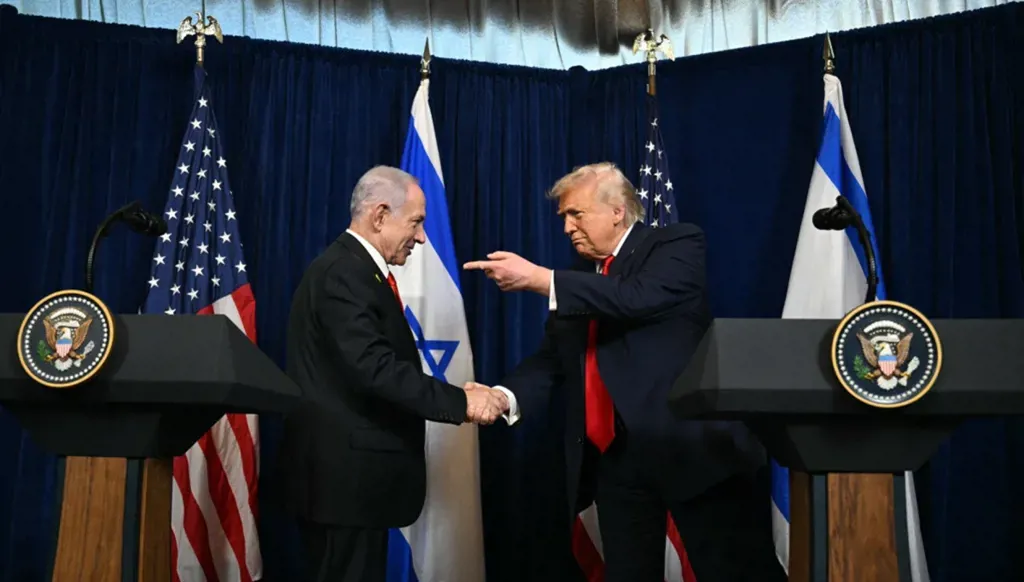


During his meeting with Israeli Prime Minister Benjamin Netanyahu in Florida, U.S. President Donald Trump said his administration is discussing the issue of Hezbollah with the Lebanese government, adding, “Hezbollah has been behaving badly, and we will see where efforts toward disarmament lead.”
Based on Trump’s remarks, it appears he is granting the Lebanese government additional time to implement the military’s proposed plan, which envisions the disarmament of Hezbollah in five stages.
Although Trump’s remarks give diplomacy more time, some interpret them as signaling a possible return to war between Hezbollah and Netanyahu’s government, driven by a belief that no further “wasted time” will be tolerated, that diplomatic avenues have been exhausted, and that the issue may once again be decided on the ground.
The Israelis understand that Hezbollah’s failure to respond to daily attacks for more than a year - targeting its personnel, positions, and equipment - does not signal a willingness to surrender its weapons. They are also aware that the group has reorganized its military and logistical capabilities, and that the message delivered by Hezbollah Secretary-General Sheikh Naim Qassem in his latest appearance on Sunday, December 28, was directed simultaneously at both the Lebanese and Israeli governments.
Among the issues Netanyahu raised in Florida was the content of Naim Qassem’s speech, in which he said during a Hezbollah ceremony in Baalbek that “Lebanon is no longer required to take any steps until Israel fulfills its obligations,” adding that “disarmament is an Israeli-American project, even if it is presented as weapons exclusivity.” The party’s stance clearly rejects any notion of surrender and affirms that it remains active south of the Litani, noting that the Lebanese army’s deployment there was facilitated by Hezbollah.
From the American perspective, there is no prospect of a fourth war in Lebanon in the near or mid-term, despite the possibility of increased Israeli strikes or targeted assassinations of senior Hezbollah leaders. However, the U.S. clearly vetoes any escalation that could lead to a conflict resembling the Third Lebanon War, which has lasted for 66 days.
U.S. operations have not only targeted Nicolás Maduro’s government in Venezuela in the Atlantic but have also aimed to expand strikes and tighten control to achieve strategic objectives - primarily disrupting funding sources for Iran and Hezbollah. According to CIA claims, these groups have used oil and drug trafficking and money laundering to evade sanctions, with Caracas serving as a key hub for their operations in the region and into the United States.
Targeting Maduro’s regime is viewed as equally important as confronting Assad’s government in Syria. Trump considers weakening Bashar al-Assad and supporting Ahmad al-Sharaa’s faction crucial to cutting the land route used to smuggle weapons and drugs from Iran to Lebanon via Syria. Washington believes that a strategy focused on “drying up” funding sources for Hezbollah and other groups is more effective than direct military strikes.
The Americans may be waiting for the potential collapse of the Iranian regime to gain strategic advantages in Lebanon and Palestine. However, Qassem’s statements signal that Hezbollah is preparing to play its final card - the option of war with Israel - especially after Netanyahu’s government deliberately escalated tensions by declaring recognition of the independence of “Somaliland.”
Will Netanyahu’s fears align with Hezbollah’s concerns, potentially opening both southern and northern fronts? Lebanon’s reality remains uncertain, and events could unfold contrary to the wishes of the Trump administration, possibly dragging the region into a new military conflict.
Disclaimer: The opinions expressed by the writers are their own and do not necessarily represent the views of Annahar.