

Lebanese presidency backs national effort to free prisoners held by Israel


 Messenger
 Whatsapp
 Threads
 Email
Email
 Print
Print
 X
X
 Facebook
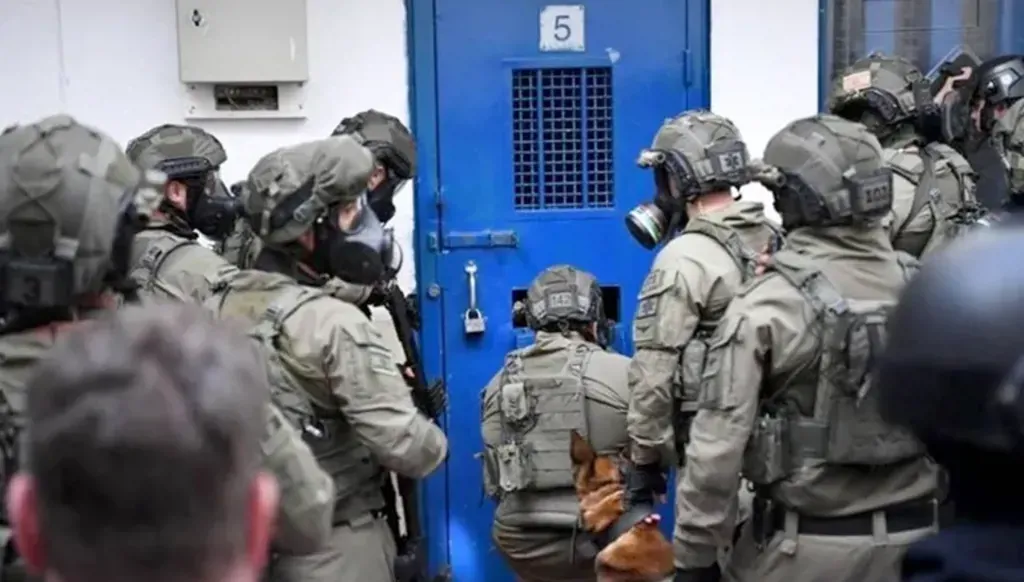


Since Hezbollah has effectively frozen its military activity in southern Lebanon, it has lost the ability to issue the kind of open threats it once used, such as the slogan “We are a people who do not abandon our prisoners in the enemy’s jails.” That phrase was famously coined by the party’s late secretary-general Hassan Nasrallah, and was put into action in 2006, when Hezbollah fighters carried out a cross-border operation in the Aita al-Shaab area near the Israeli border, capturing Israeli soldiers in order to exchange them for Lebanese detainees held by Israel. With military leverage no longer an option, Hezbollah has recently shifted to a political and diplomatic pressure campaign aimed at securing the release of 20 Lebanese prisoners held by Israel. Twelve of them were detained while taking part in clashes against Israeli ground advances along the border, while the remaining detainees were arrested after a ceasefire agreement had come into force.
This effort is being led by two Lebanese organizations, the Committee of Representatives of Lebanese Prisoners and Freed Detainees and the Lebanese Association of Prisoners and Freed Detainees, with support from legal experts and advisers. According to Ahmed Taleb, a senior official in the association, who spoke to Annahar, the groups have developed a comprehensive action plan to secure the release of all detainees. The plan rests on two main pillars:
- Compiling a final list of prisoners after thorough investigation and verification that they are indeed in Israeli prisons.
- Including meetings and contacts designed to keep the issue alive, elevate it to a national cause, and push the Lebanese state to raise it in relevant international forums through successive diplomatic initiatives.
In the first track, Taleb said: "Our efforts and communications have resulted in a confirmed list of 20 individuals whom we are now certain are in Israeli custody. We stress that not all of them are Hezbollah members or fighters. Eight were arrested while returning to their villages after the ceasefire took effect, or while traveling for work and daily livelihood." In addition to a Lebanese ship captain detained in the coastal town of Batroun, the confirmed detainees are: Abdullah Fahda, Ali Younes, Ali Tarhini, Murtada Mhanna, Ali Fnaysh, Hussein Hammoud, Daher Hamdan, Youssef Qataya, Mohammad Jheir, Fadi Assaf, Ibrahim Al-Khalil, Hussein Qashqoush, Hussein Sharif, Ali Assaf, Waddah Younes, Mohammad Jawad, Hassan Jawad, and Hussein Karki.
However, Taleb pointed out, "this list does not mean that we have stopped our efforts to discover the fate of other missing individuals who disappeared during the 66 days of conflict. We have a list of 42 missing persons, which recently decreased to 39 after rescue teams retrieved the bodies of three martyrs from the outskirts of Ramiya town a few days ago."
Accordingly, Taleb added that "these 39 individuals cannot be considered martyrs as some of them may be prisoners in enemy hands, and we will continue our efforts to resolve the matter."
In response to a question, Taleb confirmed that the Israelis still refuse to show any cooperation with the efforts of the International Committee of the Red Cross mission, aimed at communicating with the prisoners and learning about their conditions and health. They also refuse to provide a final list of prisoners, and they prevent the exchange of messages between the prisoners and their families, in violation of international laws that require the capturing party to disclose the conditions and health status of the prisoners, and if they are in reasonable circumstances.
It is known that both associations, along with delegations of detainees’ families, have launched an escalating campaign of public action. This has included a sit-in outside the headquarters of ESCWA, the United Nations Economic and Social Commission for Western Asia, in Beirut, as well as solidarity vigils in various locations, media outreach, and visits to diplomatic missions.
Taleb pointed out that this movement will continue in upcoming days with meetings with authorities and officials.
According to him, one of the most significant developments so far was a meeting held a few days ago with Lebanon’s President, General Joseph Aoun, which he described as positive. "The president showed full responsiveness, viewing the issue as a national cause rather than the concern of a single party or group," Taleb said. “He announced that he would raise the matter in all his meetings and communications with influential actors, as well as in his media appearances, stressing the need to keep the issue alive and actively engaged, and not allow it to fade from public attention.
Taleb added: “We have submitted a formal request to the Grand Serail, the seat of the Lebanese government, to schedule a meeting with Prime Minister Nawaf Salam. This is aimed at finalizing the necessary framework for coordination with relevant state institutions, so that our upcoming actions are fully integrated and clearly convey, both domestically and internationally, that the prisoners’ issue is a national cause of broad public concern.”
Disclaimer: The opinions expressed by the writers are their own and do not necessarily represent the views of Annahar