

What happens next? Hezbollah confronts weapons seizure


 Messenger
 Whatsapp
 Threads
 Email
Email
 Print
Print
 X
X
 Facebook
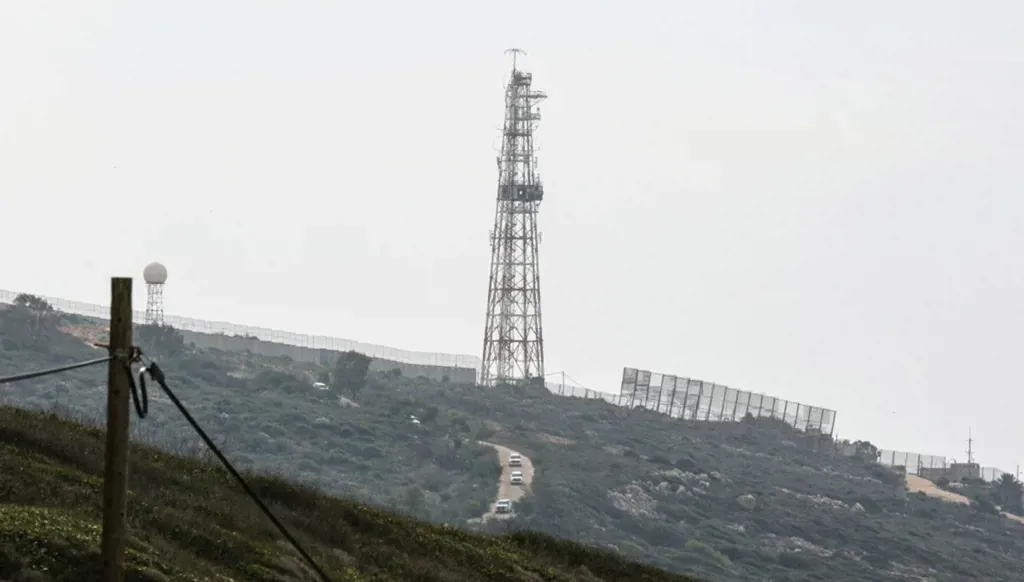


As the government prepares to issue its long-awaited statement declaring that the army has completed the first phase of its plan to consolidate weapons under state control in the southern Litani River region - rendering it entirely free of any military presence by Hezbollah - the party realizes that this new reality will confront it with significant challenges. These are centered on two key issues: the future of its arsenal and the extent of its presence and influence within Lebanon and across the broader regional equation.
Hezbollah’s position becomes even more delicate as its opponents, both inside Lebanon and abroad, are eagerly awaiting this development - the anticipated clearance of the southern Litani region of all weapons not under state control - to step up pressure and challenge the party’s influence.
It was therefore unsurprising that Prime Minister Nawaf Salam quickly announced the government’s readiness to begin implementing the second phase of the plan to dismantle Hezbollah’s weapons, just hours after the army chief spoke of the imminent declaration of the southern Litani region as fully disarmed. Equally expected was the open acknowledgment by Hezbollah’s internal adversaries of an impending increase in financial pressure on the party - efforts that began months ago - aimed at cutting off its funding sources and dismantling its economic foundations, which Western observers consider one of its key pillars of power.
In other words, Hezbollah is fully aware that its opponents’ calculations are based on the assumption that, over the past year following the theoretical implementation of the ceasefire agreement, the party has exhausted much of its “resistance and resilience” capabilities - those very strengths that allowed it to withstand the intense attacks aimed at disarming it.
In response to this situation, Hezbollah is planning to confront the repeated attacks aimed at disarming it in the area between the Litani and Awali rivers - which practically encompasses the entire administrative South. This area is, in theory, envisioned as the bridge to a third phase that could extend to other parts of the southern suburbs and the Bekaa Valley, where the party’s remaining missile stockpiles and heavy weaponry are stored. Thus, Hezbollah is also fully aware that it now faces an inevitable confrontation to defend the last strongholds of its arsenal.
First, Hezbollah’s opponents are expected to make an exceptional effort this time to prevent the party from maneuvering by relying on its long-standing defense that the ceasefire boundaries are limited to the Litani South and do not extend further north. When, during the government session on September 5, they endorsed a gradual approach based on army reports, they effectively approved a settlement that allowed Hezbollah to “save face” in front of its mobilized and provoked base. However, this “leniency” is unlikely to be repeated in the next phase, which is now approaching. The commitment of the parties involved toward external actors is fundamental and principled, whereas their commitment toward Hezbollah remains tactical and circumstantial - especially given that U.S. and Western pressures exceed anyone’s capacity to endure.
The second concern is that, while the government makes no secret of its position and requirements - which are now fully clear - what options does Hezbollah have in response to this pressing development? How far can it maneuver in the face of repeated attacks aimed at curbing its influence and disarming it?
Hezbollah believes it holds a legal and legitimate claim. It argues that it has fully assisted the state in withstanding Israeli pressures by fulfilling its commitments: withdrawing all military presence from the south of the Litani River, granting the army access to its storage facilities in the area, and strictly refraining from any confrontation with Israel. From Hezbollah’s perspective, it is therefore incumbent upon the government to insist on a logical prerequisite: Israel must cease its daily aggression against Lebanon under international guarantees, withdraw from the five strategic hills it continues to control, allow residents of the border villages to return safely, and release prisoners - before any measures are taken to confiscate weapons in the area north of the Litani.
In principle, the party counts on implicit commitments from the Lebanese Presidency, made during the negotiations that led to the “September 5 Settlement.”
In this context, the party was not surprised by Prime Minister Salam’s haste in publicly announcing the government’s readiness to immediately begin the second phase of the army’s plan. The party understands that Salam sought to preempt a more measured and cautious approach preferred by certain actors, particularly the Lebanese Presidency and army leadership. At the same time, he aimed to send a message abroad, signaling that the government is determined to carry out the mission, while expecting a different response from the Lebanese Presidency based on previous “understandings” and past experiences between the two sides.
Consequently, the party is adopting a wait-and-see approach in forming its decisive position on this course, betting on a rational approach from the Baabda Palace, which has consistently declared that it will not accept any course leading to a clash between the army and the resistance. The party's continuous guarantee is that its environment will not remain passive toward any attempt intended to humiliate the resistance.
Disclaimer: The opinions expressed by the writers are their own and do not necessarily represent the views of Annahar.