

U.S.-Israel alignment strengthens as Trump backs Netanyahu’s regional strategy
Analysis of Trump and Netanyahu’s coordinated policies reveals deep U.S.-Israel ties and implications for Iran, Hezbollah, and Gaza


 Messenger
 Whatsapp
 Threads
 Email
Email
 Print
Print
 X
X
 Facebook
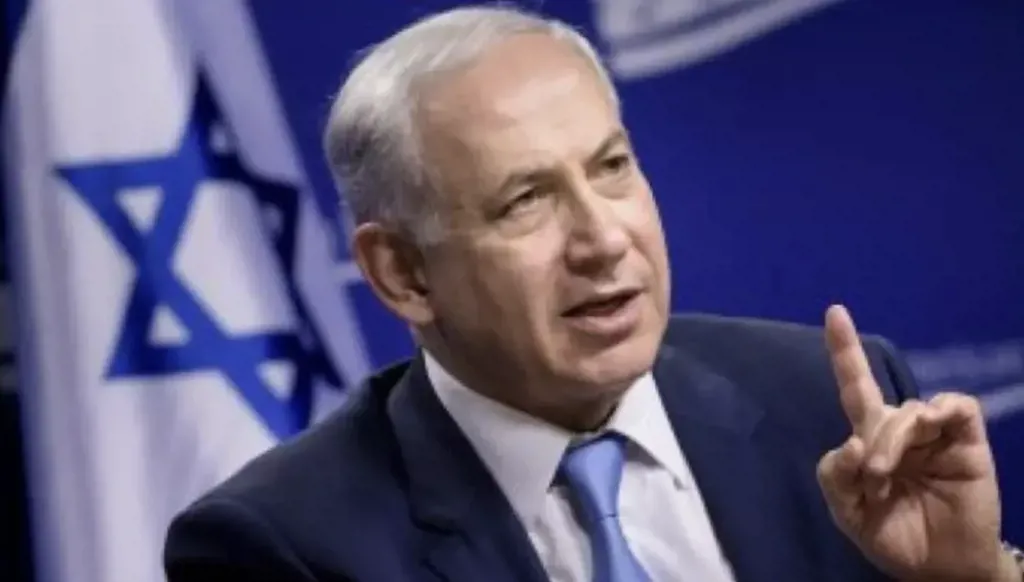


The factions aligned with the “resistance and confrontation” axis are banking on severing the connection between U.S. policy under President Trump and the approach pursued by the Israeli government, particularly the hardline administration led by Netanyahu.
Practically, this bet is misplaced. First, it overlooks the close and strong relationship between Israel and the United States. Second, it ignores the history of U.S.-Israeli relations, which, while occasionally marked by minor or incidental disagreements, does not undermine the fundamental alignments. Third, the U.S. president is the one most aligned with Israel’s policies under Netanyahu’s leadership.
A review of Trump’s policies during his first term (2017–2021) and the early months of his second term (2025) confirms this alignment. He was the architect of the “Deal of the Century,” renounced U.S. commitments under the Oslo Accords, sidelined the Palestinian dimension in the peace process, legitimized settlements, and recognized Israel’s annexation of the Syrian Golan Heights. Additionally, he closed the PLO office, cut funding to UNRWA, and halted aid to the Palestinian Authority. Early in his second term, he even floated the idea of relocating Gaza’s population and supplied Israel with advanced destructive weapons that the Biden administration had withheld. Moreover, the United States participated under his leadership in Israel’s war against Iran (June 2025).
It therefore seems odd for Iranian or Hamas leaders to claim that “rationality” has suddenly guided their thinking, or that “realism” now drives their decisions, when they discuss the supposed disintegration of U.S.-Israeli relations and call on the U.S. to pressure Israel to halt its war policies - especially given Iran and Hamas’s demonstrated willingness to adjust their strategies.
In reality, the United States continues to support Israel and shield its policies, showing that the regional circumstances - or the reality on the ground - have shifted, particularly following the 12-day war with Iran in the summer of 2025. This conflict pushed Iran back within its own borders and curtailed its influence, fully or partially, across the Arab East - from Lebanon to Syria to Iraq - amid the collapse of the Assad regime and the dismantling of Hezbollah’s military capabilities.
Thus, the shift in the Trump administration’s policy can be attributed to its confidence in Israel’s long-term strategic security, following the elimination of the previous challenges and risks it faced.
From Israel’s perspective, it has demonstrated the ability to fight on multiple fronts - with American support, of course - and the parties that once threatened its security have either disappeared or been significantly weakened. This, in turn, necessitates changes in U.S. policy to implement a new regional framework in collaboration with other actors, including Saudi Arabia and Turkey, while taking into account the incentives that encourage their participation.
According to this view, we can discuss a divergence in priorities between the American and Israeli sides, as Israel, under the extremist government, seeks to exploit the current situation to continue its extermination war in Gaza, not only to eliminate Hamas but also to rid the region of as many Palestinians as possible. Additionally, Israel aims to completely end the Palestinian state project in the West Bank, not just in Gaza.
Conversely, the United States no longer perceives Israel as being under threat, especially in light of recent developments in the Levant. This shift follows the weakening or adaptation of the Palestinian state project to align with American and Israeli priorities - allowing for the preservation of settlements and a largely demilitarized Palestinian state - without addressing the fundamental issues at the heart of the Palestinian cause.
Regarding Iran, the United States views the country as weakened and sees the need for continued political, economic, and security pressures, including dismantling Iranian-backed militias in Lebanon and Iraq and limiting its missile capabilities. Israel, meanwhile, interprets the situation as justification for another military strike aimed at further degrading Iran’s missile potential, with the ultimate goal of undermining the regime in Tehran.
However, Israel’s main concern is the United States’ reliance on other regional actors to shape the Middle East. Saudi Arabia and Turkey play central roles in this approach. The strong relationship between the U.S. president and the Saudi crown prince, along with arms transfers, support for Saudi Arabia’s peaceful nuclear program, and linking regional progress to the promise of a Palestinian state, all enhance Saudi influence. At the same time, Turkey is relied upon to help stabilize Syria and Gaza, further shaping the regional balance.
In this context, Netanyahu seeks to strengthen Israel’s role within the U.S. regional strategy by aligning with it rather than breaking away. At the same time, he emphasizes the importance of maintaining hostility toward Iran, using this focus as leverage to reduce Israel’s obligations to the United States regarding Gaza, Syria, and Lebanon - a form of political bargaining. On a personal level, it also allows him to project himself as a figure comparable to, if not surpassing, Ben-Gurion, who famously led Israel to overcome its adversaries.
Disclaimer: The opinions expressed by the writers are their own and do not necessarily represent the views of Annahar.