

Inside Iran’s 12-Day war: Strengths, weaknesses, and lessons for the regime


 Messenger
 Whatsapp
 Threads
 Email
Email
 Print
Print
 X
X
 Facebook
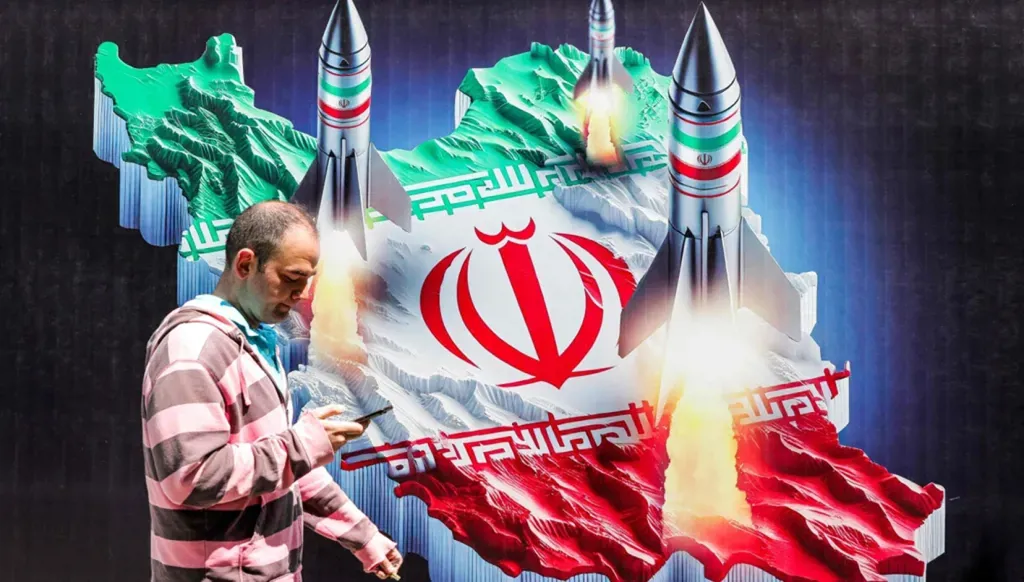


Throughout history, wars have left profound and lasting impacts on the countries involved, shaping governments, governance, societies, and cultures. Some experts argue that, despite the destruction, killing, and violence that define their grim reality, wars can also have constructive aspects. They can reveal weaknesses, highlight areas for strengthening national resilience, and compel societies to confront realities they previously ignored. In the process, nations may act more wisely: first, by enhancing deterrence to prevent future conflicts, and second, by building the capacity to respond effectively if confronted by an adversary.
Historical examples of invasions of Iran
For example, in the last century, Iran was invaded by external enemies three times: the first in 1941 during World War II, when British and Soviet forces occupied parts of Iran for about five years, until 1946; the second in 1980 by Iraq under the Ba’ath regime; and the third in 2025 by Israel. During World War II, Iranian political leaders realized that, despite Reza Shah’s ability to build the economic and administrative infrastructure of modern Iran internally, he was incapable of confronting an external enemy. This bitter experience led Iran, under Mohammad Reza Shah, to strengthen its military and economic forces and to develop international cooperation, making it an undesirable target for any aggressor for 38 years.
After the Islamic Revolution of 1979, Saddam Hussein believed that Iran’s military - particularly weakened by the execution and flight of its senior commanders - had collapsed organizationally, and that he could occupy the Arab-populated regions of Iran. He therefore launched a war. Despite simultaneous support for Baghdad from the United States and Russia, he was unable to win, as the Iranian people stood united in defending their territory against the aggressor for eight years.
The long period of peace and Iran's preparations
Over the past 37 years, from the end of the Iran-Iraq War in 1988 to Israel’s attack on Iran in 2025, the country repeatedly faced the risk of military confrontation with the United States, Israel, and even the Taliban - but full-scale war never broke out. Iran drew on its historical experience: It avoided unnecessary conflict while simultaneously investing heavily in its military and defense capabilities to prepare for any potential threat. Both American and Israeli intelligence agencies were well aware of this strategic reality.
The 12-Day War: Revealing strengths and weaknesses
During the 12-day war in June 2025, reportedly planned and designed years in advance, Iran’s air defense system weaknesses were exposed, leading to the dismissal of the Iranian Air Force and Air Defense commanders. However, Iran’s offensive missile capabilities became evident to international observers. In the recent conflict with Israel, the number of Iranian missiles penetrating Israel’s defense systems - the Iron Dome and David’s Sling - increased daily, along with their destructive power, reaching the point that Israel’s Weizmann Institute of Science, a major strategic and research center in Rehovot, was also destroyed. This demonstration of power earned the approval of several governments and populations in the Arab region, who viewed it as the first time a Middle Eastern country could strike occupied territories destructively and without fear. Iran did not limit its attacks to Israel; it also targeted the US Al Udeid Air Base in Qatar.
Rebuilding Iran's military power
After the war, Iran focused on rebuilding and enhancing its defensive capabilities, reaching strategic agreements with China to support these efforts. Although only 6% of Iran’s missile launch sites were damaged during the conflict, Tehran is actively strengthening these sites in preparation for any future confrontation. Reports suggest that Iran is developing plans to launch up to 2,000 missiles simultaneously toward Israel if a new war were to erupt.
Accordingly, Israeli Prime Minister Benjamin Netanyahu plans to visit the United States next week to portray Iran’s missile capabilities as a serious threat to both America and Europe, paving the way for potential U.S. involvement in a new attack on Iran. In the minds of Israeli decision-makers, Iran’s air defense system is insufficient to counter highly advanced aircraft such as the F-35. However, Iran’s missile launch platforms could inflict irreparable damage on Israel, prompting Tel Aviv to focus on weakening or destroying this key component of Iran’s military strength.
Non-military aspects: Internal challenges
Beyond the military dimension, the 12-day war did not succeed, as expected, in pushing the Islamic Republic to reconsider its approach toward society and its people. Many had anticipated a continuation of the political, social, and cultural openness that emerged in Iran during the three months following the conflict. However, over time, as external threats receded, it appears that decision-makers in the Islamic Republic intend to return to pre-war policies. This approach has sparked dissatisfaction and protests among the population, especially as Iran’s economic situation has become increasingly concerning.
Experts argue that the 12-day war demonstrated the Islamic Republic’s dependence on the support of its people. Should the public turn against the regime - especially in light of the emerging Israel-U.S. alliance against Tehran - the risk of its collapse in the near future becomes significant. The most important lesson for the Islamic Republic from this conflict is to rely on its citizens, heed their demands, understand social and cultural shifts, and implement necessary reforms within the political system.
Disclaimer: The opinions expressed by the writers are their own and do not necessarily represent the views of Annahar.