

Tensions soar in the Middle East as Israel’s actions in Gaza, West Bank and Lebanon stir regional unease


 Messenger
 Whatsapp
 Threads
 Email
Email
 Print
Print
 X
X
 Facebook
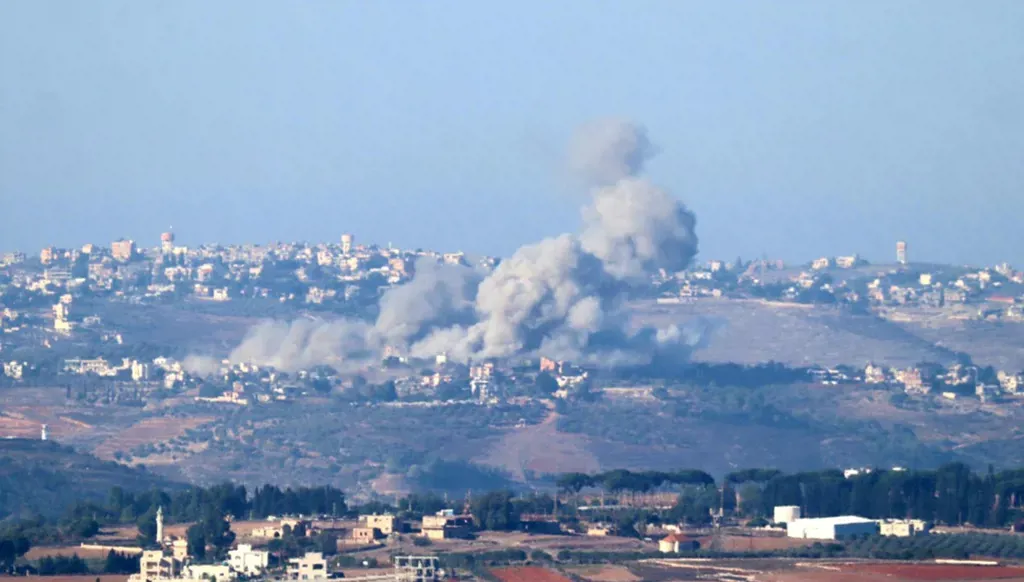


All eyes are on the U.S.-Israeli summit on the 29th of this month, as observers hope to gauge potential developments for the year ahead. Tensions are expected to escalate at different speeds and intensities across multiple, interconnected fronts - many of which Israel has delineated based on its ideological priorities, strategic considerations, and core security interests, particularly under the current government.
Israel views Gaza primarily as a core security issue rather than part of the occupied Palestinian territories, even though the area is subject to various arrangements right before the war. As a result, Israeli demands to implement the second phase of the Trump plan clash with the broader Arab-Muslim position.
Some parties have expressed willingness to contribute forces to maintain security in Gaza, citing widely accepted justifications aimed at reinforcing the ceasefire. However, these measures do not align with Israel’s plan to bring the sector entirely under its security vision; in fact, they contradict it by treating Gaza as if it were an isolated island, detached from the broader Israeli-Palestinian conflict and the comprehensive, gradual settlement such a conflict requires.
Thus, any effort to implement the second phase of Trump’s plan remains a fragile truce, always at risk of exploding, as long as Israel’s position - both in vision and in practice - remains unchanged.
In the West Bank, where Israel’s campaign takes other forms, including armed actions against the population, Finance Minister Bezalel Smotrich - who also oversees settlement policy - recently highlighted the legalization of 19 settlement units, bringing the total approved in the past three years to 69. Smotrich emphasized that these measures are intended to prevent the future establishment of a Palestinian state. Meanwhile, the UN Secretary-General called for an end to the cycle of violence, stressing the need to pave the way for a lasting two-state solution.
On the ground, developments paint a picture that contradicts the UN Secretary-General’s appeal. International decisions in this area remain largely unimplemented, even gradually, which comes as little surprise.
The Lebanese front
The same Israeli logic applies on the Lebanese front, where Israel has continued to violate the ceasefire agreement established on November 27, 2024. While Lebanon negotiates over the ceasefire and Israeli withdrawal from occupied positions - and pushes, despite clear Israeli refusals and weak international pressure, to revive the 1949 truce agreement - the Israeli objective remains to “normalize relations and engage in political negotiations with Lebanon.” Lebanon rejects this approach, insisting instead on a comprehensive peace settlement based on the resolutions of the 2002 Arab Summit in Beirut.
It is worth recalling in this regard the theory of "security sovereignty," which, if not stopped, appears to be on its way to becoming part of Israel's strategic doctrine - a doctrine that Israel seeks to impose on both Lebanon and Syria, a move that both countries categorically and fundamentally reject.
It is important to keep these issues in mind when assessing developments in the coming year in a Middle East undergoing significant change and facing numerous challenges - strategic, political, economic, and developmental - albeit to varying degrees across different countries. Developments in one country or part of the region often have ripple effects that impact the entire Middle East, even if unevenly. Given this complexity, comprehensive or sectoral regional cooperation, even if gradual, remains in the common interest of all nations. Such cooperation is crucial for building or reinforcing stability, particularly in managing points of tension that could escalate and be exploited in various conflicts, producing negative repercussions across the region at different times and in different ways.
Therefore, fostering cooperation grounded in non-interference, managing and resolving disputes, and building on shared or integrated interests is essential to enhancing stability across the region, drawing lessons from both recent and more distant experiences.
Disclaimer: The opinions expressed by the writers are their own and do not necessarily represent the views of Annahar.