

Yemen’s South and the "Day After": Who can deliver security and stability?


 Messenger
 Whatsapp
 Threads
 Email
Email
 Print
Print
 X
X
 Facebook
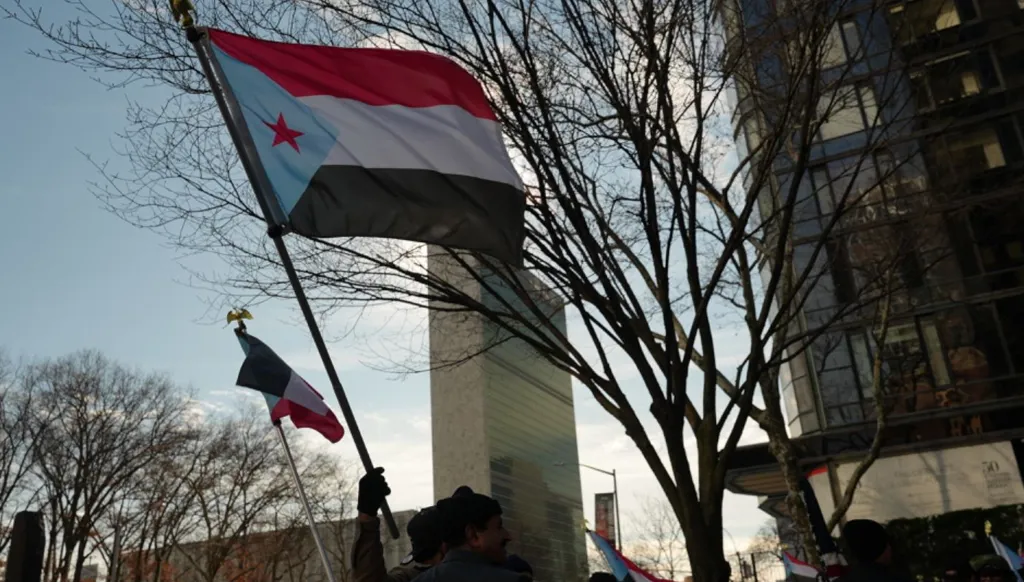


Far from the clamor of narratives that attempt to describe what is happening in Southern Yemen as a deviation from the expected course, the central question remains both simpler and deeper: what do people want after years of war and chaos?
Today’s issue is not who dominates the map, but who can protect civilians and restore a sense of stability to their lives. Prolonged wars do more than redraw front lines; they generate chronic security vacuums that foster smuggling networks, allow extremist groups to operate, and are repeatedly exploited by rival forces whenever hope appears within reach. This is why the notion of the “day after” becomes a decisive moment: either a transition from emergency logic to sustainable stability, or a return to the same void under new guises.
Southern Yemen is more than a geographical space. It represents an identity, an experience of statehood, and a collective memory. The south existed as a state prior to Yemeni unification in 1990, before entering a unity process that, in the view of many southerners, failed to produce an equal partnership. That experience culminated in conflict and prolonged marginalization. After the 1994 war, a widespread perception took hold that the south had been pushed to the political and economic margins, and that the state increasingly functioned as a network of influence rather than a contract of citizenship.
For this reason, southern demands did not emerge suddenly or opportunistically. They are the result of a cumulative trajectory that began in the 1990s and gradually expanded in the public sphere. Subsequent political shifts revived a fundamental question: if the costs of state dysfunction are borne by southern security, resources, and the prospects of its youth, why is the south repeatedly asked to wait for a comprehensive solution that might be delayed for years?
Hence, the transformations in Hadhramaut and Mahra are read not just as an expansion of security scope but as a test of the south's ability to turn risks into a stability project. The southern east is not an easy area; it is a socially and tribally unique environment, with sensitive local balances and resources that could be a blessing if managed with a state mind, or a burden if left to the war economy.
It becomes clear, then, that the “day after” is not only about institutions in an administrative sense. It is also about a narrative of justice and rights. Some analyses overstate the “inevitability of geography,” effectively holding the south accountable for its location, as though popular will were a marginal detail in political equations. Yet politics is not merely about borders and maps; it is about social contracts, representation, and reciprocal interests. Sovereignty cannot be administered as a conditional grant or postponed indefinitely. Within the Yemeni file, this debate reflects the depth of transformation underway. One side argues that the right to self-determination belongs to southerners, on the grounds that unification was not built on an equitable political contract or clear popular consent. Another fears that returning to two states would open the door to greater disintegration. Beneath this dispute lies a pragmatic question that cannot be ignored: should the south remain suspended, tied to an uncertain northern future, while paying the price of disorder and eroding security?
At the same time, a responsible reading of the “day after” recognizes that southern security does not exist in isolation. Its sustainability is affected by developments in the north, where the Houthis, who control most of northern Yemen, pose an ongoing threat that extends beyond Yemen to regional security and strategic passages. Elsewhere in the north, the picture remains opaque: rival forces compete for influence more than they produce a coherent state project, and their capacity or willingness to change the rules of the game remains uncertain. Political realism, however, also dictates that the south’s future should not be held hostage to northern paralysis, nor should societies be asked to defer normal life indefinitely while awaiting a “comprehensive solution” that may not arrive anytime soon. When the state erodes, those on the ground have a responsibility to build what they can: day-to-day security, basic services, and a model that demonstrates stability is achievable rather than rhetorical.
Through the sacrifices of its people, the south has succeeded in narrowing the space for terrorism and restoring a significant degree of security to its cities and coastline. As southern identity consolidates and channels of representation emerge that reflect public sentiment, the right of southerners to discuss their future, within peaceful frameworks, has never been more present. Ultimately, success in the next phase will not be determined by maps alone, but by the south’s ability to translate gains into everyday life: security that reassures citizens, an economy that opens horizons of hope, and a fair narrative that brings an end to the slow erosion of people’s lives by prolonged uncertainty.
Disclaimer: The opinions expressed by the writers are their own and do not necessarily represent the views of Annahar