

Global power plays: How Iran’s shadow fleets and Russia’s missiles are raising the stakes
The confrontation between Russia and Europe is somewhat linked to the parallel American war on Iran and Venezuela, ushering the world into a new phase of complex balances.


 Messenger
 Whatsapp
 Threads
 Email
Email
 Print
Print
 X
X
 Facebook
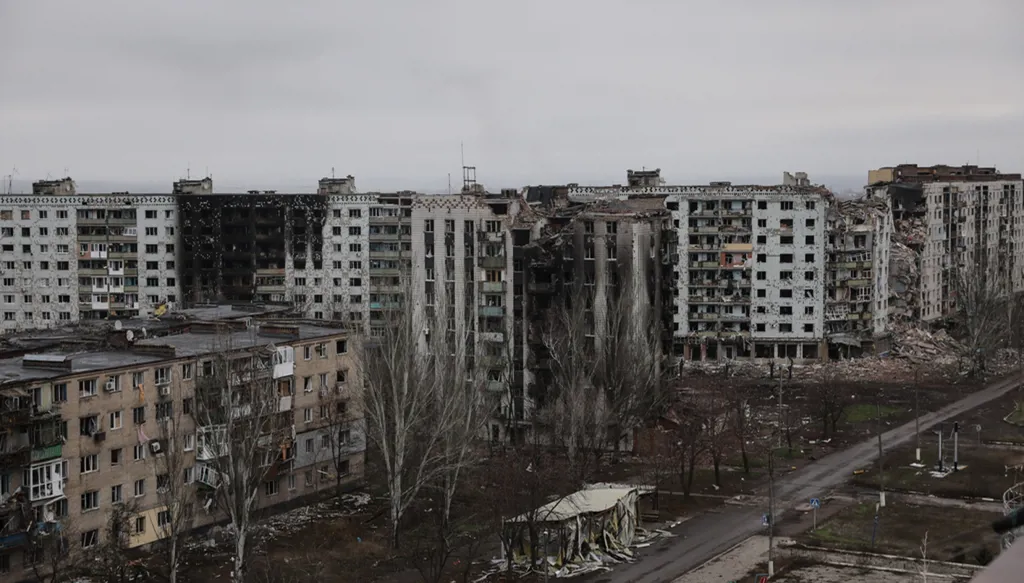


From the Iranian-Venezuelan shadow fleets targeted by the Trump administration’s economic and logistical campaign, to the Russian “Oreshnik” missiles in Belarus, today’s landscape reveals the contours of a dual strategic confrontation. The U.S. campaign against oil and goods-carrying ships from Iran and Venezuela has shown how control over economic lifelines can serve as a powerful instrument of pressure on the international system.
The heated European debate over frozen Russian assets and their potential use to fund Ukraine’s defense against Russia’s military buildup - including Oreshnik missiles - has shortened warning times and raised the stakes of any escalation. Money, fleets, and missiles have become parallel instruments of war. Today’s confrontation is not merely a clash of weapons or sanctions but a multi-layered strategic conflict.
Tens of billions of dollars in Russian assets are frozen across multiple European banks, including in France, Germany, the UK, and Belgium. Directly using these funds to support Ukraine would be a strategic political decision with the potential to shift the balance of the conflict. However, Europe remains divided on the issue, and the United States has not backed such a move.
The battle within the European Union concluded with an agreement to provide Ukraine a €90 billion loan to cover its projected budget deficit, after EU leaders failed to reach a consensus on using frozen Russian assets for funding. The loan will be backed by the bloc’s joint budget and is expected to support Ukraine over the next two years.
Today, Europe finds itself caught between the hammer of U.S. pressure and the anvil of potential Russian retaliation or legal complications, making every step highly sensitive. This has led to the decision to refrain from using the frozen Russian assets until further notice.
Russia has deployed its advanced “Oreshnik” missile brigade in Belarus as part of a strategy to strengthen military deterrence and send a clear political message to Europe and the West. The presence of these missiles shortens response times and complicates European strategic calculations, raising the costs of any potential escalation.
Europe faces a complex dilemma: Using the frozen Russian assets could strengthen its political position and support Ukraine, but it risks provoking direct Russian retaliation or legal and economic countermeasures that Moscow has threatened, testing Europe’s ability to make decisive decisions.
Europe stands at a critical crossroads: It can either define its position on funding Ukraine in its war with Russia - potentially revisiting the use of frozen Russian assets and accepting the consequences - or remain at the mercy of negotiations between Washington and Moscow over the resolution of the Ukrainian conflict.
The Trump administration is focused on its priority campaign, directly targeting Iranian shadow fleets and imposing a naval blockade on Venezuelan tankers, including dozens of ships carrying oil and essential goods. This effort involves freezing assets, disrupting insurance, and blocking commercial licenses, aiming to cut off the economic lifelines that sustain Iran and Venezuela’s regional and domestic policies.
Despite repeated efforts to present a unified strategy against Russia, Europe still faces significant internal challenges. Dependence on Russian gas remains, and public pressure over rising energy prices constrains governments from implementing stricter measures. This internal division undermines the effectiveness of sanctions or economic measures against Moscow, giving Russia opportunities to exploit European weaknesses - particularly in Eastern Europe and the Baltics, where border tensions remain volatile.
Russia is also focused on another part of the world, particularly the U.S. efforts to curtail its influence in Venezuela and the resulting American control over global oil markets. For now, the United States is conducting what can be described as a “shadow war” against Iran and Venezuela. Its naval fleet operates covertly to monitor and disrupt the movements of Iranian and Venezuelan ships, while strict financial restrictions target assets linked to these countries.
The goal is not only to disrupt sources of funding but also to send a clear message to regional and global actors: Any attempt to bypass American sanctions, or expand political and financial influence, will face a swift and organized response. The intersection of these two axes - Europe and Russia on one side, and the U.S. shadow war on the other - centers on control over the global financial and energy systems.
Despite its frozen assets in the West, Russia has strengthened its economic ties with China, India, and other emerging markets. Meanwhile, Washington is working to prevent Iran and Venezuela from leveraging the international financial system as a tool of influence, reflecting a broad U.S. strategy to simultaneously pressure multiple adversaries, including China and Russia.
On the European political front, this parallel and indirect war has produced unexpected effects. Countries dependent on Russian energy or trade with Central Asia face a complex dilemma: Supporting sanctions against Moscow while managing the fallout from U.S. actions against Iran and Venezuela on financial and energy markets. This reality increases Europe’s fragility and makes unifying positions difficult, granting Russia an opportunity to exploit divisions for strategic gains.
The military dimension is equally significant. Russia’s deployment of advanced missiles in Belarus signals Moscow’s readiness to respond to any European escalation, while the United States carries out precise naval operations to monitor the Iranian shadow fleet and Venezuelan ships, preparing for potential direct military actions in Venezuela. Today’s international confrontation extends beyond traditional land or border conflicts to include maritime, financial, and cyber domains.
Economically, pressure on frozen assets remains a key instrument in this global contest. Russia leverages its partially frozen assets to exert political influence, while the United States works to prevent Iran and Venezuela from turning their assets into financial power that could be used for regional expansion or military development.
This dual use of financial tools highlights the evolution of modern economic warfare, which is no longer just about sanctions but a part of a global race for influence and resources.
Europe must rethink its energy and security policies, Russia is expanding into alternative markets while exploiting Western divisions, and the United States is exerting pressure on its adversaries across multiple fronts to limit their strategic flexibility.
The confrontation between Russia and Europe is somewhat linked to the parallel American war on Iran and Venezuela, ushering the world into a new phase of complex balances.
The current conflict goes beyond borders or oil; it is about control over financial assets, maritime routes, economic and political influence, and military readiness. From Venezuela to Iran, and from Russia to Belarus, the United States and European countries are recalibrating their strategies - just as Russia and its allies are doing.
This is the language of intertwined challenges.