

From Doha to Miami… Gaza plan in crisis and Washington hastens 'Sunrise' as an alternative?


 Messenger
 Whatsapp
 Threads
 Email
Email
 Print
Print
 X
X
 Facebook
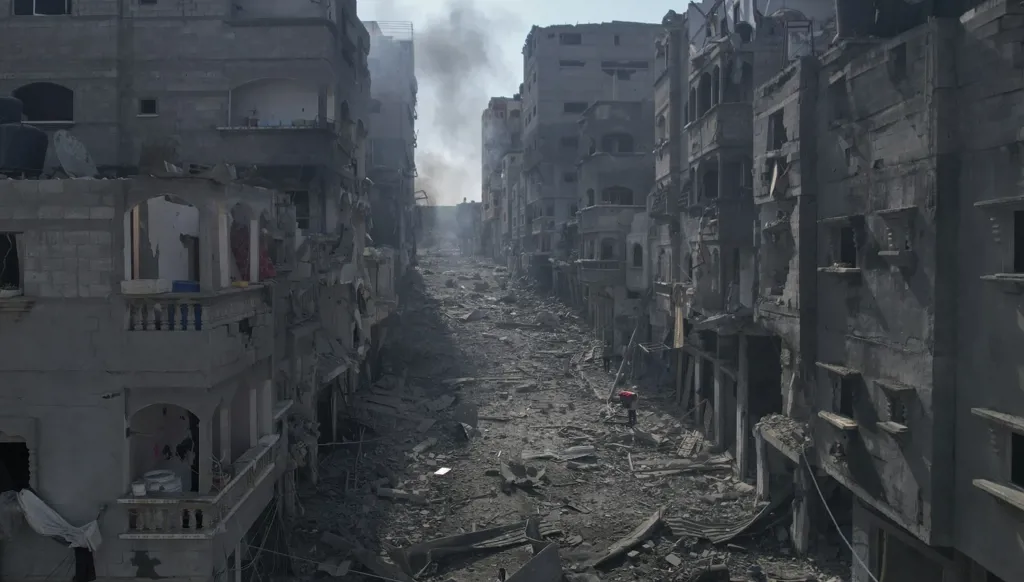


The U.S. envoy, Steve Witkoff, who has been concentrating on convincing Russia and Ukraine of the American plan to stop the war between them, found time on Saturday to meet with representatives from Egypt, Qatar, and Turkey in Miami, Florida, to discuss the stages reached by the American plan for Gaza.
The mediators' meeting in the Gaza file resulted only in a general statement urging Israel and "Hamas" to "exercise restraint," praising the progress in the first phase of the American plan, and calling for the "establishment and activation" of a transitional administration, as stipulated in the second phase of the plan.
The Florida meeting is part of the diplomatic activity of the four countries that signed the "Document to End the War" in Gaza.
These countries are discussing ways to facilitate the transition to the second phase, which involves the establishment of the international stabilization force. The establishment of this force, as is widely known, is linked to defining its mission: is it a force to "impose peace" or a force to "maintain peace"? The Doha meeting on Tuesday, chaired by U.S. Central Command and attended by dozens of countries, could not reconcile Israel's demand that the role of the proposed international force includes disarming "Hamas" with the mediators' proposal to have this force monitor the ceasefire, as no country would agree to deploy its forces in a combat mission.
The position of U.S. Secretary of State Marco Rubio, on Friday, indicates that President Donald Trump's administration insists on disarming "Hamas" as a condition for the success of the American plan, noting that many U.S. officials have come to believe that after two years of Israeli war, the movement has been so weakened that it no longer poses a threat to Israel.
In an attempt to overcome this impasse, Egypt, Qatar, and Turkey propose parallel implementation of the provisions in the American plan to persuade "Hamas" to respond to the demand to disarm. This means that Israeli withdrawals from the sector would accompany the move, replacing them with the international force, forming a Palestinian committee of independent technocrats to govern Gaza, allowing for more humanitarian aid entry, and opening the Rafah crossing for this purpose, not for departure as Israel proposes, and speeding up reconstruction efforts.
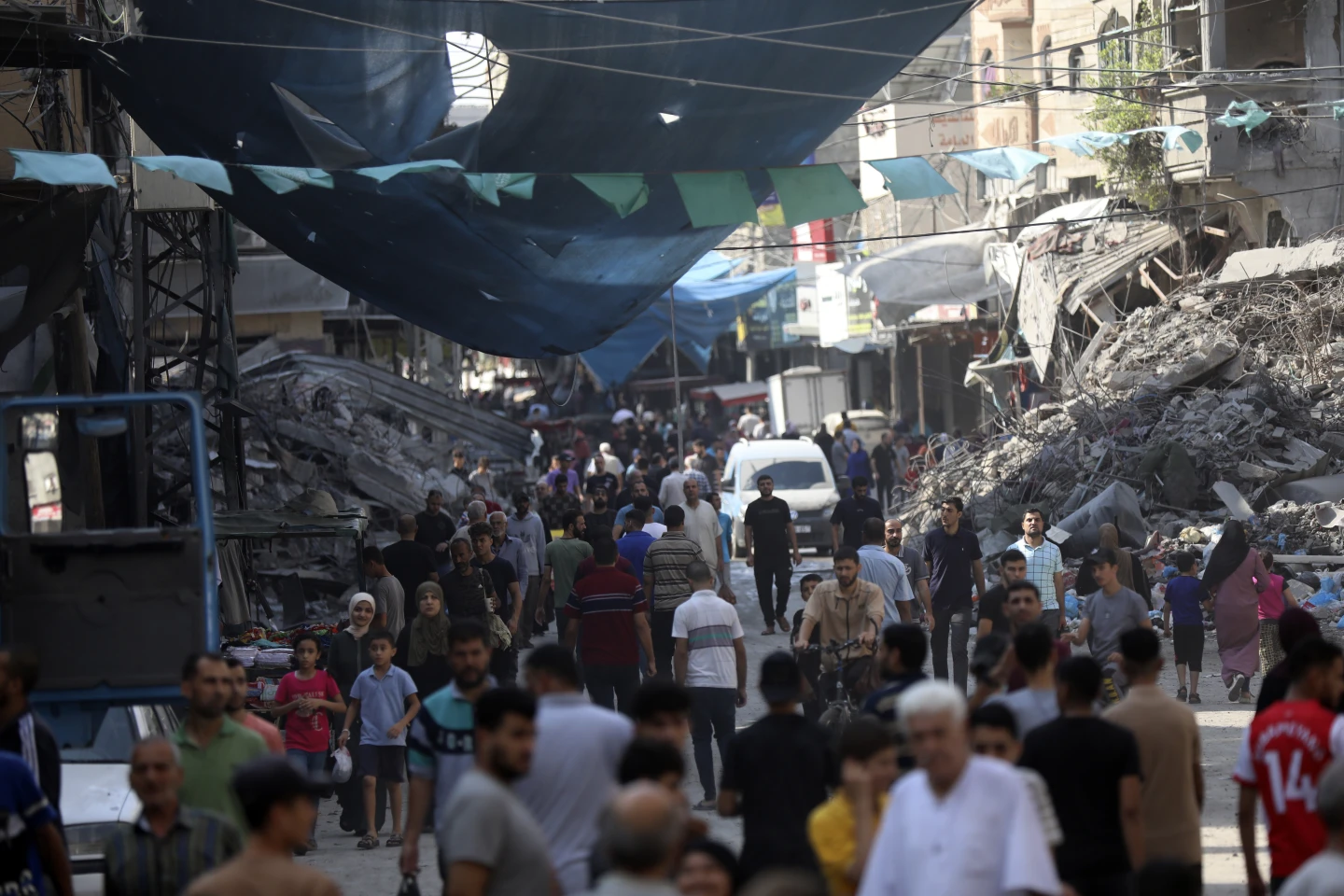
Despite prevailing pessimism about the prospects for the success of the American plan, the American newspaper "The Wall Street Journal" revealed that Witkoff and Jared Kushner, Trump's son-in-law, have prepared a plan for Gaza reconstruction with the codename "Sunrise." It is based on initiating this process starting from Rafah and Khan Yunis up to Gaza City, transforming it into luxury tourist resorts, and building high-speed railway lines and artificial intelligence networks, at a cost of $112 billion.
However, the project, which is supposed to start in two months, does not address fundamental issues, such as where two million Palestinians will reside during the reconstruction process or which countries are contributing to the project, the designs of which were presented by U.S. officials to potential donor countries such as the Gulf states, Turkey, and Egypt.
Nonetheless, the project does not overlook mentioning that reconstruction relies on the "complete disarmament of Hamas and the dismantling of all tunnels," as "no one can be convinced to invest money in Gaza if a war is likely to erupt again in two or three years."
The project is considered a detailed plan that echoes what the U.S. previously called for, namely starting with reconstruction in areas occupied by Israel, implicitly acknowledging the faltering of the original American plan.