

Hezbollah’s strategy in Southern Lebanon explained after recent events


 Messenger
 Whatsapp
 Threads
 Email
Email
 Print
Print
 X
X
 Facebook
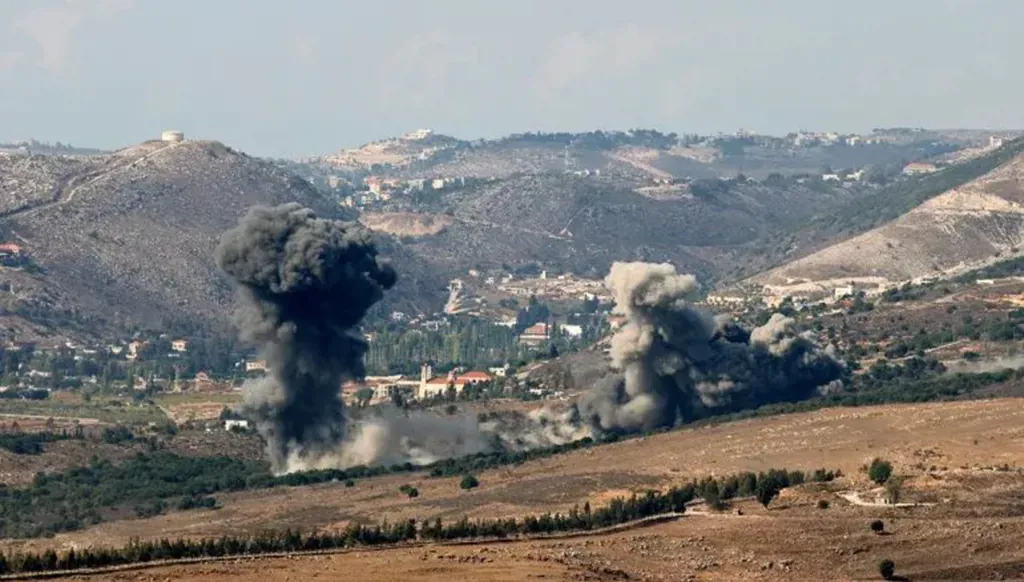


When Lebanon, through Army Commander General Rodolph Haykal, voiced its objection to Israel’s request to enter homes in the south to verify they were free of weapons, it aimed to ease Israeli concerns and replace them with reassurance. In response, Hezbollah and its surrounding environment quickly “celebrated” the move as a demonstration of resistance to repeated Israeli demands. Yet, this was accompanied by a lingering question: How far can the country realistically advance in this confrontation?
Consequently, the party soon shifted from its positive tone when it, along with observers, noticed a coordinated campaign organized by the military under the slogan: “The field is open to view and free of any weapons.” As a result, it found itself in a position that was expected to appease Israel and mitigate its anger toward Lebanon.
The process began with the tour organized by the army for ambassadors to certain areas in southern Litani, specifically Wadi Zebqine. Up to that point, the situation was acceptable and could be seen as presenting evidence and gestures of goodwill, demonstrating Lebanon’s absolute commitment to the terms of the ceasefire agreement signed more than a year earlier. However, the situation changed completely when the concept of a “verification mechanism” came into play. Its first manifestations appeared in Beit Yanouh (Tyre) and Wadi Touline (Marjaayoun), and the process continued relentlessly. The army was forced to dig for hours in front of cameras to document the sites. For the party, this came to represent an additional “retreat and submission” by the state, which, despite providing all evidence and documentation, could not secure any guarantee against continued Israeli aggression.
Of course, the party can only register its objection, arguing that the recent developments in the south are a result of the state’s decision to abandon the ceasefire agreement under Resolution 1701 and engage in negotiations. As a result, the Yanouh and Touline model is likely to be repeated, raising concerns that the entire south could become open territory for Israel to assert its control.
In light of this, the question remains: what lies ahead for the party, and what can it expect in the next phase?
The party takes care to emphasize two things daily:
- First, the party has indeed withdrawn from the area south of the Litani for two reasons: either its previous positions were targeted, or they became exposed to Israel, making them strategically useless. Moreover, the party has repeatedly stated that it is not inclined toward any imminent military confrontation.
From this perspective, the pressing question for the party is: what comes next, and what vision does it hold for the future?
The party’s clear stance is that its commitment to the ceasefire does not in any way imply a withdrawal from the field. It acknowledges, however, that maintaining this position is not easy amid internal and external shifts following the Al-Aqsa Flood operation—particularly since its opponents quickly argued that the ceasefire also entails disarming it north of the Litani, a position the government has reportedly adopted and tasked the army with implementing within a set timeframe.
"Amid these developments, the party continues to uphold a stance recently articulated by one of its leaders, Ghaleb Abu Zainab, who stated: 'Washington recognizes that Israel's military pressure is no longer effective and seeks to shift toward dialogue and containment.'"
Based on this, the party is now betting on two things:
- Israel will not turn its daily threats into an actual war against Lebanon.
- This suggests the possibility that others may accept Hezbollah's retention of its weapons within the framework of compromise.
The party’s final framework for the proposed settlement has not yet been finalized, but proposals continue to reach its leadership from various sources and capitals. The matter ultimately depends on Israel, which must formally acknowledge it, though preliminary signals have already emerged. Recently, Haaretz reported that the Israeli military estimates the party "will not disarm, but it can no longer carry out large-scale incursions into Israel."
The party has expressed its willingness to transform into a defensive reserve force alongside the army and is open to considering proposals framed under the concepts of "containment" and "freezing weapons." It emphasizes that the open letter previously sent to the Lebanese President, Prime Minister, and Speaker of the Parliament affirmed its readiness to assume a defensive role alongside the army and the people—provided that this role remains separate from decisions regarding war and peace, and operates strictly within the framework of a national security strategy."
The question remains: Is the party’s reassurance grounded in genuinely solid foundations?
Disclaimer: The opinions expressed by the writers are their own and do not necessarily represent the views of Annahar.