


 Messenger
 Whatsapp
 Threads
 Email
Email
 Print
Print
 X
X
 Facebook
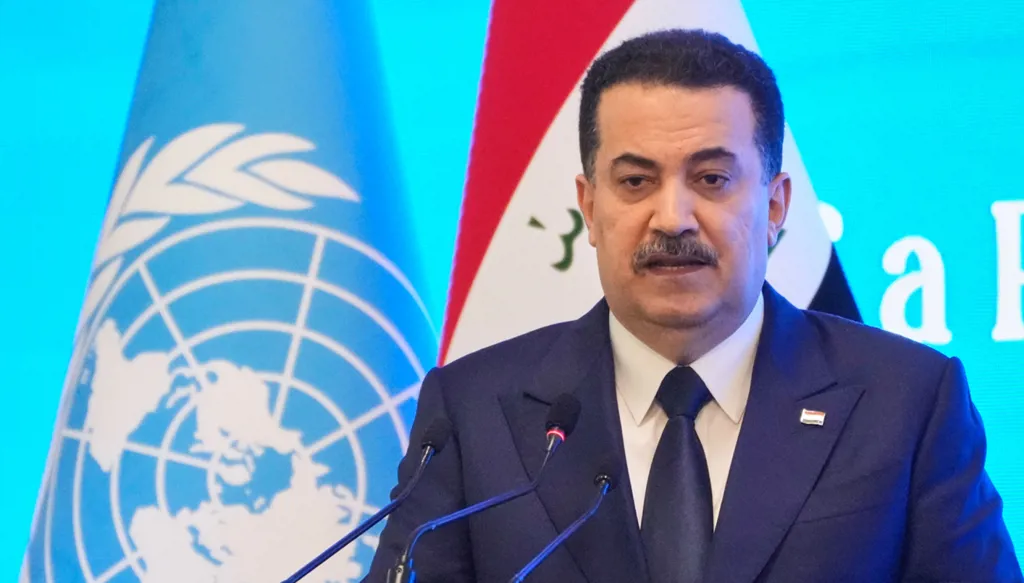


The termination of the United Nations Assistance Mission for Iraq (UNAMI), established in 2003 by a UN Security Council resolution following the fall of Saddam Hussein’s regime, marks a significant moment in today’s Baghdad.
The mission, designed to guide Iraq through its transitional phase by providing political advice, supporting national dialogue and reconciliation, overseeing elections, enhancing human rights, monitoring violations, coordinating humanitarian aid, and restoring stability after sectarian violence, cited a “request from the Iraqi government” for its departure. This decision suggests that the UN’s work over two decades of Iraq’s democratic transition remains unresolved.
The formal request, submitted by Prime Minister Mohammed Shia al-Sudani in a letter to the UN Secretary-General on May 8, 2024, coincides with parallel demands by his political allies within the Coordination Framework - a coalition of Shiite political forces closely linked to armed factions - for the end of the US-led international coalition’s mission and the withdrawal of American forces, scheduled for September 2026.
Observers interpret this synchronized push as an attempt to eliminate remaining international oversight over Iraq’s political, security, and humanitarian landscape. This is particularly notable given the discomfort of Iraq’s ruling establishment with reports presented to the UN Security Council by Jeanine Hennis-Plasschaert, the UN Secretary-General’s Special Representative for Iraq, highlighting democratic stagnation, corruption, unchecked militia power, Iranian influence, and the killing of protesters during the October 2019 uprising.
Hennis-Plasschaert’s remark that “the political system in Iraq is unsustainable” positioned the UN mission as a perceived threat to forces controlling power, weapons, and financial resources - factors contributing to the urgency behind ending the mandate.
While the Iraqi government framed the termination as a reclaiming of sovereignty, the reality suggests little achievement. Democratic setbacks persist, trust in institutions is declining, political participation is limited, and militias maintain near-total control over decisions. Freedom of expression is under unprecedented threat, state institutions struggle to address internal displacement and deliver humanitarian aid, and ecological degradation continues. In foreign policy, Iran’s influence has grown stronger, becoming a visible presence on the ground.
UNAMI struggled to meaningfully counter this influence, focusing instead on diplomatic visits to Tehran to ease political pressures. Its final year effectively legitimized Iran’s role and its local allies, despite Iraq increasingly becoming a theater of confrontation. Indicators suggest Iran has no intention of relinquishing control following the collapse of its broader regional ambitions.
In 2023, Volker Perthes, who led a strategic review of UNAMI, warned of ongoing threats to Iraq’s peace and security and stressed the importance of continuing the mission. However, these conclusions gained little traction. The internal and regional complexities facing Iraq were largely disregarded. For many Iraqis, the UN presence, once seen as a form of international oversight, came to symbolize a rigid bureaucracy, distant from society and complicit in granting legitimacy to armed realities. Some even accused the mission of becoming a “false witness” to ongoing events.
With UNAMI’s departure, Iraq remains a fragile state, underscoring the disappointment and challenges ahead.
Disclaimer: The opinions expressed by the writers are their own and do not necessarily represent the views of Annahar