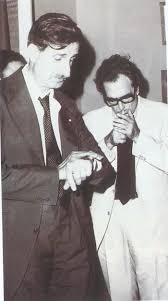
Ghassan Tueni and Kamal Jumblatt: A legacy of words and thought


 Messenger
 Whatsapp
 Threads
 Email
Email
 Print
Print
 X
X
 Facebook
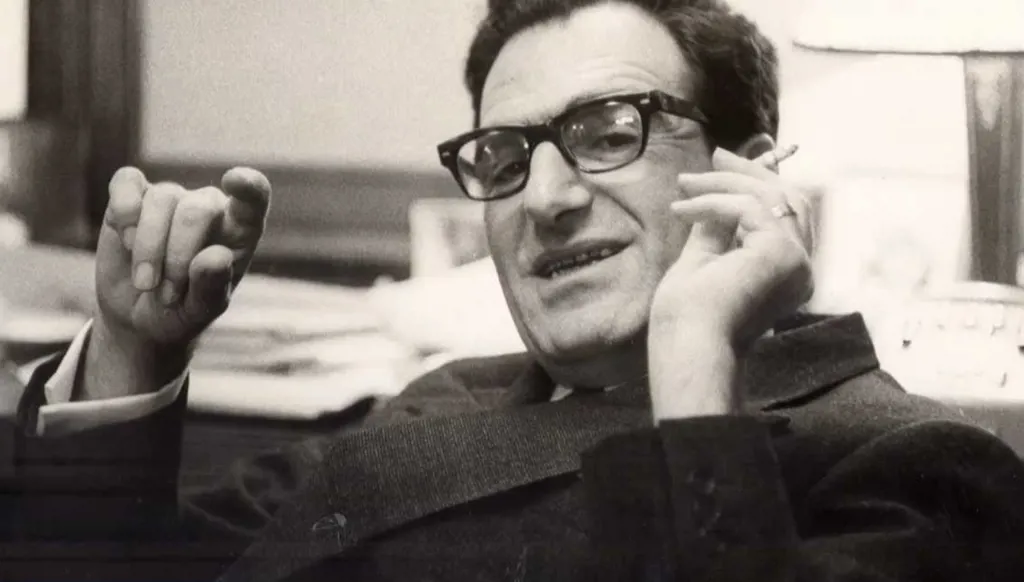


At a moment when Lebanese politics was ensnared in sectarian rivalries and dynastic feuds, two remarkable figures sought to chart a different course. Kamal Jumblatt, the visionary who transformed socialism into a sweeping program of national reform, joined forces with Ghassan Tueni, the uncompromising voice of An-Nahar, Lebanon’s leading independent daily and a steadfast platform for freedom and accountability. Their convergence was not a fleeting alliance of convenience, but a daring experiment: it served an effort to fuse ideas with action and to bridge the divide between rhetoric and reality in a nation still struggling to define its identity
A time of change: Lebanon in the 1960s and 1970s
The ascent of nationalist and leftist movements, coupled with the growing influence of Palestinian factions, shook Lebanon’s traditional political order to its core. What had long been a system anchored in sectarian balances and entrenched elites began to fracture under the weight of new ideologies and external pressures. Historian Kamal Salibi captures the magnitude of this moment, describing it as “a transformation in the traditional social structure and the emergence of new political forces” (Modern History of Lebanon, 1999, p. 245).
Against this backdrop of upheaval, Kamal Jumblatt in 1969 unveiled the Progressive National Front, a coalition whose early contours are preserved in An-Nahar’s archives. Conceived as a reformist vehicle, the Front sought to confront Lebanon’s entrenched sectarianism and disrupt the traditional order, positioning itself as a bold experiment in reshaping the country’s political landscape.
Thought and politics: an ongoing dialogue
Ghassan Tueni regarded journalism not simply as a medium for reporting events, but as an instrument of change. “Words can be a tool for change,” he reflected in his memoirs, underscoring his conviction that the press could shape political reality. Kamal Jumblatt, meanwhile, turned to An-Nahar as a platform to broadcast his reformist vision to a broad readership, even as he and Tueni diverged on the role of Palestinian factions and the boundaries of Lebanon’s ties to the Arab world. Historian Issam Khalifa captured their dynamic succinctly: Jumblatt was the thinker who sketched the grand design, Tueni the critic who dissected it with candor and rigor. As Tueni himself explained in 1998, “Our mission was not to promote Kamal’s ideas, but to present them critically.” Out of this interplay emerged a rare model of disagreement—one rooted not in hostility, but in mutual respect and intellectual honesty.
Common ground: the word at work
Among the most striking dimensions of this collaboration was An-Nahar’s sustained coverage of agricultural reform and land corruption, a focus highlighted by lawyer Nicolas Nassar. Beyond reporting, the newspaper became an incubator of ideas, convening seminars where Kamal Jumblatt engaged with leading intellectuals on themes such as “socialism and democracy.” In doing so, An-Nahar evolved into a forum for high-level dialogue that bridged politics and thought. The resonance of this experiment reached a new generation: Walid Jumblatt would later recall, “I learned at An-Nahar that words can be stronger than bullets” (Memory of Reality, 2004, p. 77).
Challenges and difficulties: The road was not easy
The experiment soon collided with entrenched resistance. Lebanon’s traditional regime, bolstered by religious authorities and compounded by regional and international pressures, pushed back forcefully. The 1972 parliamentary elections laid bare the limits of reform in a system deeply rooted in sectarianism: the Progressive National Front managed to secure only 11 seats out of 99. Five years later, the project was tragically cut short. On March 16, 1977, Kamal Jumblatt was assassinated, silencing one of Lebanon’s boldest reformist voices. The following day, Ghassan Tueni captured the nation’s grief in An-Nahar: “The man who carried Lebanon in his mind has fallen, and we are left carrying his unanswered questions in our minds.”
Lasting lessons: Words are stronger than bullets
This experience distills into three enduring lessons.
Media independence must be safeguarded, even as it engages responsibly with politics.
Alliances built on intellectual conviction carry greater weight and longevity than those driven by narrow interests.
Transforming a deeply entrenched sectarian system is arduous, yet history reminds us it is not beyond reach.
Conclusion: The legacy of words and ideas
Although this experiment fell short of reshaping Lebanon in the way its architects envisioned, it left behind a powerful legacy of words and ideas. It showed that when journalism and politics converge around the values of freedom and honesty, they can spark meaningful change even in the bleakest of times. That legacy endures as a reminder that some words carry more force than bullets, and that certain dreams continue to live on long after their creators have departed.