

Margaret Thatcher and the will to power: When Nietzsche's philosophy takes political form


 Messenger
 Whatsapp
 Threads
 Email
Email
 Print
Print
 X
X
 Facebook
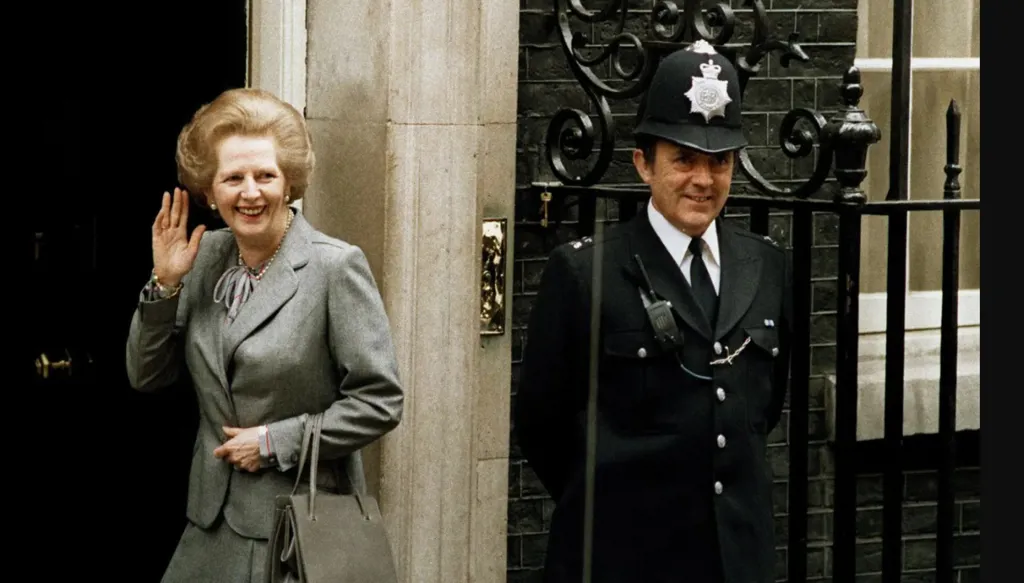


Political figures are remembered not only for what they said but also for the spirit and ideas they projected onto history. Margaret Thatcher, often called the “Iron Lady,” is not merely a chapter in Britain’s political record, but a lasting symbol of determination and resilience Revisiting her biography reveals a political figure whose decisive leadership intersected with a distinct governing philosophy —one that treats power not as an instrument, but as a defining mode of action. At this point, it is useful to recall the ideas of German philosopher Friedrich Nietzsche, who described the “will to power” as the driving force behind life and human striving.
Was Thatcher, perhaps without direct philosophical intent, expressing a form of this idea in the way she approached political life?? Can her career be understood through this profound dimension —one that surpasses politics and touches on the essence of humanity?
This article explores Thatcher's character and her worldview through the lens of Nietzsche's philosophy, inviting us to reflect together on how politics becomes an expression of will that reshapes reality.
1. Margaret Thatcher: When decision-making becomes an existential act
When Thatcher became prime minister in 1979, Britain was experiencing a faltering economy, a fearful society, and a state weakened by the power of trade unions.
Thatcher responded with a hardline, sometimes pain-inflicting approach. She privatized and cut spending, seeking to both save the economy and reshape the British mentality itself.
She once said in an interview with Woman's Own (October 31, 1987): “There is no such thing as society. There are individuals, men and women, and there are families.”
With this controversial statement, Thatcher established a political philosophy grounded in individual responsibility over collective solidarity and on will rather than complaint.
So, was Thatcher echoing Nietzsche’s question: “How do we forge a new human being from the ashes of outdated values?”
2. Nietzsche: The will to power as a cry in the face of weakness
For Nietzsche, life is not measured by survival, but by the ability to create and transcend oneself.His “will to power” is not a mere pursuit of dominance, but an existential force pushing individuals toward excellence and renewal, toward saying “yes” to life despite its contradictions.
Nietzsche despised the “morals of slaves” that glorify humility and obedience, and extolled the “morals of masters” rooted in value-creation and holding one’s head high while facing destiny.
It is not surprising that some scholars link Nietzsche's “charismatic leadership” to the emergence of leaders such as Thatcher, who believe that they must change the rules rather than simply apply them.
3. Three Nietzschean Moments
A. Breaking the Union: The Miners' Strike (1984–1985)
Thatcher confronted the miners' union with an unyielding resolve. She viewed the union not as a vehicle for social justice but rather an expression of reactionary forces hindering progress. The conflict lasted a full year, culminating in the union's defeat.
The Times wrote at the time that “Thatcher did not just confront the union, she confronted the memory of an entire postwar nation.”It was a quintessentially Thatcherite-Nietzschean moment: the dismantling of old idols and the imposition of a new will that was not ashamed of cruelty when necessary.
B. An individual without a shadow: “There is no such thing as society.”
Behind her famous phrase lies a stark existentialist vision: the individual, not the group, is the center of decision-making.
Nietzsche, who saw the group as a moral constraint, would have approved of this vision, seeing it as a liberation of the will from the false rhetoric of compassion.
C. National dignity: The Falklands War (1982)
When Argentina occupied the Falkland Islands, Thatcher acted without hesitation. Rather than negotiate, she deployed naval and air forces to reclaim the territory.
In her June 14, 1982 address to the House of Commons, she stated: “We must show that we will not give up our land or our citizens, because if we do, no other nation will respect us.”
This was a perfect Nietzschean moment: justice emerging from will, not the other way around.
4. A will that knows no apology
Thatcher did not rule with leniency, but through decisiveness. She did not retreat in the face of hatred, but drew from it proof of her influence.
Political writer Francis Pimlo said of her:“She loved to be hated, because hatred meant she had made an impression.”
This, in itself, is an embodiment of Nietzsche, who wrote: “He who offends no one changes nothing.”
We cannot know if Thatcher ever read Nietzsche, but certain elements of her political approach echo themes found in his work such as, “Be what you are. Do not fear being a storm.”
Margaret Thatcher was not just a leader, but a philosophical project in political form.She made willpower her motto, strength her stance, and decisiveness her path.
In a world drowning in indecision, she would say, “Act, even if you must stand alone.”She may not have read Nietzsche, but history may remember her reflecting aspects of the philosophy he articulated: influential, unyielding, and unmistakably forceful in her convictions.