


 Messenger
 Whatsapp
 Threads
 Email
Email
 Print
Print
 X
X
 Facebook
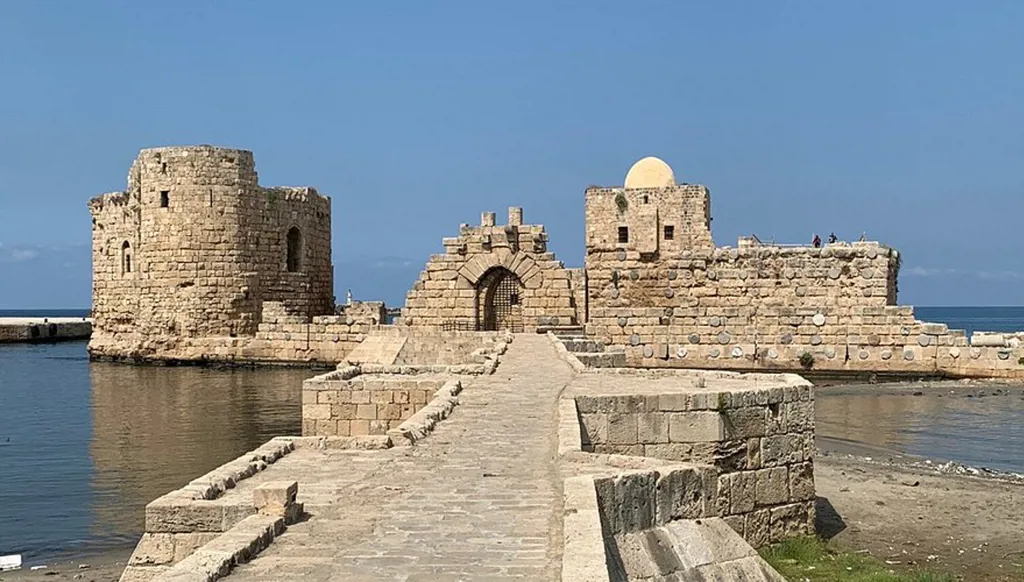
saida palace (Trip advisor)


I have both written and lectured about the urgent need—both in scholarship and in practice —to transmit our heritage to the new generation. It is futile to expect them to love their homeland, if they have not personally encountered the treasures, ruins, landmarks, symbols, and figures that define Lebanon and to which they must learn to feel connected.
How can young Lebanese grow to be worthy of their country? By introducing them to their homeland through its civilization—rather than through the state or its authorities. The hardships they face are rooted in corruption embedded within the structures of power and in the dysfunction of state mechanisms.
I recognize that current efforts sincerely aim to address the countless distortions inherited from previous eras, yet the impact will continue to fall on our children and future generations if all we present to them are the state’s shortcomings and surface-level flaws. Neglecting the breadth of Lebanese heritage denies them the very foundation that, once understood, cultivates pride in their homeland and a true sense of what it means to deserve it.
I write these words with the age group most capable of absorbing and growing through new knowledge: schoolchildren, from the early primary years and onward.
For what benefit is a homeland served by students who learn to read and study science, yet remain unaware of even a single national landmark,and know no place beyond the confined region in which they live and which constitutes the entirety of their world?
Is this difficult to achieve? Not at all. It simply requires an educational leader with vision and a strong sense of Lebanese identity. Consider this example: During a seminar held this week by the Lebanese Heritage Center at the Lebanese American University (LAU) on “Beiteddine Palace: An Architectural Jewel,” presented by researcher Eddy Choueiry, the principal of Al-Safir High School in Ghaziyeh (South Lebanon), Dr. Sultan Nassereddine, brought 45 students.
The students listened, absorbed, and engaged with the lecturer, who spoke to them patiently and clearly. They left with them new knowledge about a historical, cultural, and touristic landmark in their own country—knowledge that anchors them more deeply in their heritage.
In Sultan Nassereddine’s educational journey, this practice has become a deliberate training for the students of Al-Safir High School: accompanying them to seminars, lectures, and various regions across Lebanon. He continues a long-established approach—inviting distinguished figures from every field of knowledge to the school, where they meet students directly in their classrooms.
Let Al-Safir High School’s initiative become a model for schools across Lebanon, so that students’ worlds are not confined to four classroom walls, the covers of a textbook, and the monotonous voice of a single teacher..
Let a school in Sidon take its students to Tripoli and its landmarks; a school in Zahle to Byblos and its heritage; a school in Akkar to Beirut and its historical sites; and a school in Tripoli to Baalbek and its monumental treasures. Let every school bring its students into the diverse regions of Lebanon—its historical, touristic, and cultural spaces—so their horizons expand beyond their narrow confines.
Only then will they come to know their homeland, its landmarks, and its history. This is how a culture of nationhood can truly take root, and how we can raise a new generation that loves Lebanon not because of what they read or are told, but because of what they see, experience, discover, and understand firsthand.
In the latest issue of Maraya al-Turath magazine, Dr. Antoine Massarra presents a very important study on “cultural culture,” in which he writes: “Culture that does not transform the life of the individual and the life of society remains merely a media façade and a temporary amusement. Cultural culture changes the life of the individual and the behaviors of daily and public life. The reference gains of heritage collapse if there are no channels to transmit them to new generations.”
Indeed, culture works precisely this way: it is a daily practice instilled in our children from their earliest school years, guiding them toward an awareness of their homeland, its significance, its role, and the unique heritage that distinguishes it from other countries in the region. This is how they come to know Lebanon. This is how they understand what it means to be children of Lebanon. And this is how they come to love their country—not through romanticized theorizing, but through a heartfelt conviction that will protect them from political demagoguery that serves not the nation, but the narrow interests of those who exploit the state for the sake of the next election, rather than building a homeland for the future generations.
How can young Lebanese grow to be worthy of their country? By introducing them to their homeland through its civilization—rather than through the state or its authorities. The hardships they face are rooted in corruption embedded within the structures of power and in the dysfunction of state mechanisms.
I recognize that current efforts sincerely aim to address the countless distortions inherited from previous eras, yet the impact will continue to fall on our children and future generations if all we present to them are the state’s shortcomings and surface-level flaws. Neglecting the breadth of Lebanese heritage denies them the very foundation that, once understood, cultivates pride in their homeland and a true sense of what it means to deserve it.
I write these words with the age group most capable of absorbing and growing through new knowledge: schoolchildren, from the early primary years and onward.
For what benefit is a homeland served by students who learn to read and study science, yet remain unaware of even a single national landmark,and know no place beyond the confined region in which they live and which constitutes the entirety of their world?
Is this difficult to achieve? Not at all. It simply requires an educational leader with vision and a strong sense of Lebanese identity. Consider this example: During a seminar held this week by the Lebanese Heritage Center at the Lebanese American University (LAU) on “Beiteddine Palace: An Architectural Jewel,” presented by researcher Eddy Choueiry, the principal of Al-Safir High School in Ghaziyeh (South Lebanon), Dr. Sultan Nassereddine, brought 45 students.
The students listened, absorbed, and engaged with the lecturer, who spoke to them patiently and clearly. They left with them new knowledge about a historical, cultural, and touristic landmark in their own country—knowledge that anchors them more deeply in their heritage.
In Sultan Nassereddine’s educational journey, this practice has become a deliberate training for the students of Al-Safir High School: accompanying them to seminars, lectures, and various regions across Lebanon. He continues a long-established approach—inviting distinguished figures from every field of knowledge to the school, where they meet students directly in their classrooms.
Let Al-Safir High School’s initiative become a model for schools across Lebanon, so that students’ worlds are not confined to four classroom walls, the covers of a textbook, and the monotonous voice of a single teacher..
Let a school in Sidon take its students to Tripoli and its landmarks; a school in Zahle to Byblos and its heritage; a school in Akkar to Beirut and its historical sites; and a school in Tripoli to Baalbek and its monumental treasures. Let every school bring its students into the diverse regions of Lebanon—its historical, touristic, and cultural spaces—so their horizons expand beyond their narrow confines.
Only then will they come to know their homeland, its landmarks, and its history. This is how a culture of nationhood can truly take root, and how we can raise a new generation that loves Lebanon not because of what they read or are told, but because of what they see, experience, discover, and understand firsthand.
In the latest issue of Maraya al-Turath magazine, Dr. Antoine Massarra presents a very important study on “cultural culture,” in which he writes: “Culture that does not transform the life of the individual and the life of society remains merely a media façade and a temporary amusement. Cultural culture changes the life of the individual and the behaviors of daily and public life. The reference gains of heritage collapse if there are no channels to transmit them to new generations.”
Indeed, culture works precisely this way: it is a daily practice instilled in our children from their earliest school years, guiding them toward an awareness of their homeland, its significance, its role, and the unique heritage that distinguishes it from other countries in the region. This is how they come to know Lebanon. This is how they understand what it means to be children of Lebanon. And this is how they come to love their country—not through romanticized theorizing, but through a heartfelt conviction that will protect them from political demagoguery that serves not the nation, but the narrow interests of those who exploit the state for the sake of the next election, rather than building a homeland for the future generations.